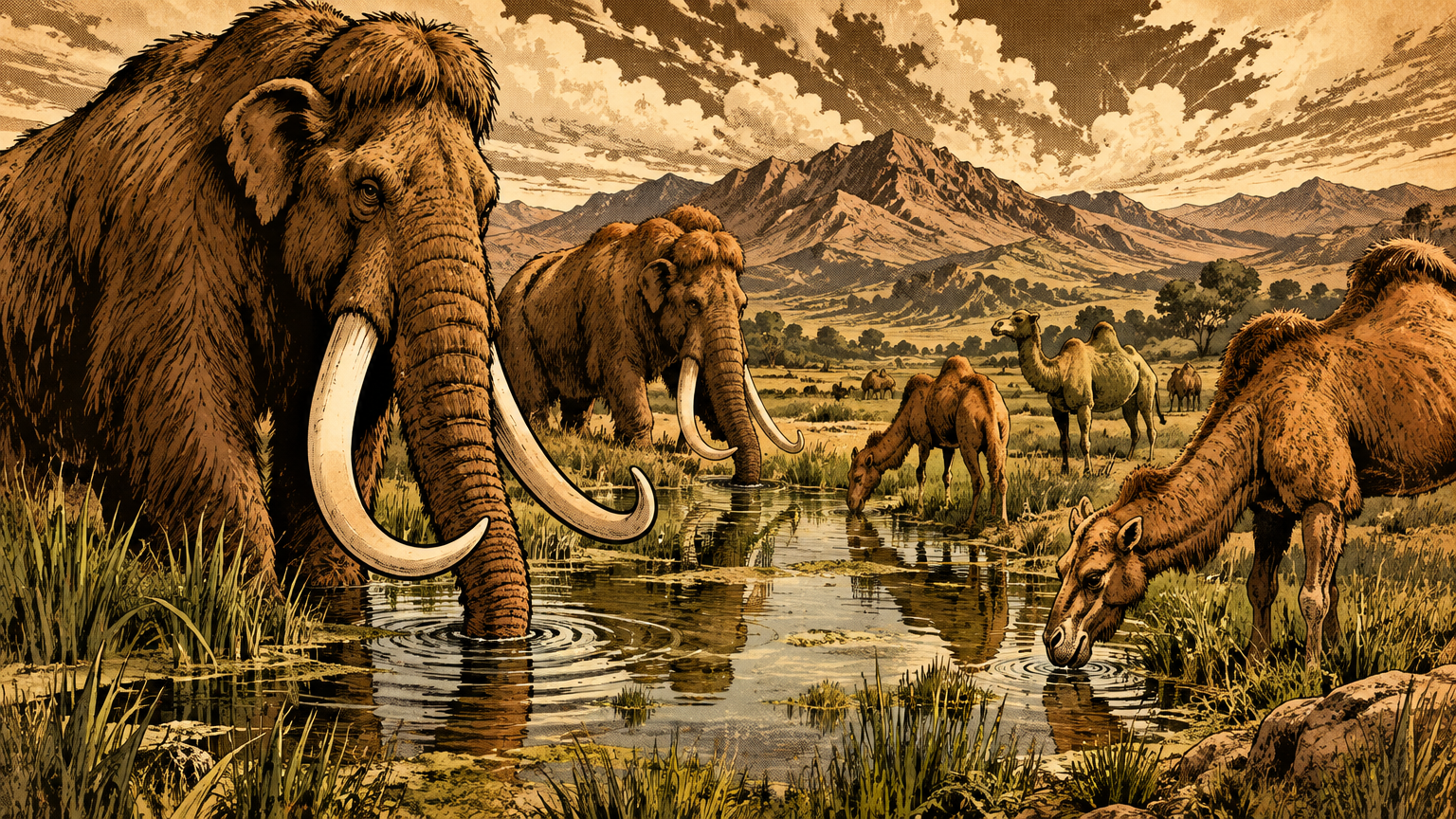
The largest land animals in North America once walked the north edge of Las Vegas. Mammoths with tusks up to twelve feet long drank at the same springs that later drew Paiute families, Mormon settlers, and eventually a railroad town. Camels browsed the wet meadows.
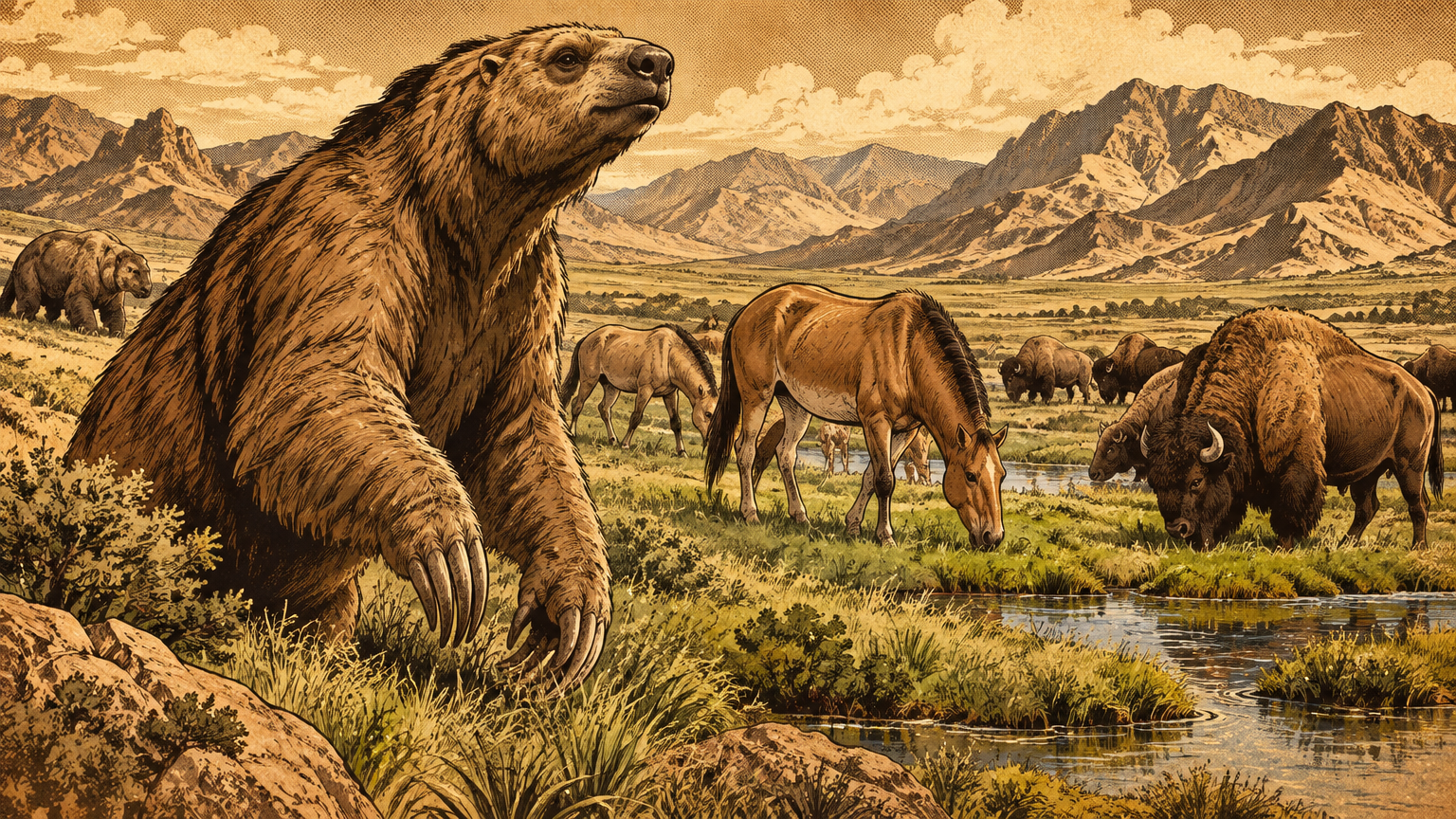
Horses, bison, and giant ground sloths grazed within sight of the mountains that ring the city today. And at night, by the evidence of a handful of bones, some of the most formidable predators of the Ice Age moved through the dark.
None of that is a guess, and none of it is a movie scene. It is a roster, built bone by bone out of a dry wash called Tule Springs, in the Upper Las Vegas Wash. This article is about the animals themselves: which species scientists can actually confirm from the Las Vegas fossil record, what their bones show, and how much honest uncertainty still hangs over the most famous names on the list.
Some entries rest on thousands of fossils. Two of the most celebrated rest on almost nothing at all.
The prehistoric ecosystem
Tule Springs fossil beds
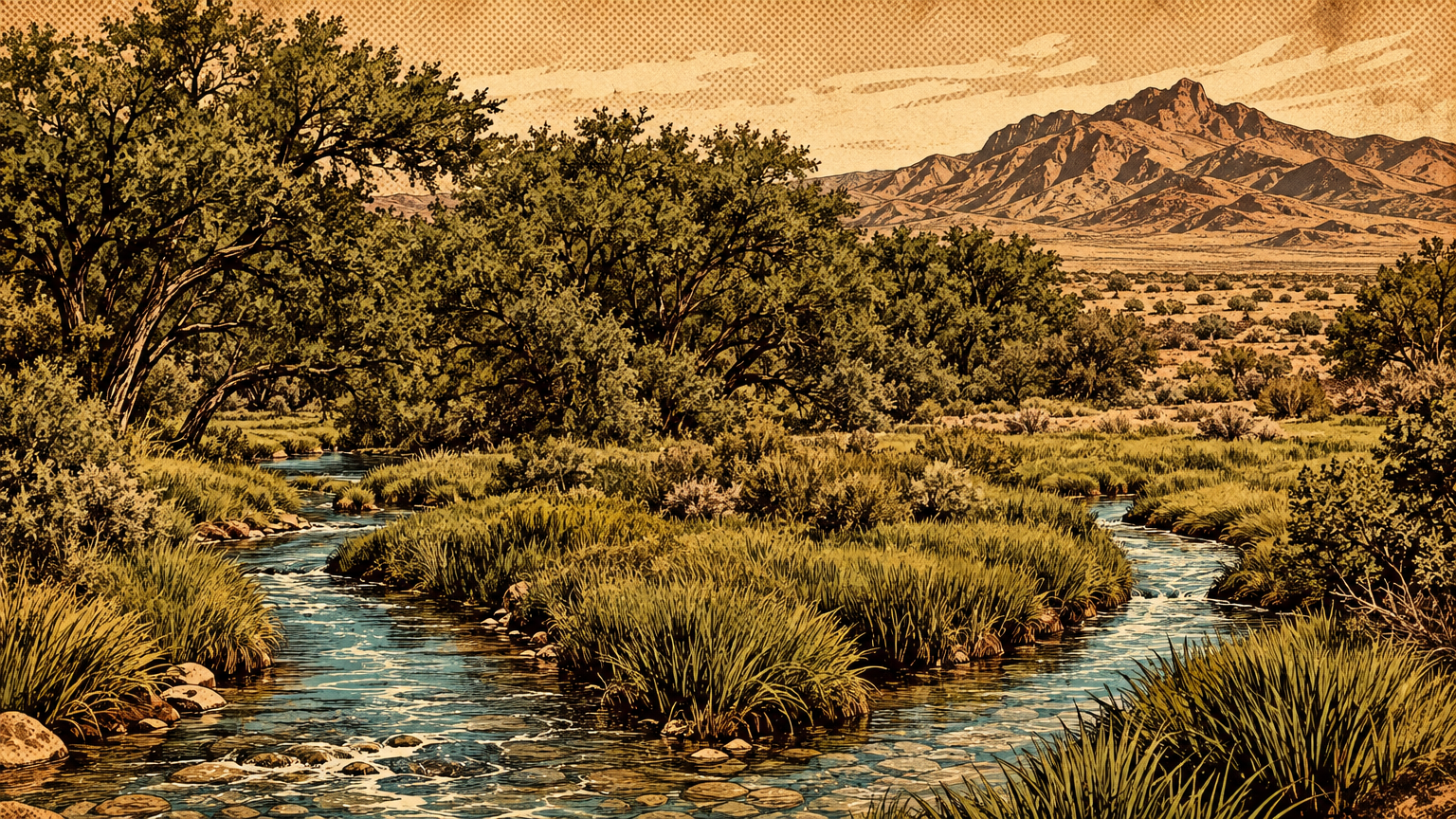
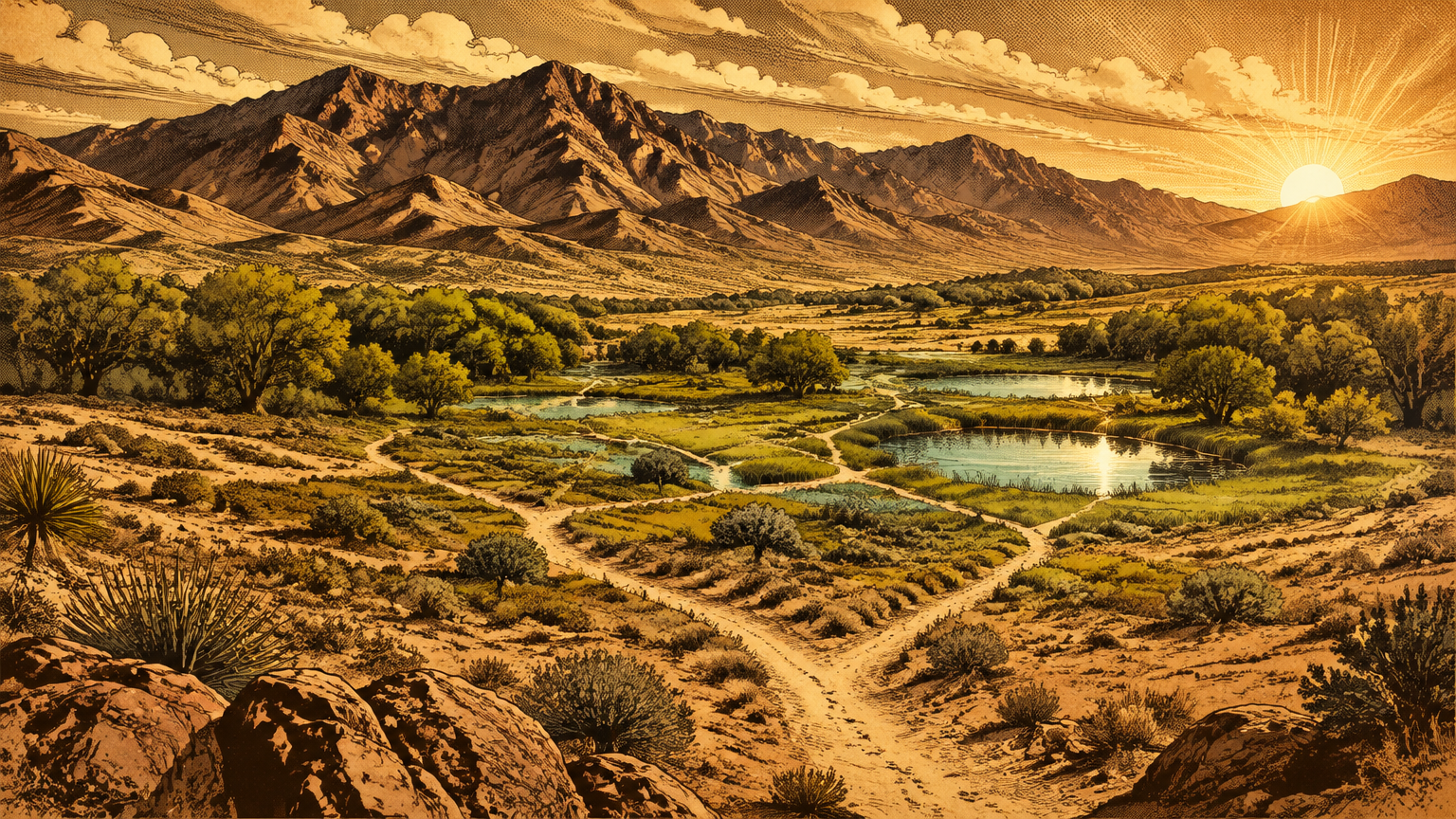
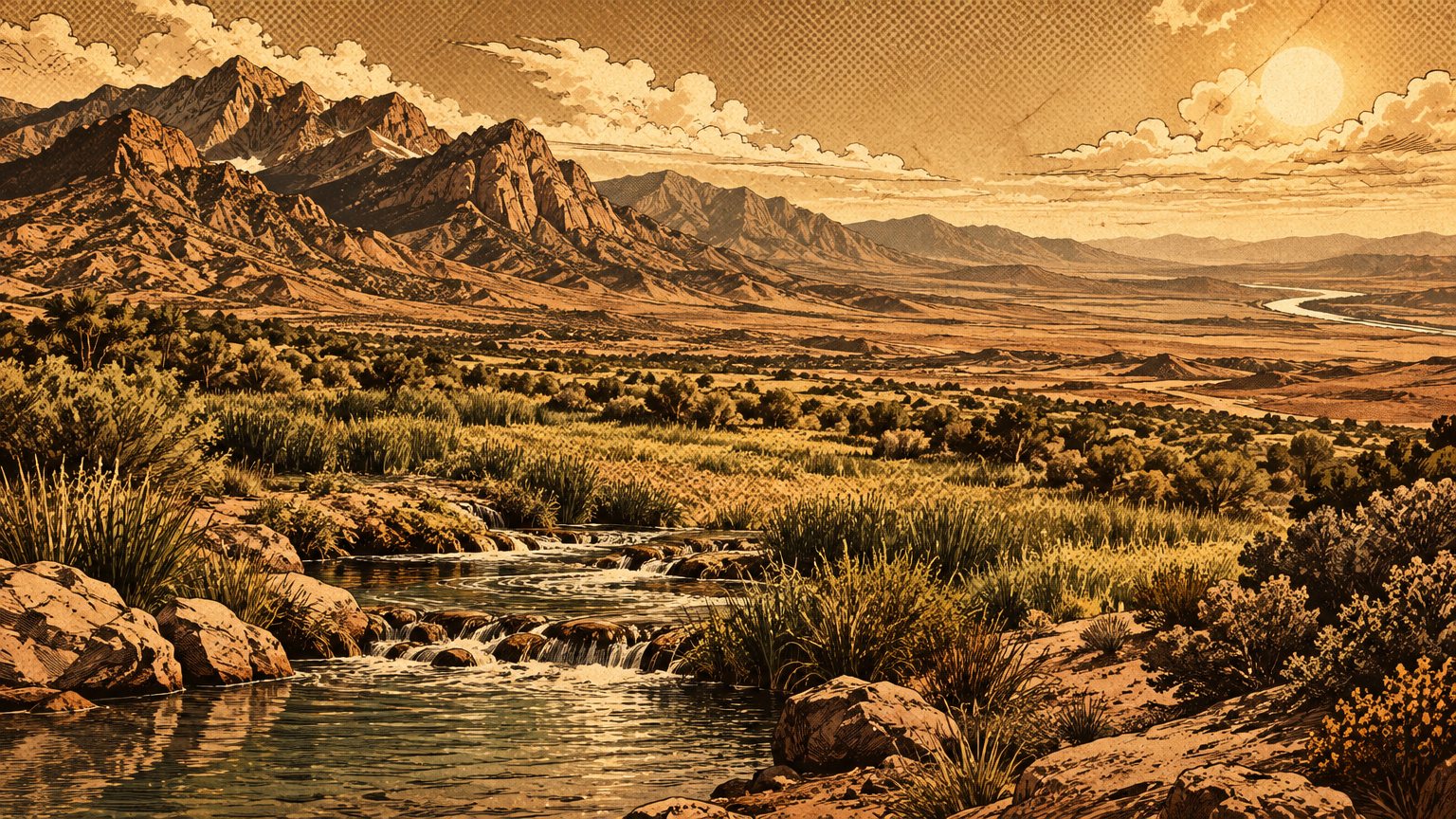
The fossil beds sit in the pale, eroded sediments of the Las Vegas Formation, exposed in the Upper Las Vegas Wash at the city's northern edge. During the late Pleistocene, the epoch most people call the Ice Age, groundwater rose here as springs, marshes, wet meadows, pools, and flowing streams. Animals came to that water for tens of thousands of years, and the ones that died near it were buried in spring mud and stream sediment, which is why their remains are here to find.
The assemblage is so rich and so distinctive that it carries its own scientific name: the Tule Springs local fauna, formally defined in a 2017 study by paleontologist Eric Scott of the San Bernardino County Museum and colleagues. It spans roughly 100,000 to 12,500 years ago, and scientists rank it among the most significant late Pleistocene vertebrate faunas in the American Southwest. It is also the largest open site assemblage of its kind known from the southern Great Basin and Mojave Desert, according to the researchers who documented its newest predator records.
The scale of the collecting tells the story. In the 2000s, a team led by U.S. Geological Survey geologist Kathleen Springer and Scott surveyed the wash systematically and recorded nearly 600 new fossil localities, collecting and curating more than 40,000 vertebrate fossils. Everything confirmed below comes out of that work, or out of the earlier digs it built on.
Which species are confirmed
Start with the giant at the top of the list. The Columbian mammoth dominates the Tule Springs record outright. Its remains turn up throughout the monument and outnumber every other animal in sheer count of fossils, making it the site's iconic species in the judgment of the Geological Survey researchers who know the fauna best.
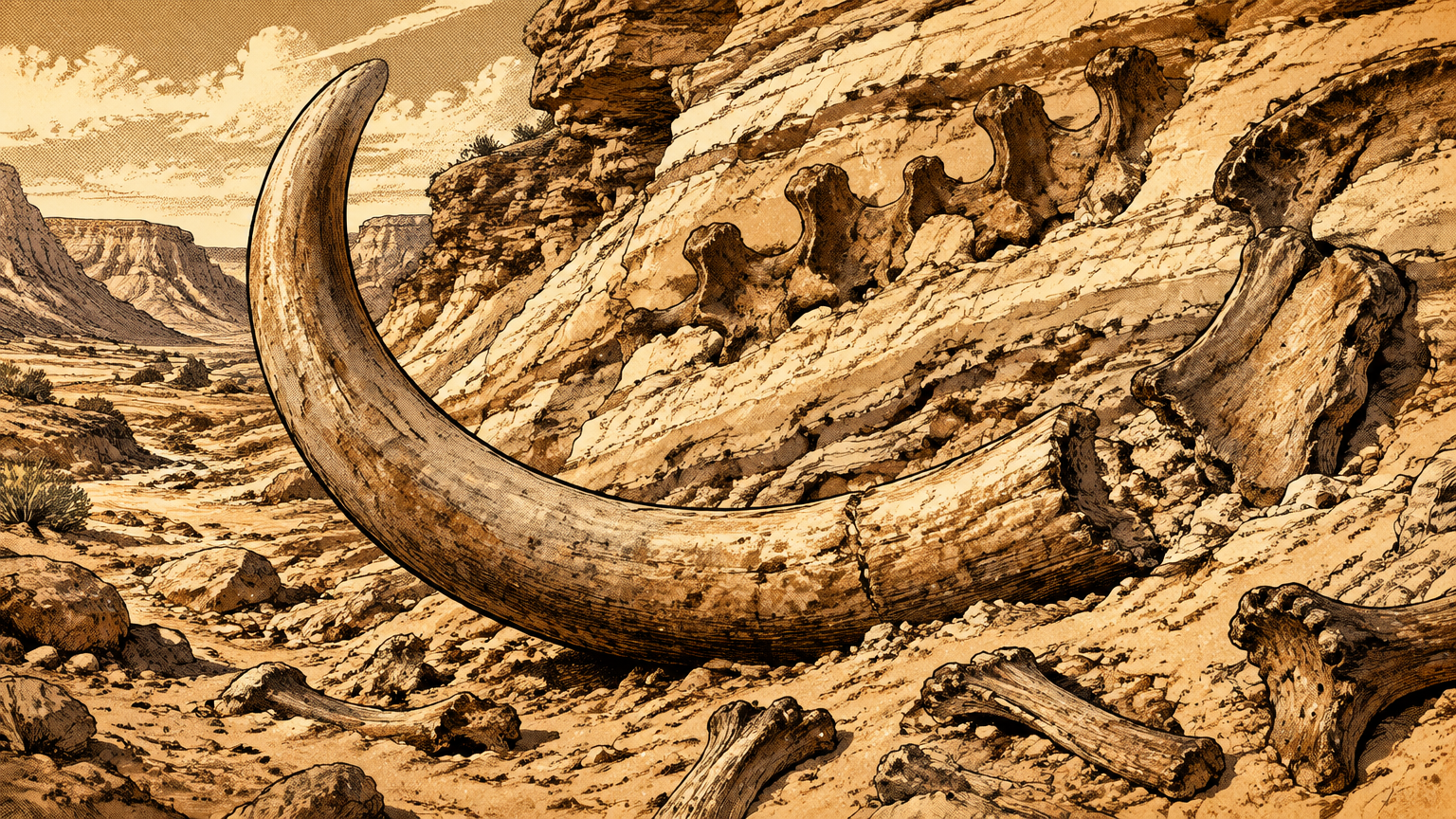
The Park Service notes that mammoth tusks from these beds run up to 12 feet long. At one locality nicknamed the Superquarry, excavators pulled out more than 500 vertebrate fossils, including a spectacular mammoth skull with jaws and several tusks.
Second in abundance, and second in almost nobody's imagination of Las Vegas, is a camel. Yesterday's camel, known to science as Camelops hesternus, was a large camel widespread across western North America in the late Pleistocene, and it is the second most common animal at Tule Springs.
Camels actually evolved in North America long before they reached the deserts of Asia and Africa, and the Tule Springs animals were among the last of the native line. Their bones are everywhere in the wash.
Two bison shared the valley. One is Bison antiquus, a large ancient bison, an ancestor of the modern animal.
The other is a long horned species that the scientific literature identifies, with an honest question mark in print, as Bison latifrons. That question mark matters, and it comes back later in this article.
Three horses lived here, distinct enough in size and leg structure to be told apart from their bones: a large stout legged horse, Equus scotti; a smaller stout legged horse not yet assigned a firm species name; and a small stilt legged horse, Haringtonhippus francisci, built for speed on long thin legs. Two ground sloths worked the vegetation: Jefferson's ground sloth, the larger of the pair, and the smaller Shasta ground sloth.
These were not the tree sloths of modern rain forests. They were ground dwelling giants, and the biggest of them stood in the size class of a small car.
Then come the predators, and the tone of the record changes. Rare fossils of the American lion, one of the largest cats ever to live, are confirmed from the beds.
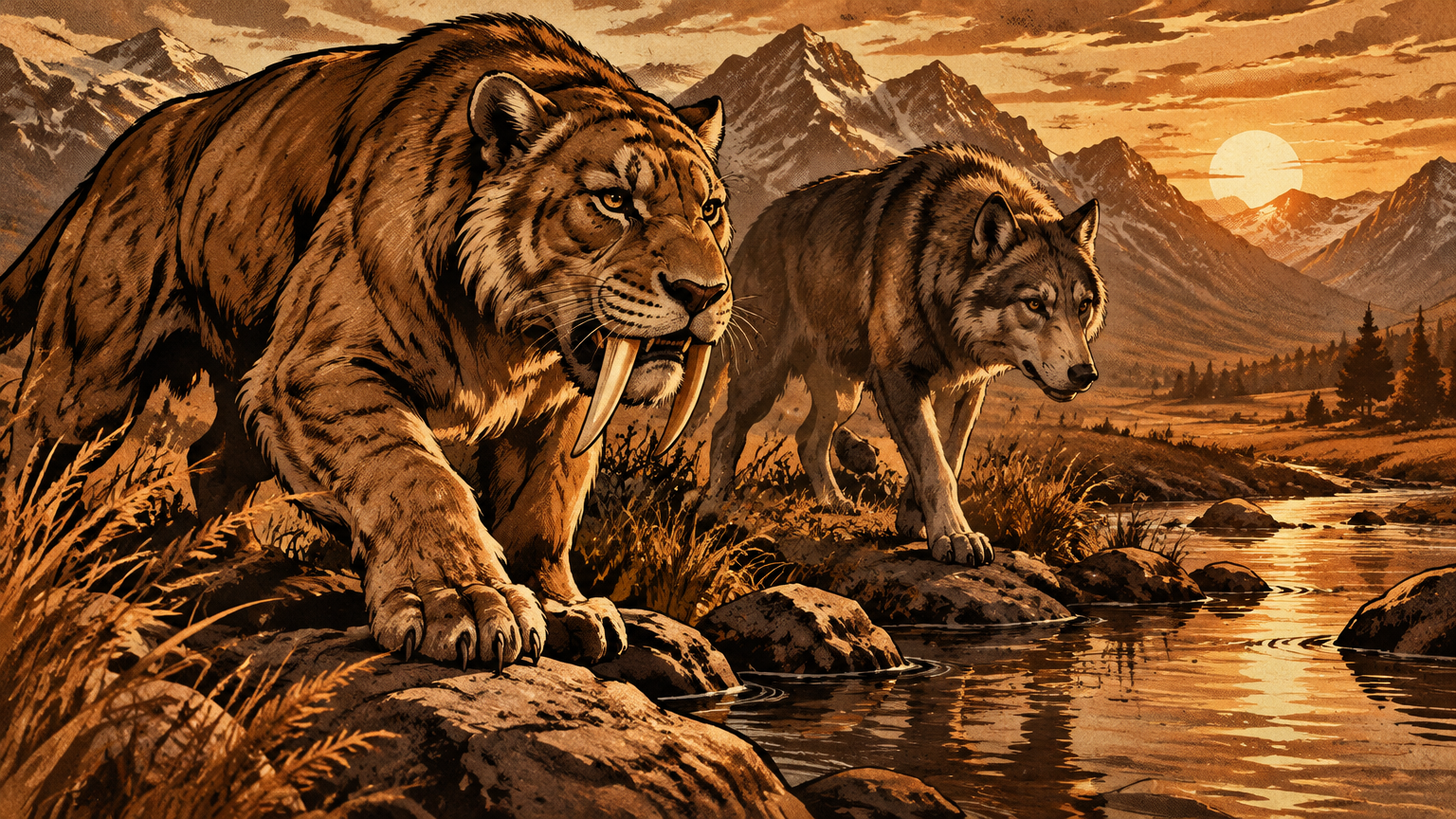
The dire wolf and the saber toothed cat are confirmed too, but only just, and only recently; their thin evidence gets its own section below. It is worth pausing on the irony: the saber toothed cat, the rarest kind of evidence at the site, is the animal on the monument's own logo, chosen, as the Geological Survey writers admit, because it is evocative.
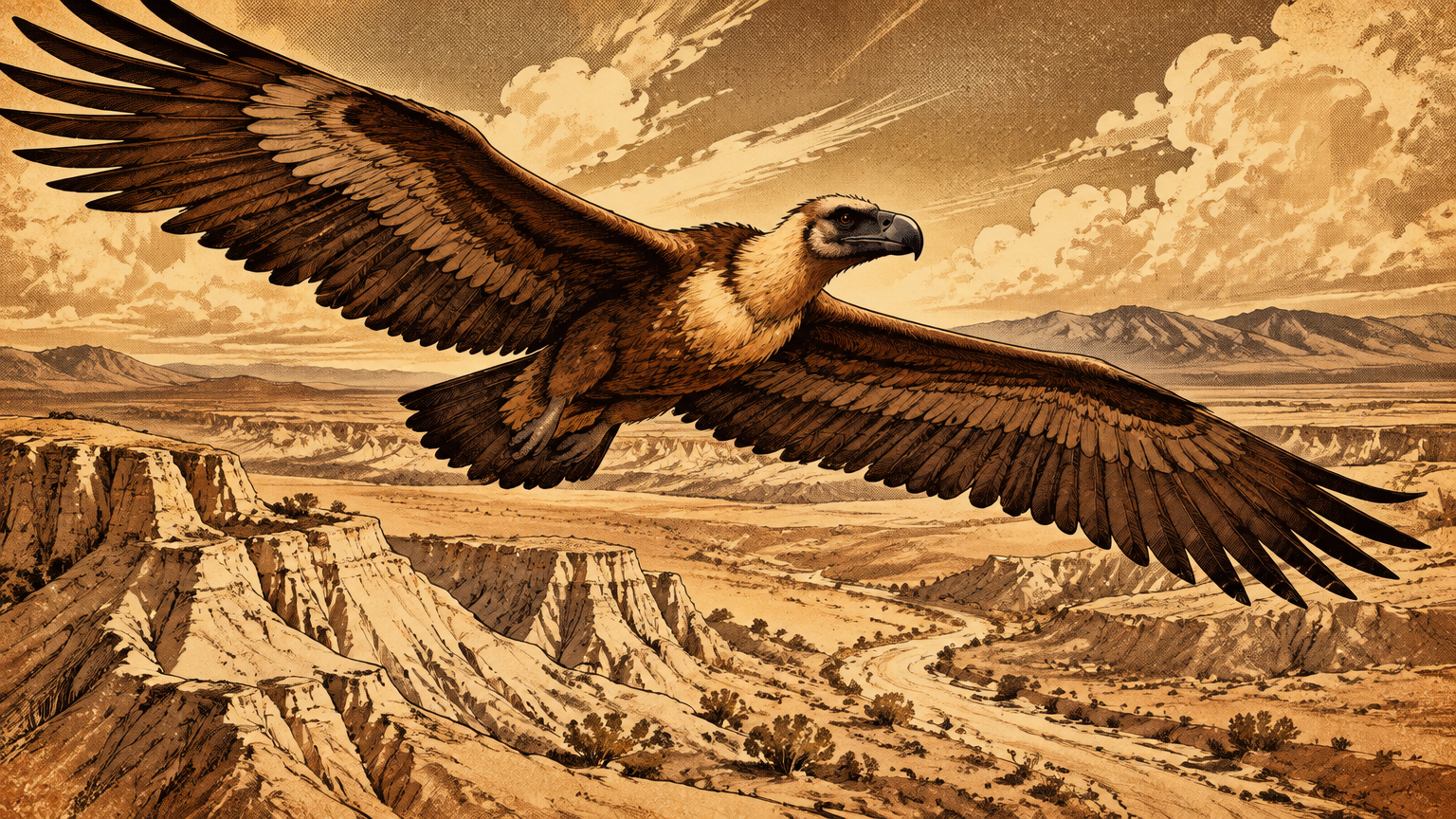
The sky had giants as well. The Park Service's interpreters picture a teratorn, an enormous extinct bird with a wingspan of about twelve feet, riding the air over the wash, and teratorn remains are part of the site's fossil record.
Below it, the small print of the fauna matters as much as the giants: frogs, lizards, snakes, birds, and rodents, plus aquatic and land snails, tiny clams, and ostracodes, microscopic shelled animals that live in water. The Park Service points out that the site's fossils run from wetland snails the size of a sesame seed to those 12 foot mammoth tusks.
Finally, the record holds animals that are not extinct at all, just gone from here. Fish, pronghorn, deer, and the yellow bellied marmot all appear in the Tule Springs fossil record; they no longer live at Tule Springs, but they survive elsewhere in North America. And some residents never left: coyote, mountain lion, jackrabbit, badger, birds of prey, small rodents, lizards, and snakes are found in the fossil record and live at Tule Springs today.
What the bones reveal
Deposits, dating and paleoenvironment
Bones alone are a list. Bones in dated layers are a history.
The Las Vegas Formation has been subdivided into 17 geologic units spanning more than 500,000 years, and vertebrate fossils are known from 13 of them. Because the layers stack in order, and because scientists can date them with radiocarbon on once living material and luminescence on buried sediment, each animal can be placed in time, not just in the ground.
The dates attached to single finds show how precise this gets. The saber toothed cat bones come from a spring discharge bed dated between about 16,100 and 15,000 years ago. The dire wolf bone comes from a slightly younger bed, dated between about 14,600 and 14,300 years ago, in deposits laid down by a spring fed outflow stream.
Charcoal from the Superquarry's stream channel dates to 14,590 years ago. These are not animals from one blurred ancient moment. They are successive tenants of a wetland that kept switching on and off.
The animal mix itself reads like an environmental report. Heavy grazers and browsers, mammoth, camel, bison, horses, sloths, require serious vegetation and dependable water. The tiny witnesses sharpen the picture: snails, clams, and ostracodes live in specific water conditions, and the Park Service notes that they give valuable clues to what the ancient wetlands were like.
Charred plant material from the dire wolf's own layer shows mesquite, conifer, and possibly juniper growing in the valley, and pollen evidence suggests vegetation zones sat nearly 1,000 meters lower than today, as if the mountain slopes had come down to meet the valley floor. The animals and the plants tell the same story from opposite ends.
Avoiding cinematic fiction
Here is where this article slows down on purpose, because the honest version is more interesting than the movie version. Nobody ever saw these animals alive. No one knows what a Tule Springs dawn sounded like, whether mammoths traveled in family herds here, or what a saber toothed cat hunted on any given night.
The bones do not say. Any scene like that, in print or on screen, is an invention laid over real evidence.
Consider the two most cinematic names on the confirmed list. The dire wolf's entire confirmed presence at Tule Springs rests on a single bone: a right patella, a kneecap. Paleontologists Eric Scott and Kathleen Springer established it in a 2016 study by measurement, showing the kneecap is far too large for a coyote and larger than a gray wolf's, and falls within the dire wolf's size range when checked against the great Rancho La Brea collections in Los Angeles.
One kneecap, carefully argued. That was enough for the first definitive record of the species in southern Nevada.
The saber toothed cat's claim is nearly as slender: three bones from one locality, part of an upper arm bone, part of a forearm bone, and part of a sacrum, published in the same 2016 study as the first definitive southern Nevada record of Smilodon fatalis. Before that study, neither predator appeared in the published fossil records of Tule Springs at all, despite a century of digging.
Both animals were really here. Both are known from less bone than a single mammoth leaves in one tusk.
Even the big names carry warning labels. The long horned bison appears in the scientific paper as Bison latifrons followed by a question mark, because the material supports the identification without proving it completely. And the whole roster comes with a standing caution: a fossil bed is not a census.
It records the animals that died near water and were buried under the right conditions, filtered by luck and chemistry. Mammoths dominate the count partly because mammoth bones are enormous, durable, and hard to miss. Scientists treat the fauna as a rich sample of the valley's animal life, not a complete head count, and the Park Service itself says the complete record is still growing.


Preserving deep time
Tule Springs Fossil Beds National Monument
On December 19, 2014, Congress established Tule Springs Fossil Beds National Monument, the 405th unit of the National Park Service, protecting 22,650 acres of the Las Vegas Formation in the Upper Las Vegas Wash. It did not happen by accident.
Starting in 2006, North Las Vegas residents who learned what lay under the last open stretch of the wash organized as the Protectors of Tule Springs and pushed until the protection became law. A senior Park Service paleontologist, Vince Santucci, marked the designation by noting that the Park System finally had a unit dedicated specifically to Ice Age paleontology.
Protection here has teeth. The fossils are protected under federal law, and they may only be dug or collected under an approved Park Service scientific research and collection permit.
The Park Service's instruction to everyone else is simple: leave fossils where you find them, take a photograph, and tell park staff, because a bone ripped out of its layer loses most of the information that made it valuable. Many of the fossils collected under permit over the years are now on display at the visitor center of the neighboring Ice Age Fossils State Park, which is where most people meet this fauna face to face.
Why fossils still shape scientific debates
The Tule Springs fauna is not a closed book; it is an active argument. Because the Las Vegas Formation is dated so tightly, the Geological Survey describes this fauna as one of the best documented late Pleistocene faunal sequences anywhere in North America, a place where scientists can track animal communities changing through time, layer by layer, right up to the extinction that ended them. The wetting and drying cycles in the deposits line up with abrupt warming events recorded in Greenland ice cores, so the valley's animals become instruments for reading how fast desert ecosystems answer a swinging climate.
The biggest argument is the ending. More than 30 kinds of large mammals went extinct across North America near the close of the Pleistocene, roughly 12,000 to 10,000 years ago. At Tule Springs, the large mammals disappear from the record about 12,500 years ago, as the climate warmed and the wetlands dried.
The Park Service states the state of the question plainly: the cause is still under investigation, and the most strongly supported explanations are a changing climate, hunting by early peoples, or a combination of the two. The Tule Springs layers document the disappearance in unusual detail. They do not, by themselves, settle who or what did it.
And the roster itself is unfinished. A fauna dug for a century still yielded two brand new confirmed predators in 2016, from single bones that earlier generations either missed or could not prove.
If the kneecap of a dire wolf can wait a hundred years to be recognized, there is no telling what else is sitting in a museum drawer or still sleeping in the wash. That is the real reason the monument exists: not to freeze a finished story in place, but to keep the evidence safe while the argument continues.
The neon came later. Long before it, this valley belonged to mammoths and camels, to kneecap thin evidence and twelve foot tusks, and the record of their world is still lying in the open, in a wash at the edge of a city that never stops building over its own past.
Next in Vegas, Back Then: The First People of the Las Vegas Valley: What Archaeology Can Tell Us.