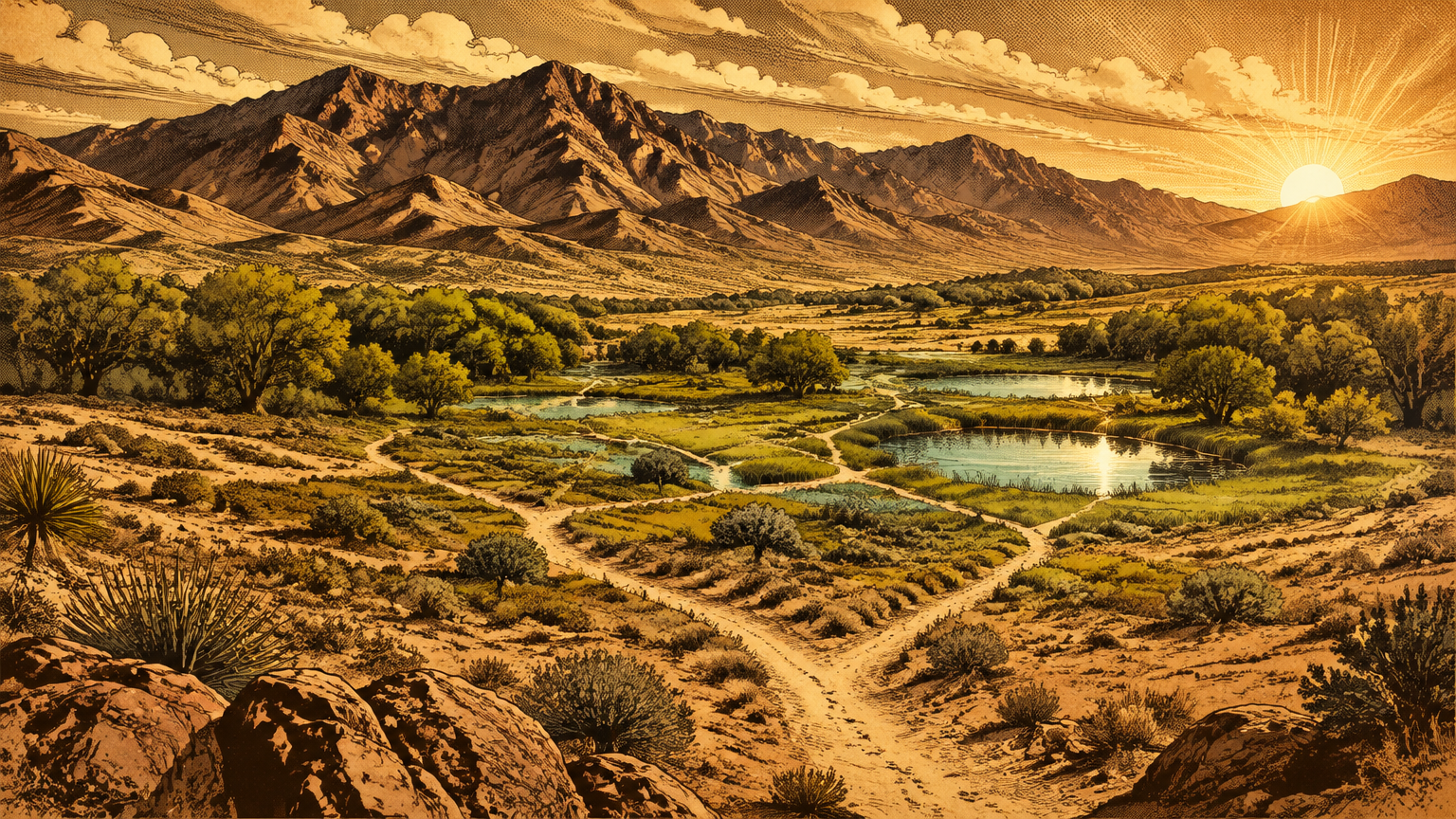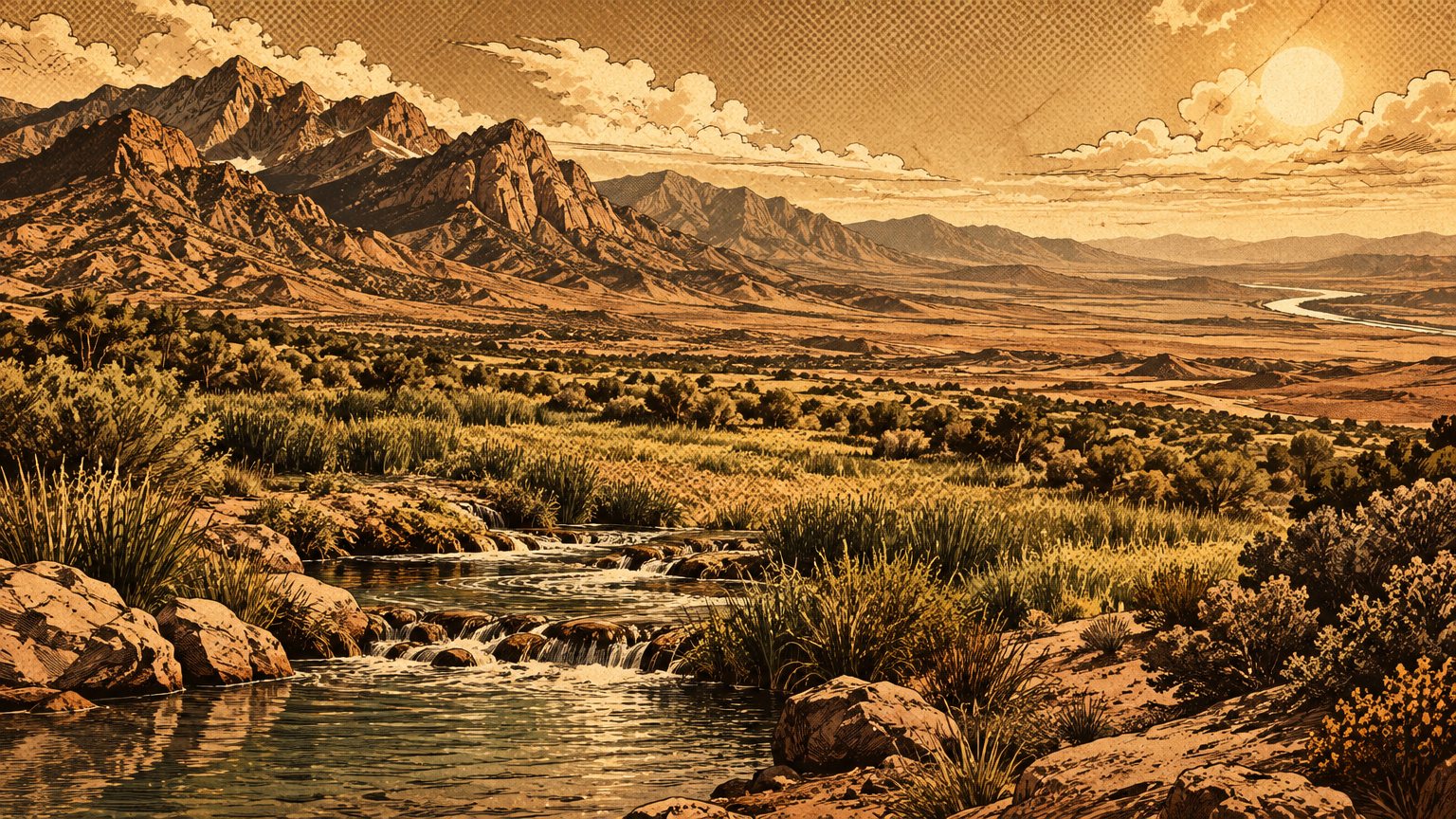
Chapter 002 of Vegas, Back Then begins where Chapter 001 ended: at the water.
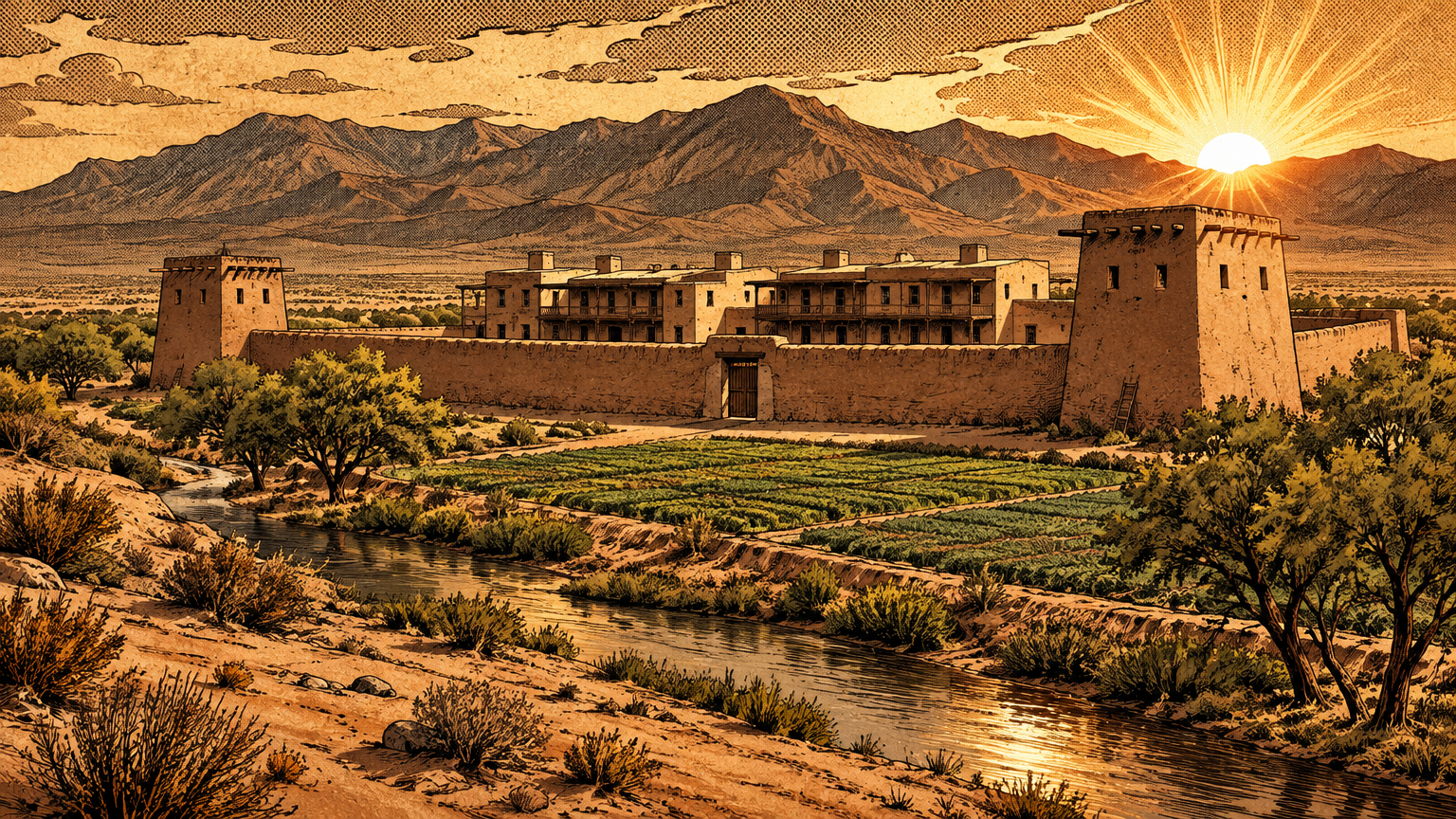
In June of 1855, thirty men rode down out of Utah and into this valley with orders to build something permanent beside the springs and the creek they fed. What they raised was an adobe fort, and what they planted was the first permanent settlement in the history of Las Vegas.
It failed.
The mission lasted less than two years. The crops disappointed, the leaders feuded, and the church that sent them called them home. But the walls they built did not fall down, and a piece of that fort is still standing today, the oldest building story in this city.
Las Vegas would one day become famous for gambling. Its first settlement was a gamble too, and it lost.
Why the missionaries came
The Las Vegas Mission was never just about Las Vegas. It was one move in a much bigger plan.
William Bringhurst and Mormon Road strategy
Brigham Young, the leader of the Church of Jesus Christ of Latter-day Saints in Salt Lake City, was building a corridor of settlements across the desert West. The Mormon Road ran from Utah down to the Pacific, ending at the mission settlement of San Bernardino, founded in 1851 in Southern California. Between the Mormon towns of southern Utah and San Bernardino sat one of the hardest stretches of road in the West, and at the middle of it sat the green meadows of Las Vegas.
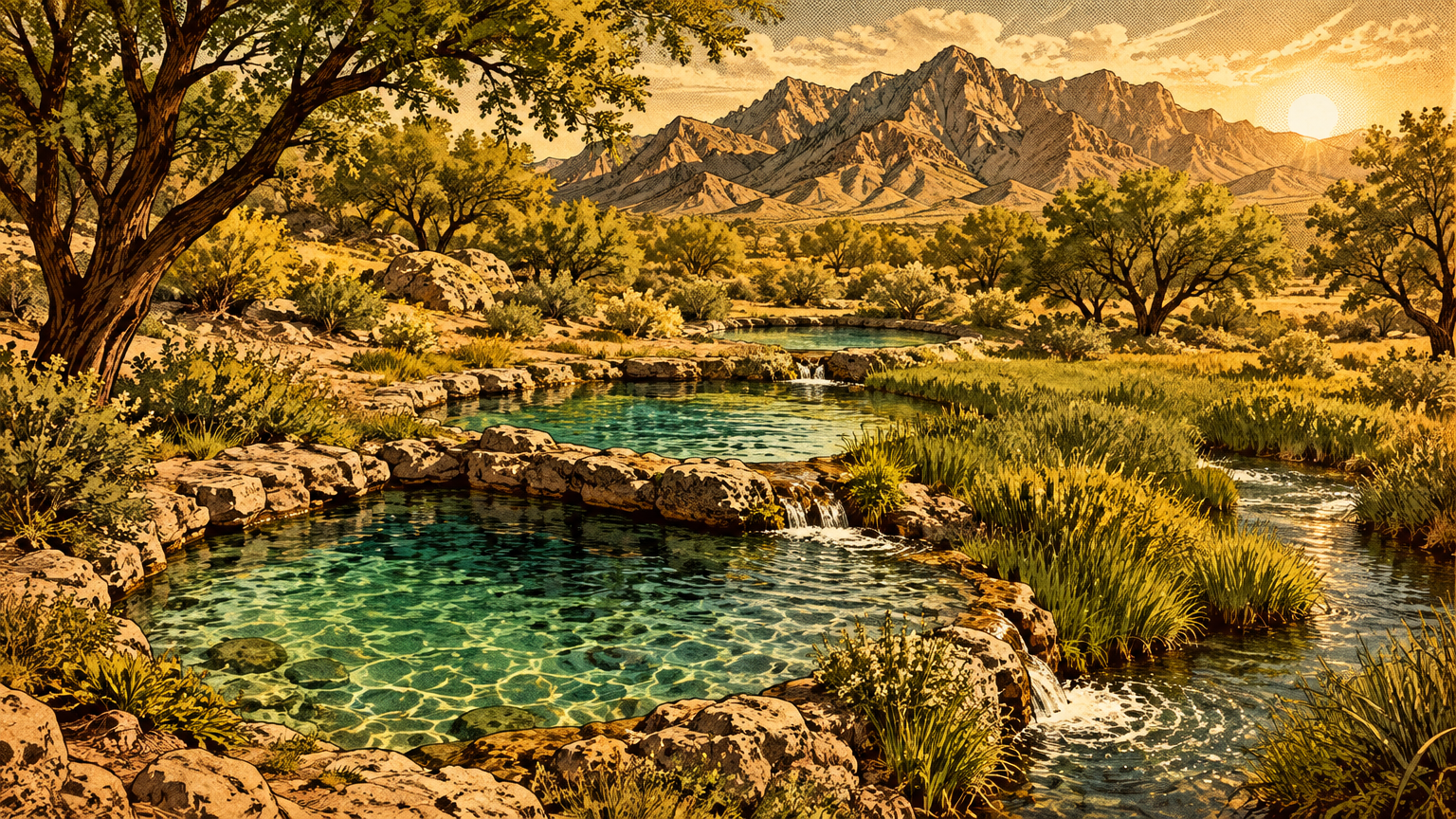
Geography made the decision. The springs and Las Vegas Creek offered the only reliable water on a 55 mile waterless stretch of that road. A settlement at the meadows could water the animals, feed the travelers, guard the route, and anchor the corridor exactly where the corridor was weakest.
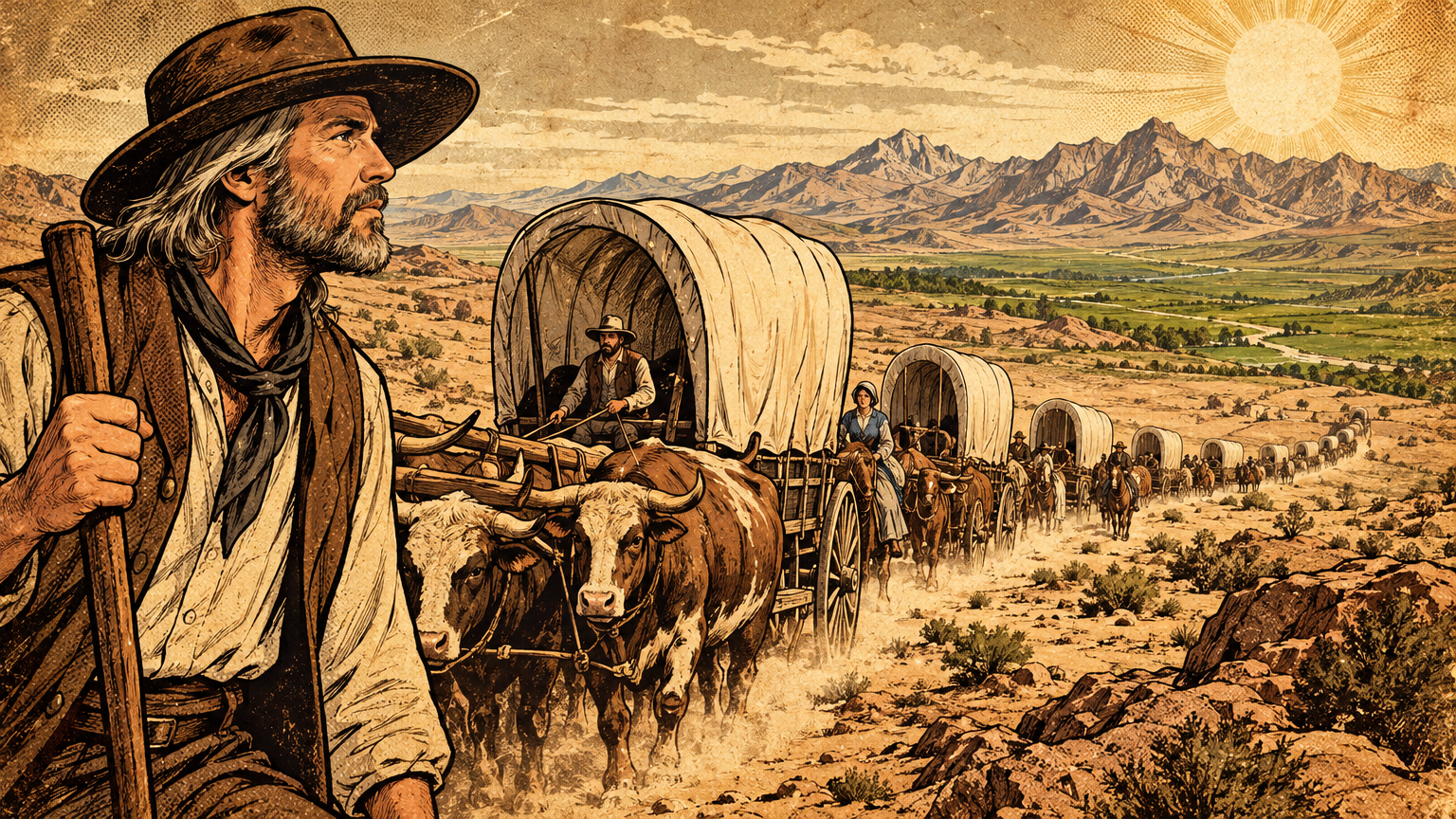
So in the spring of 1855, Young selected thirty men and sent them south. They left Salt Lake City on April 10, told to survive on what they could raise.
Their president, the man in charge of the whole experiment, was William Bringhurst. The orders he carried were stacked high: build a fort and a settlement, run a halfway station for travelers, trade along the trail, raise crops that would not grow in the colder Utah climate, open a post office, explore the country, and teach farming and the Mormon faith to the Southern Paiute people whose homeland this was.
The journey took thirty days. The last 55 miles crossed desert with no water at all. On June 14, 1855, Bringhurst and most of his party reached the valley, and the first permanent settlement in what would become southern Nevada began.
The water source and chosen location
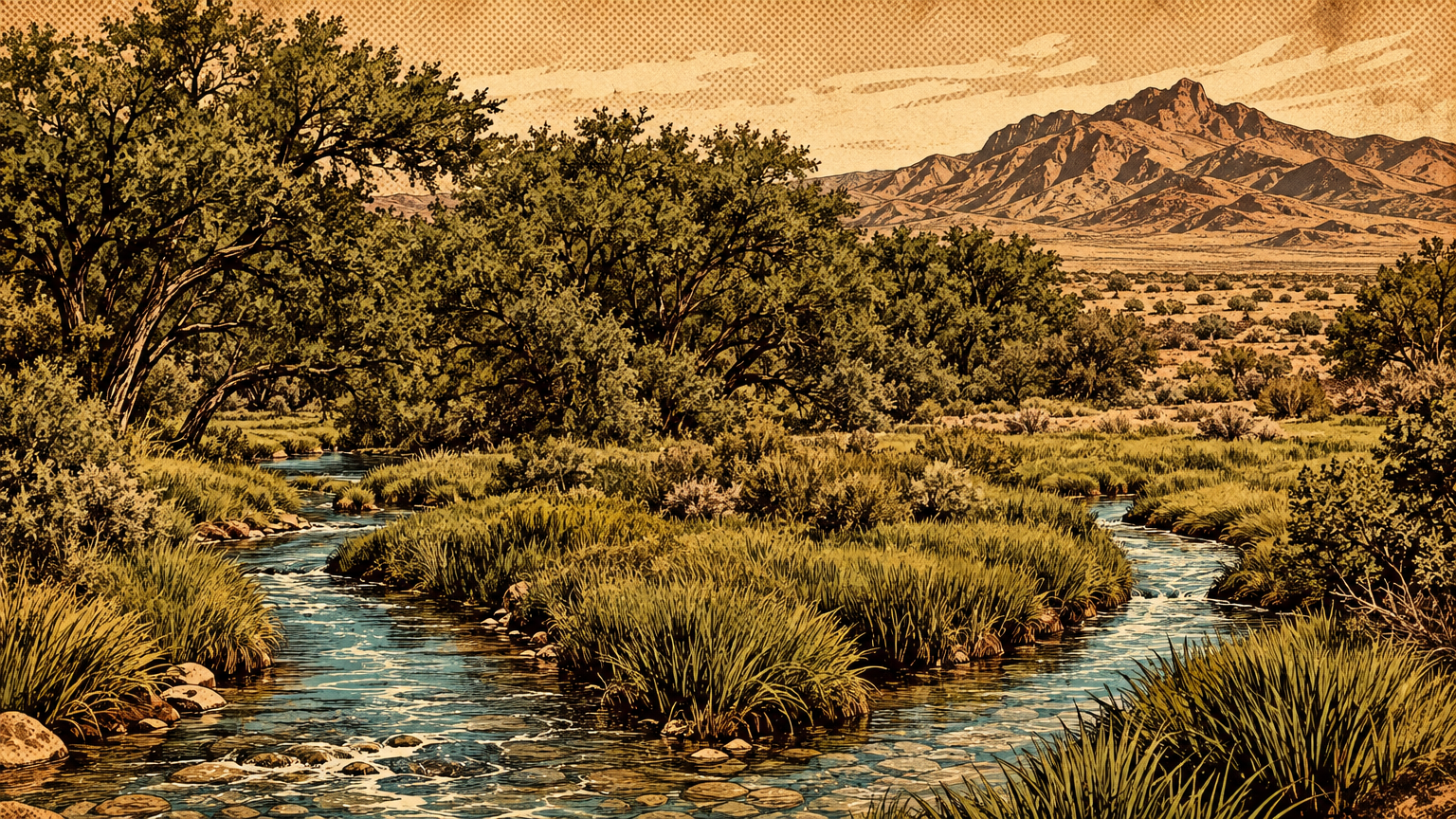
The missionaries did not build at the great springs themselves. They chose a spot about four miles east of them, on Las Vegas Creek, where the creek dropped over a bluff about twelve feet high. Falling water meant power, enough to run the small mill the settlers built there.
The land was divided with a surveyor's hope. Each man received two and a half acres, plus a quarter acre for a garden.
On paper, it was a farm town. In person, it was a desert valley floor in June.
One fact framed everything that followed, and Chapter 001 told it plainly: this ground was not empty. The meadows and the creek were the winter homeland of the Southern Paiute, the Nuwuvi, who had lived, farmed, and raised families around these waters for generations.
The mission was not planted in a wilderness. It was planted inside somebody else's home.
A hard experiment in settlement
Three weeks after they arrived, the settlers celebrated Independence Day at the site. Missionary John Steele, whose journal and hand drawn map survive as some of the best records of the mission, wrote that the flag over their liberty pole "floated majestically to the breeze." Then everybody went back to work, because the work was enormous.
Adobe fort, crops and trade
They started with salvage. A small structure stood in the valley from 1852, built by Mormon mail contractor George Chorpenning, and the settlers took it apart and reused its materials.
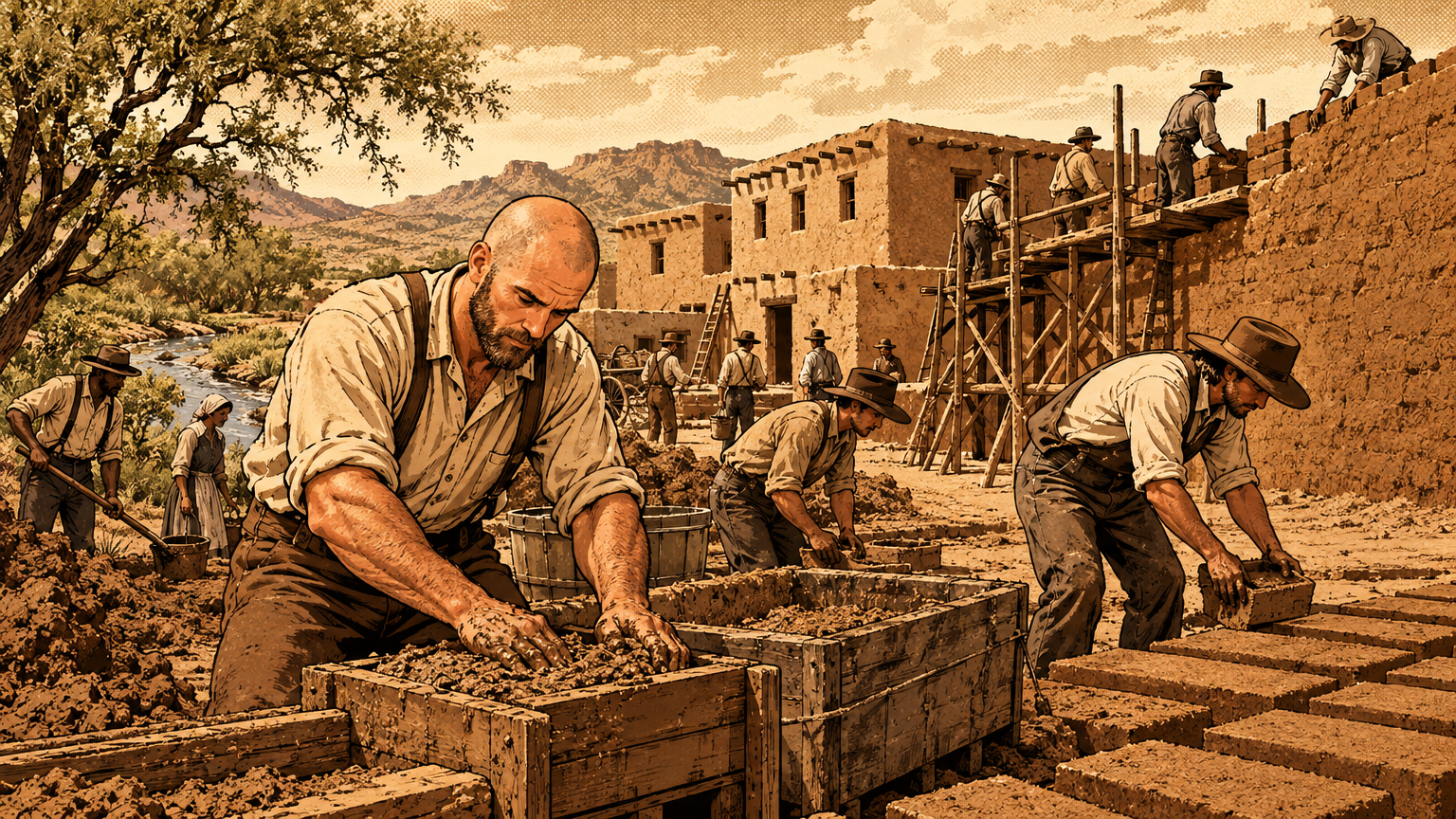
Then they made adobe, thousands of mud bricks dried in the sun, and raised a fort: an enclosure 150 feet square, its walls two feet thick through the lower eight feet, with defensive bastions at the southeast and northwest corners and a row of two story buildings inside. North of the walls they built a corral 150 feet long and 132 feet wide.
Local Paiute people helped build it. Nevada State Parks records that the settlers began construction "with the assistance of the local Paiute population," which is worth pausing on: the valley's first permanent building went up with the valley's first people working on it.
Then came the farming. The settlers cleared mesquite, dug irrigation ditches, and diverted creek water onto laid out fields. They planted corn, melons, and oats, and set out fruit and shade trees.
They did much of this labor in heavy woolen clothing, on days that could reach 110 degrees. The results were mixed from the start. Peas and beans did poorly, and when the first winter arrived, a severe frost ruined the crops.
Still, for a while, the station worked the way the plan said it should. Travelers on the Mormon Road found water, food, and shelter at the halfway point. In January of 1856 the fort opened a post office, the Bringhurst Post Office, and mail began arriving monthly from Salt Lake City.
That February, reinforcements came, and this time families came with them: 23 men, 14 women, and 15 children. The settlement built a school and chose two teachers. In August of 1856, the first baby was born at the fort, a girl named Zilpha Fuller, delivered in a wagon box.
Relations with Southern Paiute people
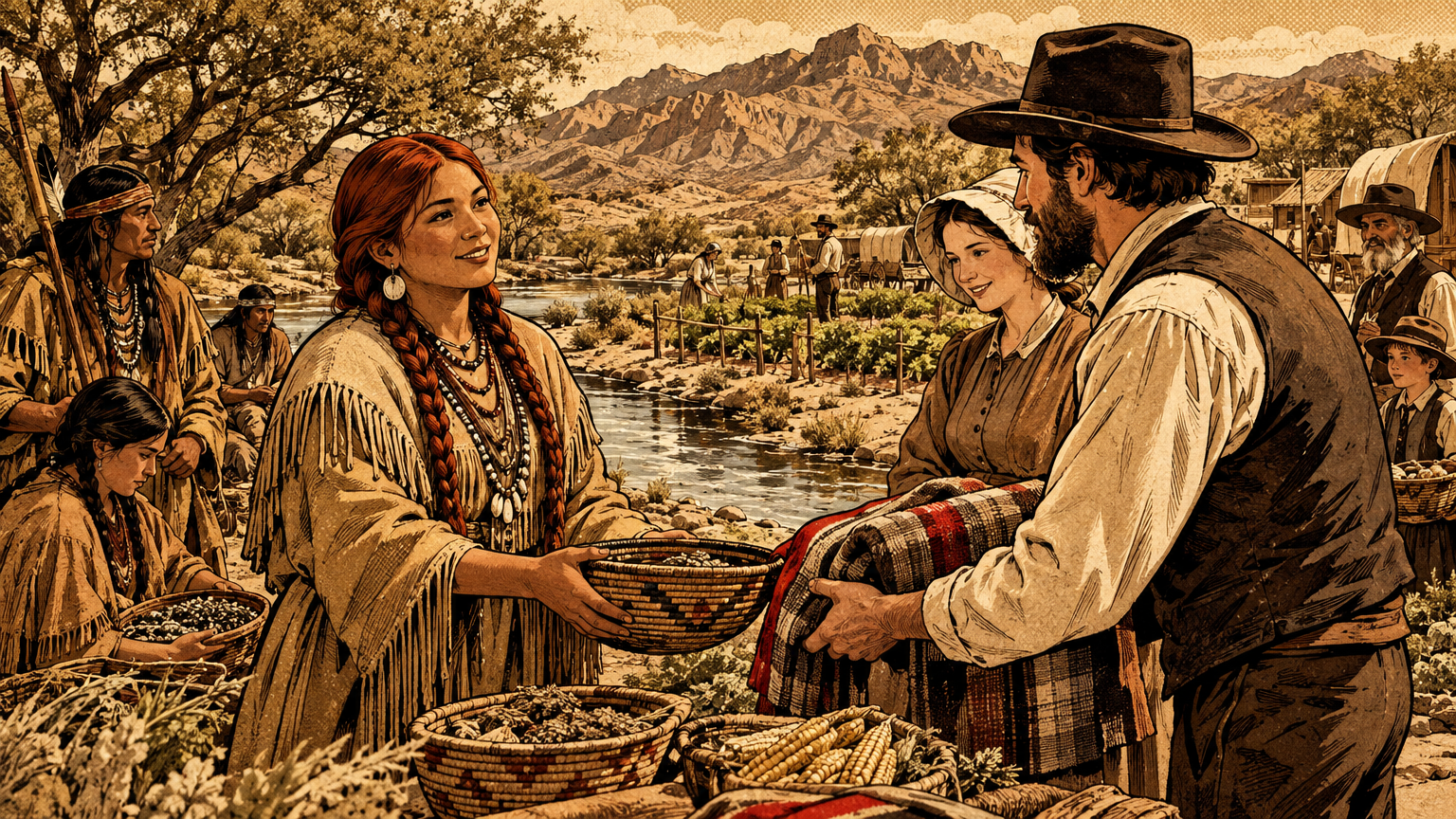
Working with the Southern Paiute was not a side note to this mission. It was part of the assignment. The settlers were charged with teaching the Paiute new farming techniques and bringing them into the Mormon faith, and relations began in a genuinely friendly way, with Paiute help on the fort itself.
The strain, when it came, grew out of something basic: two peoples with different understandings of property, sharing one small green valley. The National Park Service's account of the fort names it directly, "continued misunderstandings between the Mormons and the Paiutes regarding individual and group property rights." A fenced, surveyed, individually owned farm was the Mormon way.
Land and water held and used in common, by custom and season, was the Paiute way. One creek had to serve both.
As the settlement grew, fields, fences, and livestock pressed harder against Paiute land and Paiute water, and the welcome wore thinner on both sides. By the mission's last winter, the Park Service records "uneasy feelings" between the settlers and the Paiute as one of the weights pulling the mission down.
The Southern Paiute are not a vanished backdrop to this story. The Las Vegas Paiute Tribe remains a sovereign nation in this valley today, its citizens descended from the families who knew the springs when the springs were the whole world.


Why they left
No single thing killed the Las Vegas Mission. It was pulled apart by several at once, and they fed each other.
Conflicts, resources and competing orders
Start with the man in charge. Bringhurst led hard. The Park Service describes fiery preaching meant to improve morale, and punishments handed out for minor offenses.
Discontent spread through a company of men working brutal hours in desert heat, far from their families. On November 8, 1855, less than five months in, eleven of the missionaries secured permission to go home to Utah.
Then lead changed the mission's orders. On April 19, 1856, a Southern Paiute man showed the settlers lead ore in the mountains southwest of the fort.
Lead meant bullets, and Brigham Young, who worried about hunting needs and a possible invasion, wanted it mined. He sent Nathaniel Jones to open a mine at Potosi Mountain, about 35 miles southwest of the fort, and ordered the mission to grow cotton besides.
Now two missions shared one small settlement, farming and mining, and two strong leaders answered for them. Jones and Bringhurst quarreled bitterly over who held authority. Letters rode back and forth to Salt Lake City.
On August 19, 1856, Young's answer reconfirmed Jones over the mining mission and ordered Bringhurst to aid him. In December, Jones returned with a letter that went further: it upheld Jones and released Bringhurst from the mission entirely. Bringhurst left.
The mine failed on its own terms. The Potosi ore was poor, and Springs Preserve records the practical verdict: the lead held so much zinc that it did not make good bullets. The venture did not pay.
Add it up: failed and frost bitten crops, poor crop land, short supplies, two feuding chains of command, uneasy relations with the Paiute, and a settlement losing its people and its president. On February 23, 1857, the letter the remaining settlers had been hoping for arrived from Brigham Young. They were free to close the mission and come home.
The exodus began on March 23, 1857, and by the middle of that year the fort was nearly deserted. The wider world pushed in the same direction: that summer, as a federal army marched toward Utah in the confrontation remembered as the Utah War, Young called his followers in from the outposts.
One small party, led by Amasa Lyman, came back in 1858 to work the mines once more. On September 26, 1858, that party met, voted to disband, and went home. The mission was over, three years and a few months after it began.
The structure that survived
Here is the part nobody in 1857 could have predicted: the failure outlasted almost everything else in early Las Vegas.
The fort did not sit empty for long. In 1861 it served as a store for travelers, and in 1865 Octavius Decatur Gass took over the site and made it the heart of his Las Vegas Rancho, the ranch era Chapter 001 visited.
The adobe rooms sheltered travelers, then ranch families, then, decades later, workers testing concrete for Hoover Dam. The building kept finding work.
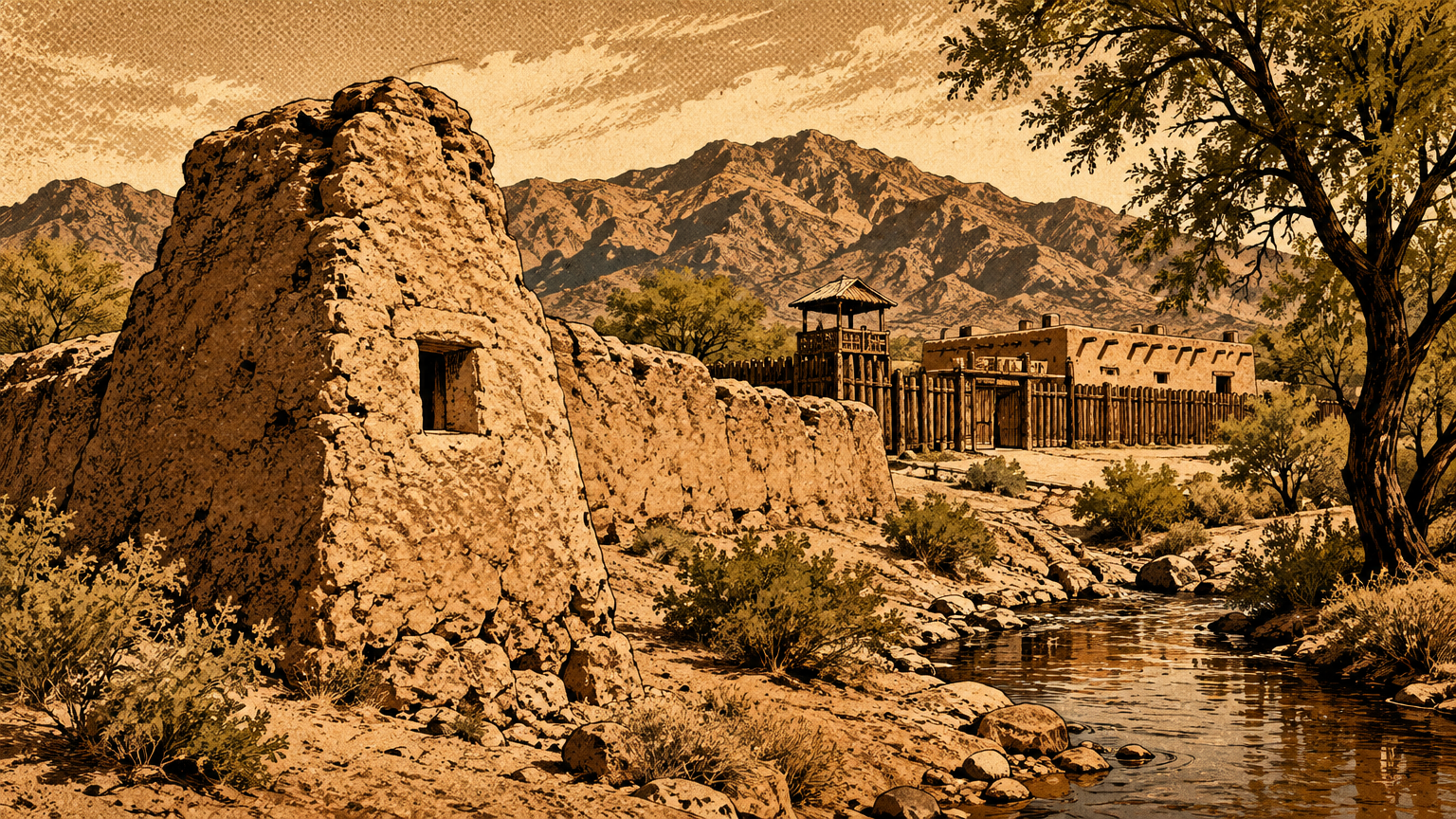
And a true piece of the original still stands. Part of the fort's original eastern wall and its southeast bastion survive today, preserved inside Old Las Vegas Mormon Fort State Historic Park. Nevada State Parks took over the site in 1991 and added a partial reconstruction of the fort, a visitor center, and a re-creation of Las Vegas Creek, so visitors can walk the ground where the mission stood.
You can go stand in it: 500 East Washington Avenue, just north of downtown, a short walk from the neon that eventually replaced everything the missionaries imagined. The first gamble in Las Vegas lost. The walls stayed.
The Story in Dates
- April 10, 1855: Thirty men leave Salt Lake City for the Las Vegas Mission.
- June 14, 1855: William Bringhurst and most of the party reach the valley.
- November 8, 1855: Eleven missionaries are released to return to Utah.
- January 1856: The Bringhurst Post Office opens at the fort.
- February 24, 1856: Families arrive; new orders add cotton growing and lead mining.
- April 19, 1856: A Southern Paiute man shows the settlers lead ore; the Potosi mine follows.
- August 1856: Zilpha Fuller is born at the fort, its first baby.
- December 1856: Brigham Young releases Bringhurst; Nathaniel Jones holds the mining mission.
- February 23, 1857: Young releases the settlers to close the mission.
- March 23, 1857: The exodus from the fort begins.
- September 26, 1858: The last party votes to disband; the fort is left behind.
- 1865: The old fort becomes the heart of the Las Vegas Rancho.
- 1991: Nevada State Parks takes over the site and protects what remains.
Next on Vegas, Back Then
The missionaries left behind adobe walls, irrigation ditches, and one unanswered question: could anybody make this valley pay?
A rancher named Octavius Gass thought so, and he bet everything he had on the same water the mission had farmed. What happened to his ranch, and to the remarkable woman who inherited his gamble and held this valley together for twenty years, is another story waiting in these pages.
Keep reading Vegas, Back Then, only on Extra Super! BIG®.