Discover more Las Vegas stories
6 published stories tagged “Old Spanish Trail”.
Rafael Rivera scouted for Armijo's sixty-man caravan in January 1830 and tied the Las Vegas Springs into the Old Spanish Trail. The documented record, the Park Service's careful probably, and why first discovery is the wrong word for a Southern Paiute homeland.
In November 1829 Antonio Armijo led sixty men and one hundred pack mules from Abiquiu toward Los Angeles with wool blankets, opening the first commercial caravan route between New Mexico and California and tying the Las Vegas Springs into the Old Spanish Trail.
Las Vegas was never an empty desert waiting for a founder. It was a Southern Paiute homeland of springs, meadows, gardens and trade trails, and the vacant land story was built later by railroad townsites, boosters and cropped photographs.
Ocean shells in a desert spring, turquoise out of the Mojave, Puebloan pottery 70 kilometers from home, and beads traded for rabbit nets. Las Vegas was never isolated. It sat inside a trade network that tied the Pacific to the Pueblo world.
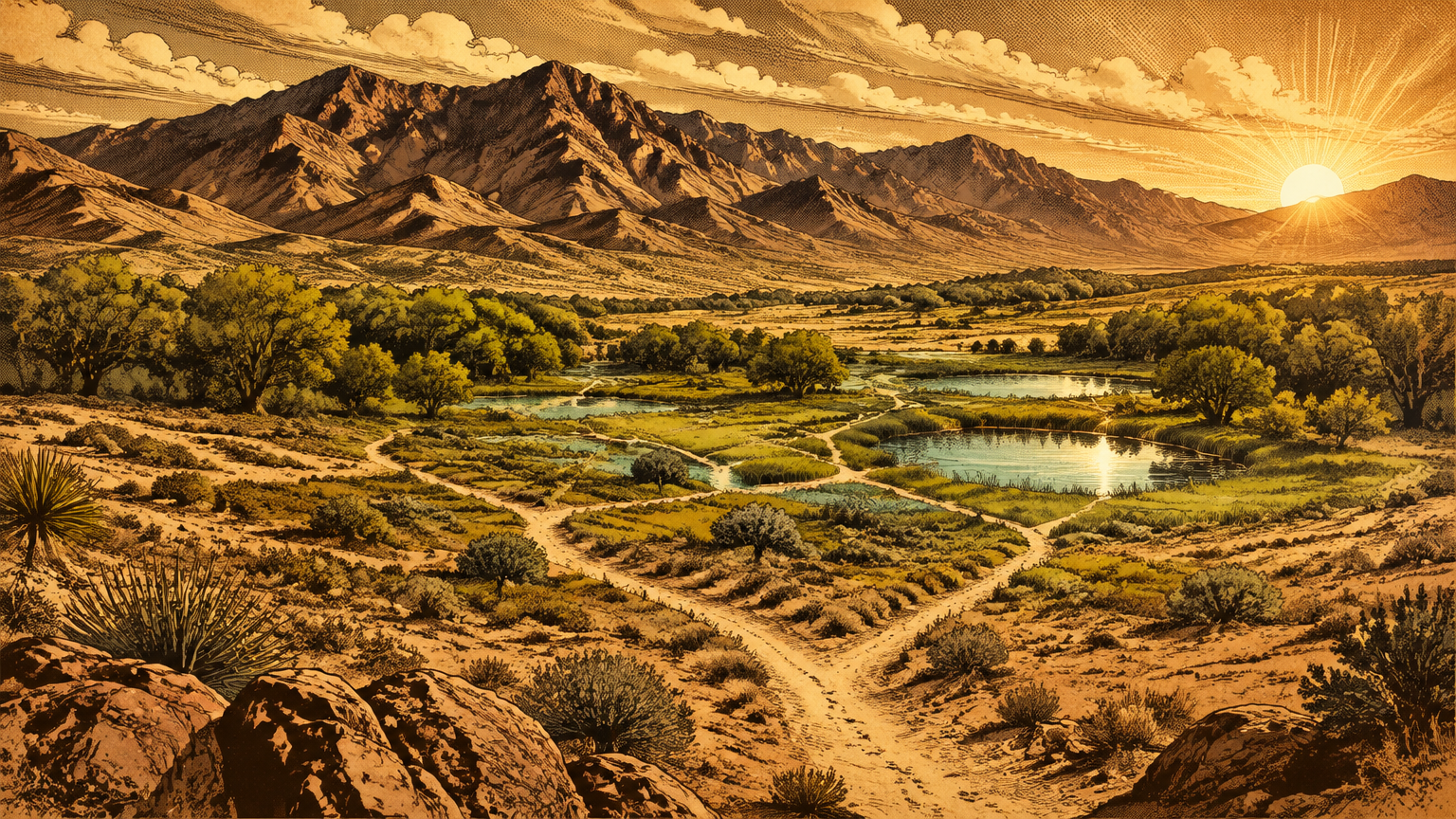
Before the highways, the valley was already a junction. Its first routes ran spring to spring on foot, and the honest map of them is certain at the water, probable across the desert, and gone under the city.
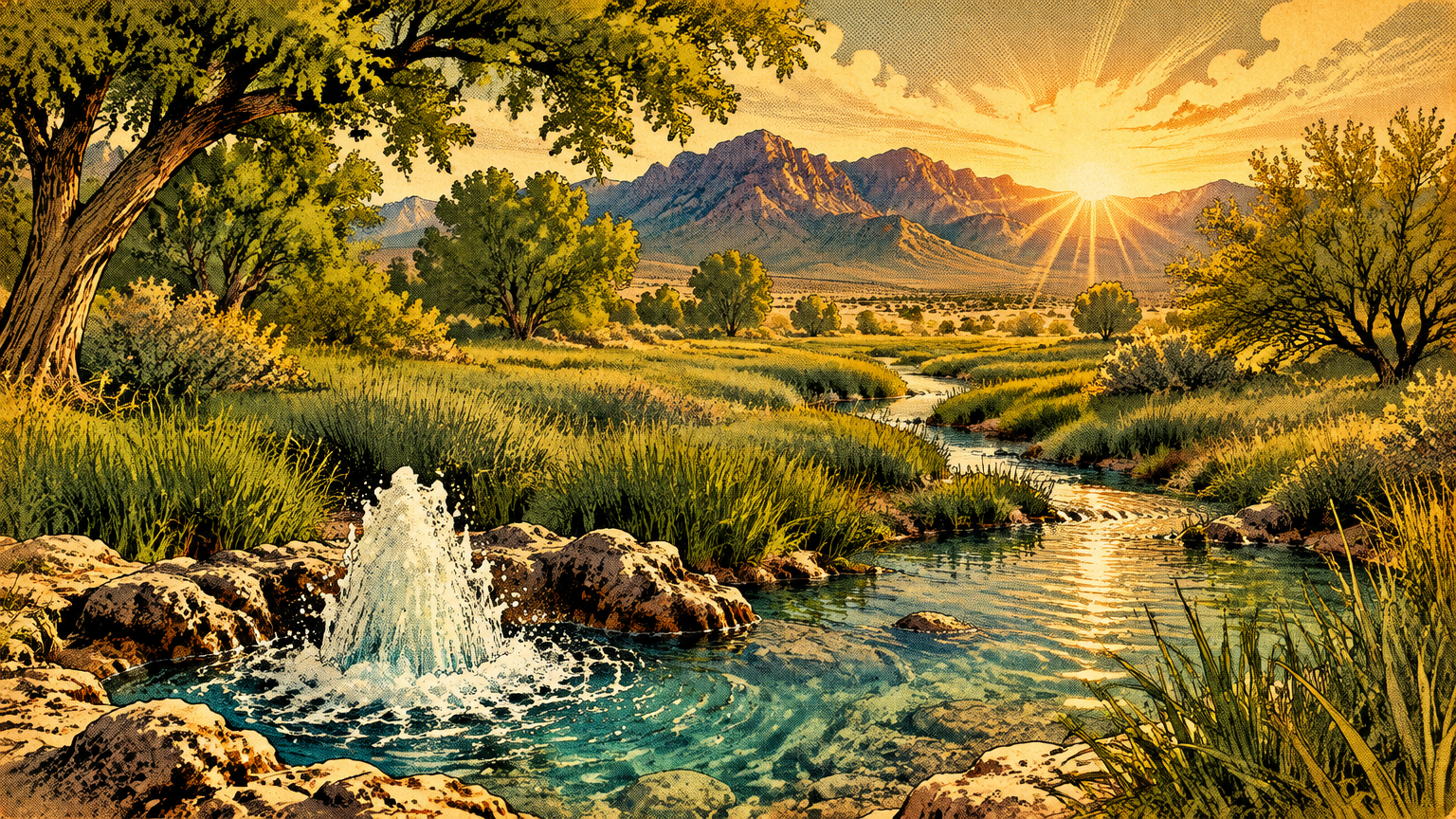
Before the casinos, before the Strip, before Las Vegas was even a city, natural springs transformed a patch of Mojave Desert into a place people couldn't afford to ignore. This is where the story of Las Vegas begins.