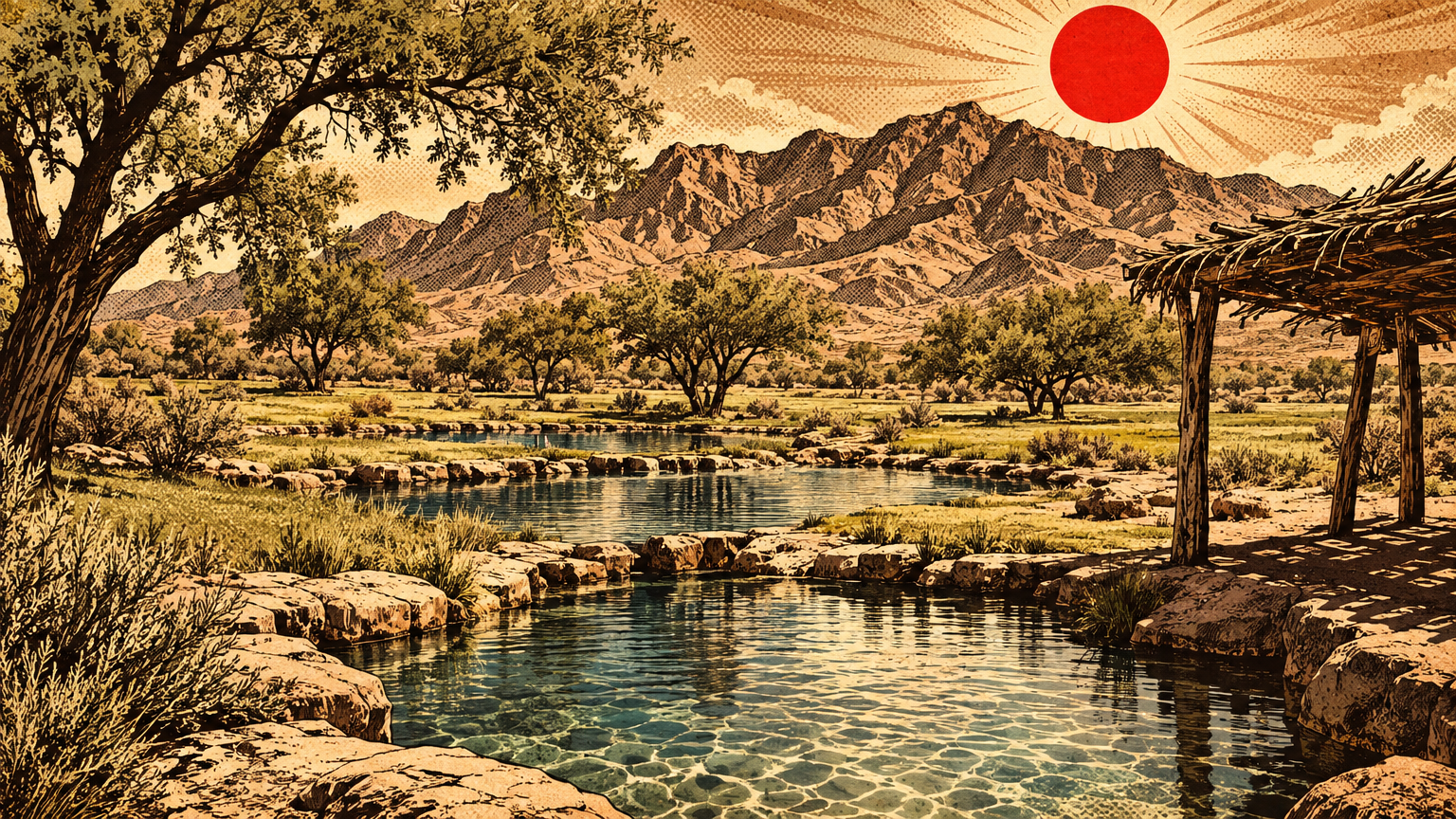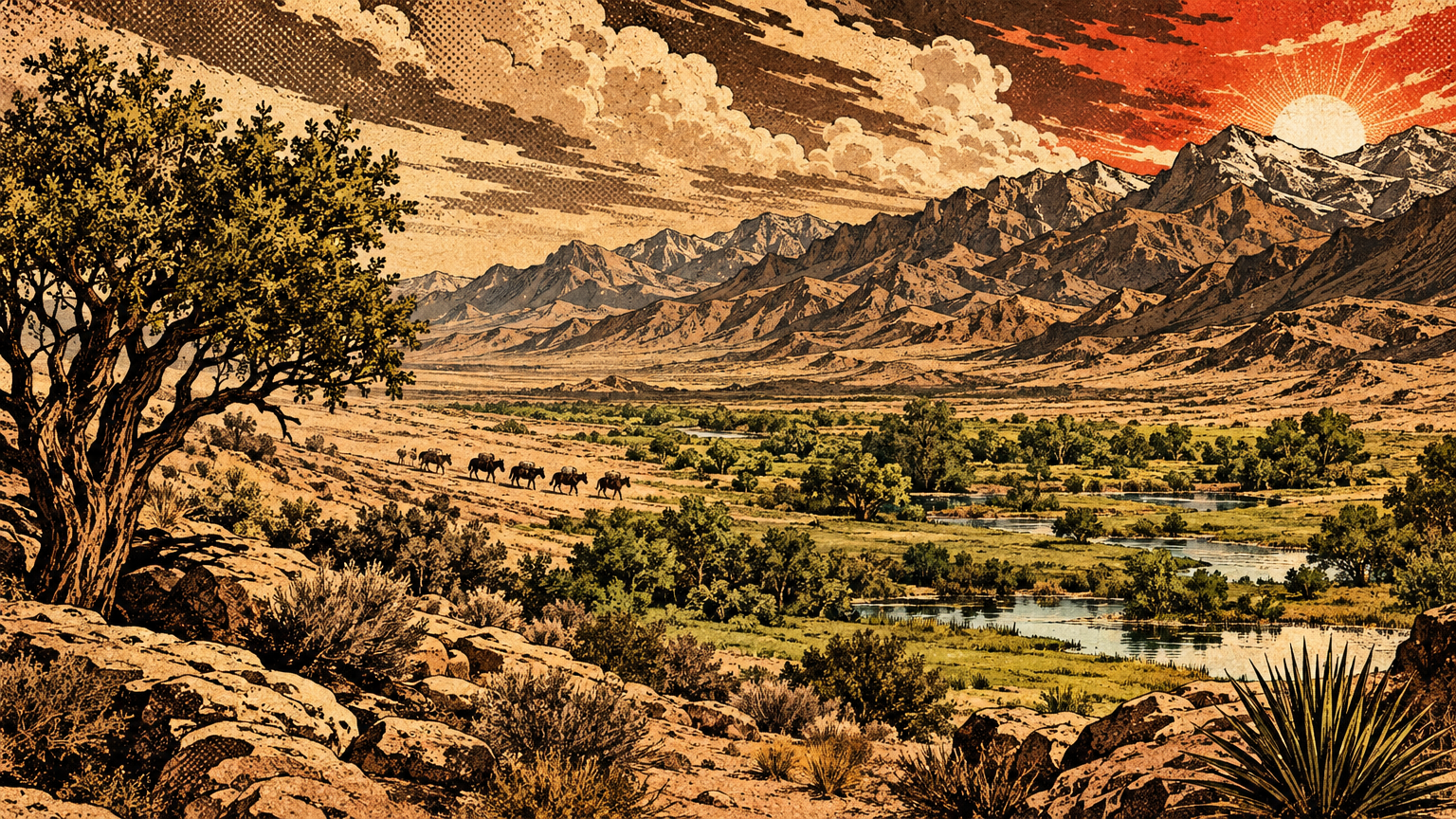
In November 1829, sixty men loaded one hundred pack mules in Abiquiu, New Mexico, and pointed them at Los Angeles. No wagon rolled with them.
There was no road to follow, only a chain of older trails, water holes, and hard local knowledge. What they carried out was wool. What they meant to carry back was horsepower.
That caravan, led by merchant Antonio Armijo, completed the first commercial trade run between New Mexico and California. In the process, it pulled the Las Vegas Valley onto a trade map that stretched 2,700 miles.
A new commercial ambition
Abiquiu and Los Angeles markets
Start with the two ends of the line, because this story is about markets as much as miles. Abiquiu sat northwest of Santa Fe, in a New Mexico that made things California wanted.
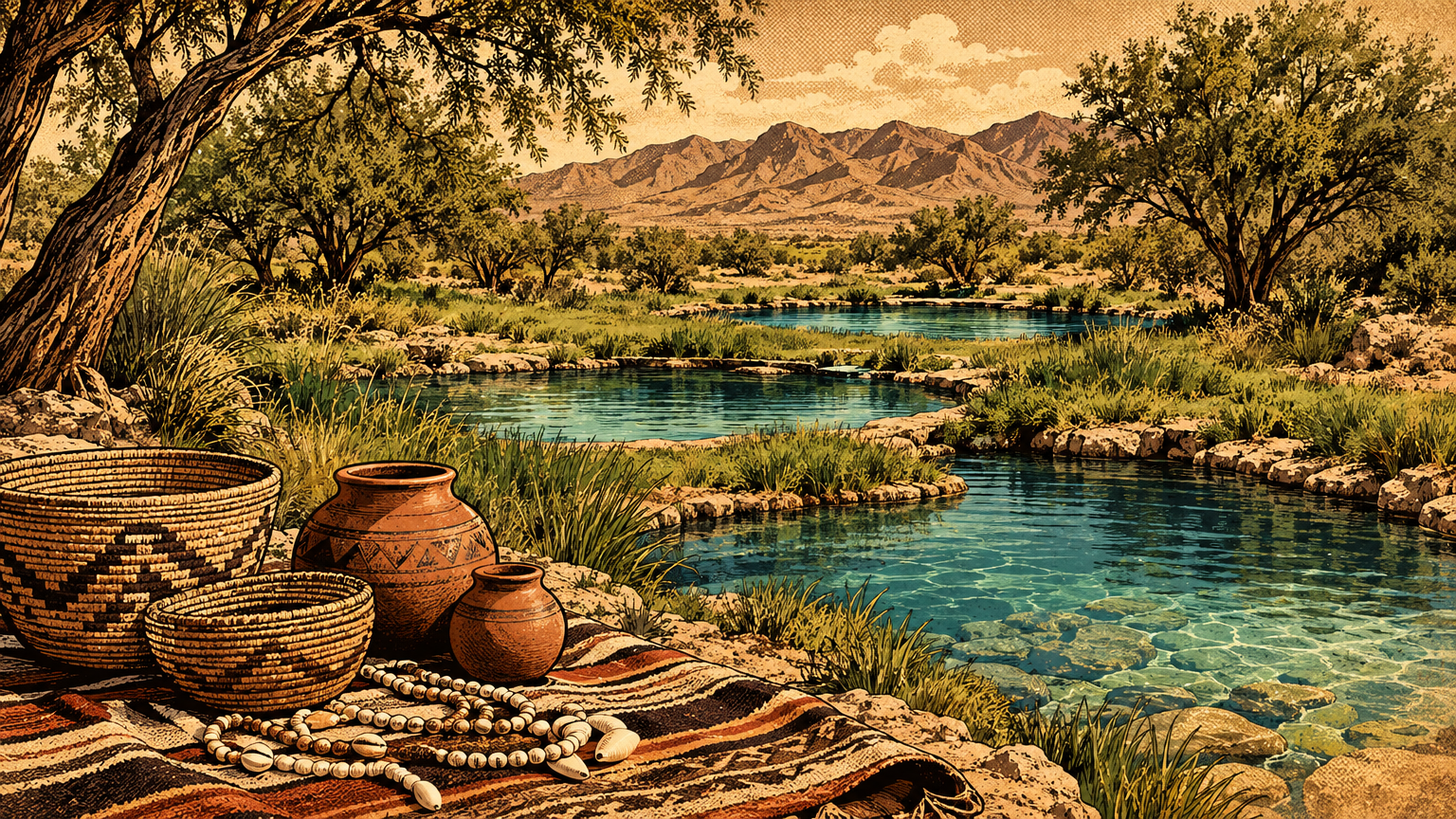
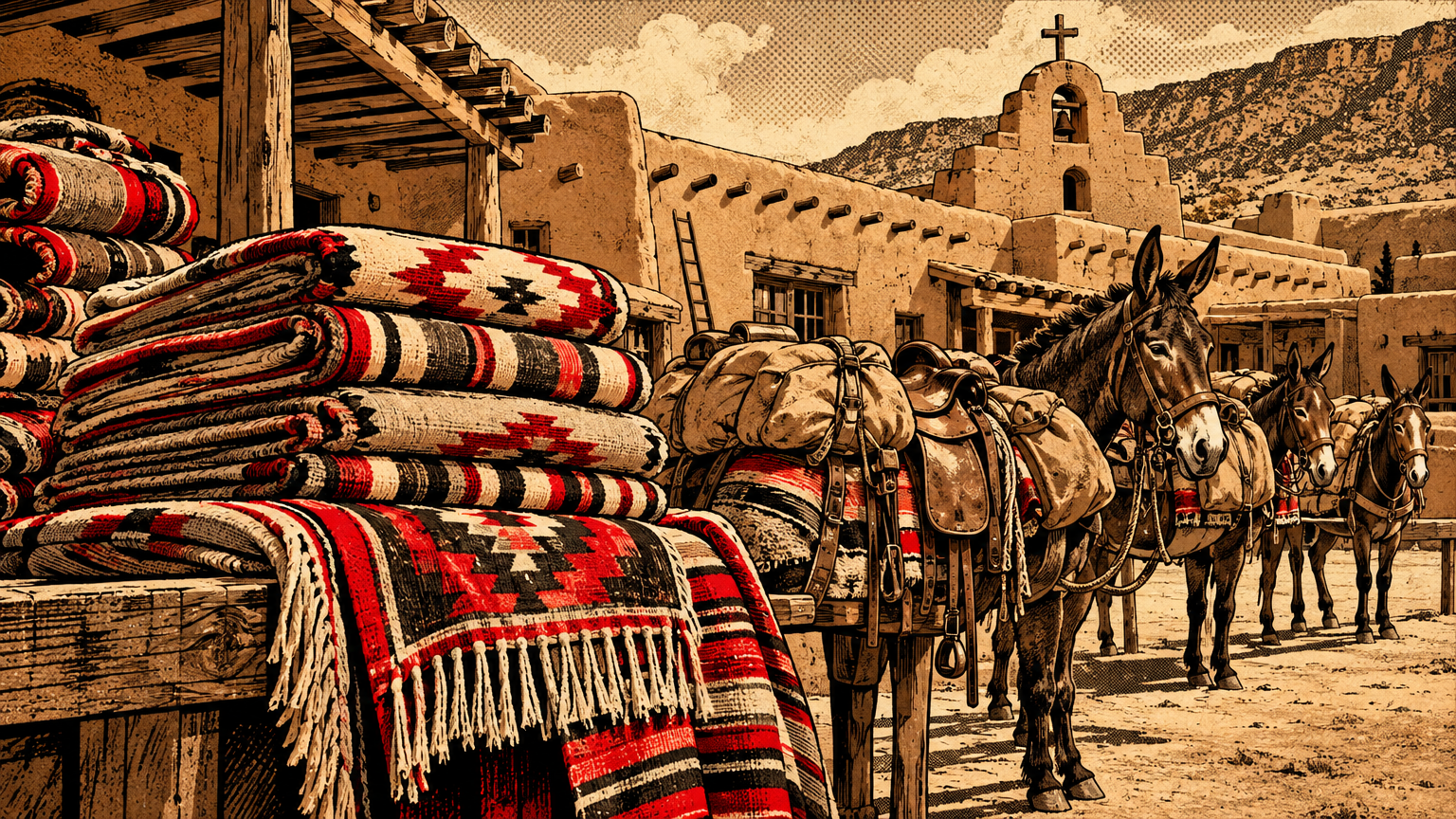
New Mexican weavers produced woolen rugs, blankets, and serapes. The National Park Service record of Armijo is blunt about the cargo: woolen rugs and blankets produced in New Mexico, loaded for trade.
California had the opposite surplus. Its ranchos and missions raised horses and mules in numbers New Mexico could not match.
So the trade wrote itself. Carry wool west, trade it for horses and mules, then drive the animals east to be sold in Abiquiu and Santa Fe.
The Nevada State Historic Preservation Office tells the same exchange from the trail side. Woolen goods made in Santa Fe went to Los Angeles and came back as horses and mules.
Neither end lacked ambition. What they lacked was a proven, complete route between them that a loaded caravan could actually survive.
Pieces of the way west had been walked for generations. Spanish priests, trappers, and traders had each crossed parts of it since the 1770s.
Nobody had yet tied the whole line together as one commercial run. That is the gap Armijo stepped into in the fall of 1829.
Why traders crossed the desert
The honest answer is money, earned the hard way. A blanket that was ordinary in New Mexico was valuable in California, and a mule that was plentiful in California was valuable back home.
That price gap paid for the risk, and the risk was real. The Park Service notes that the rugged terrain made wagons impossible, so this was a pack route, worked by men with mules.
Every load rode on an animal's back. Every animal needed grass and water in country that often offered neither.
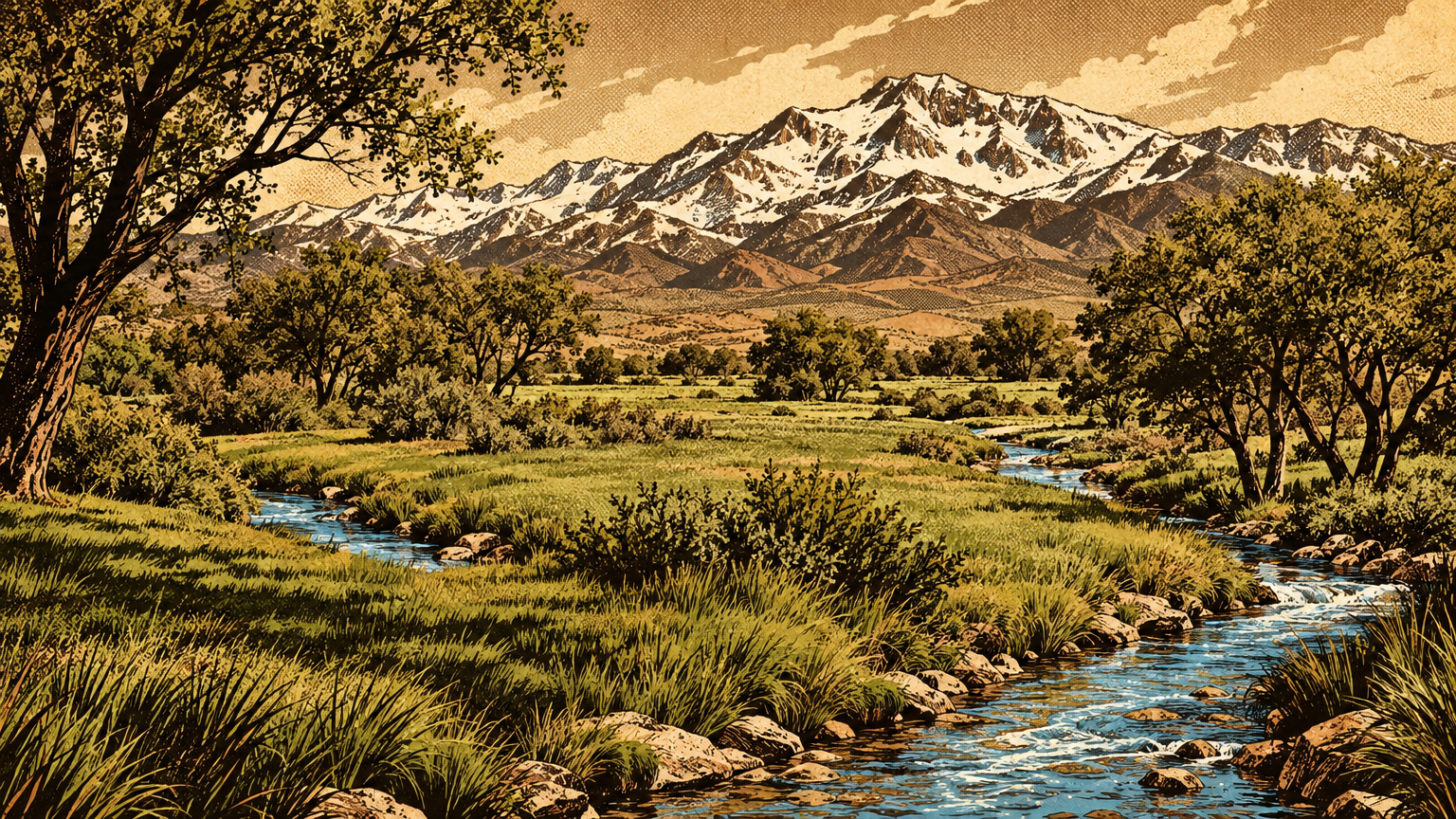
Timing was its own gamble. Winter snow could block the mountain passes, spring thaw could make river crossings dangerous, and summer heat could turn the search for water and forage desperate.
So caravans traveled in the cold season by design. They left in November, traded through the winter, and raced the spring on the way home.
Armijo's own run shows the pace. The Park Service puts the outbound journey at about twelve weeks, eighty-six days, and the return at about six weeks.
The trip home was faster for a simple reason. The route was known by then, and a herd of horses and mules moves differently than a loaded pack train feeling its way.
Across southern Nevada
Scouting for water and safe passage
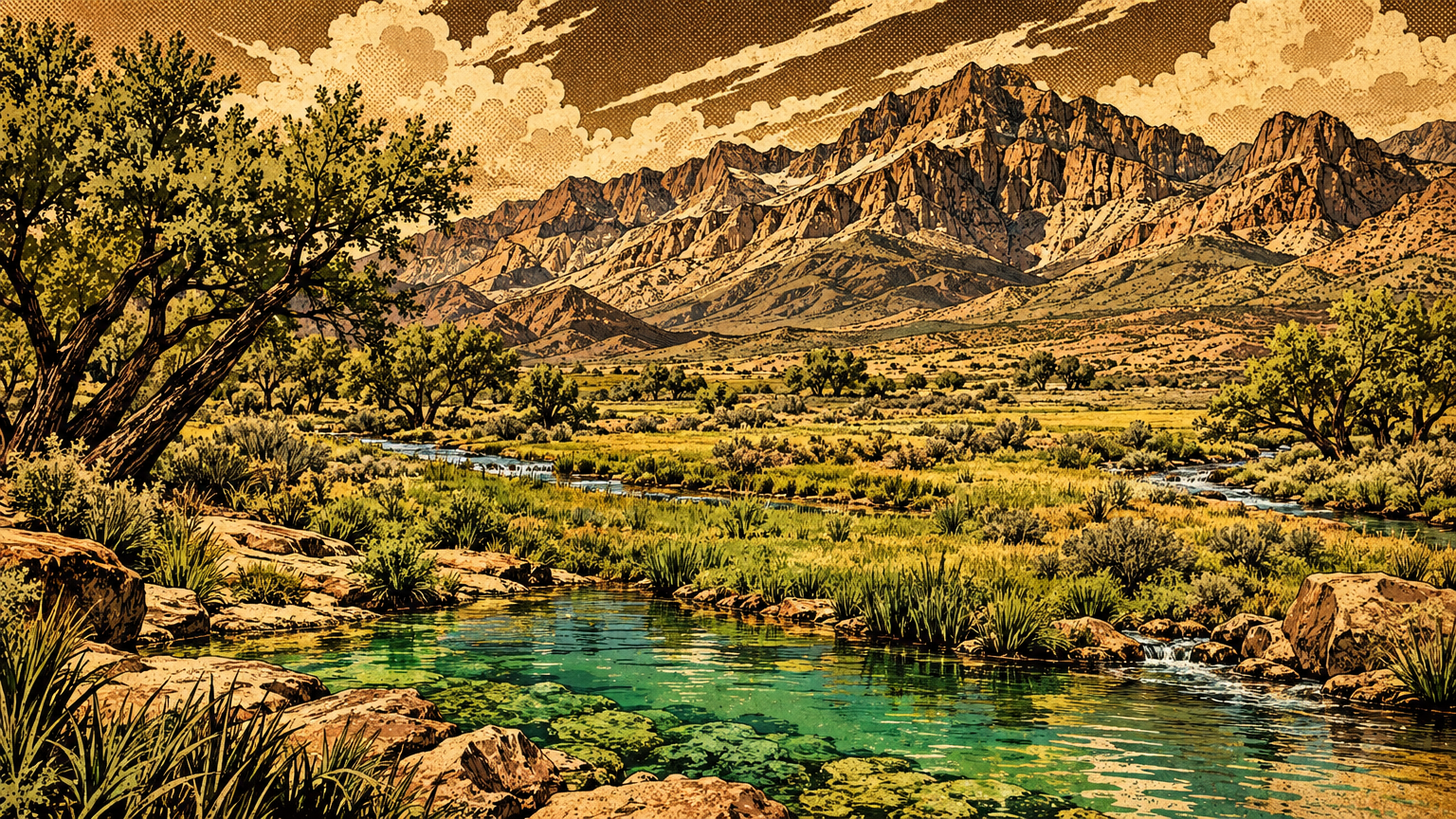
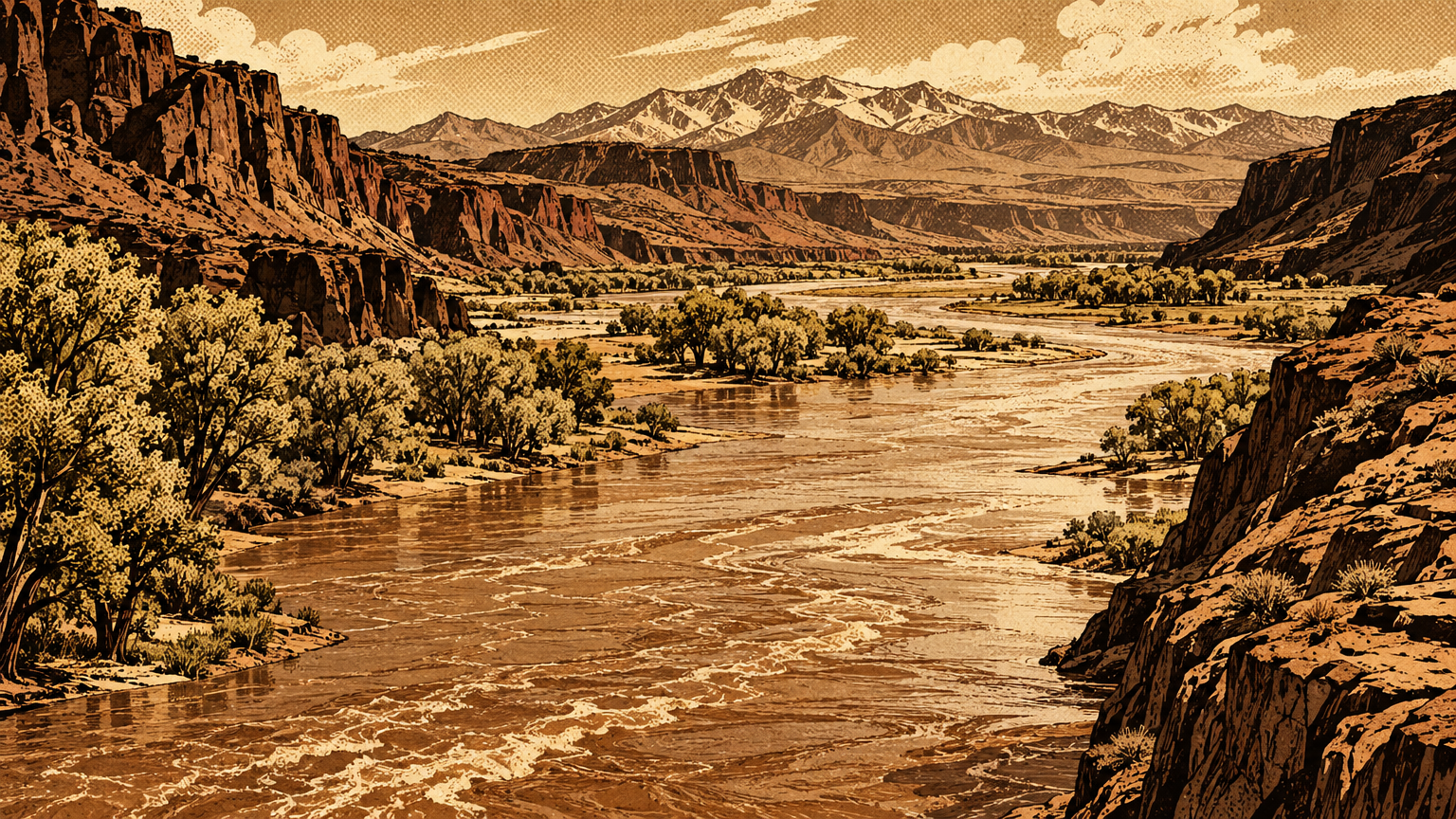
From Abiquiu the caravan followed well-known trails northwest to the San Juan River, then west to the Virgin River near present day Mesquite. It crossed the Colorado River at the Crossing of the Fathers, a ford cut into the canyon wall by the Dominguez-Escalante party some seventy-five years earlier.
Then came the country that decides whether a desert route lives or dies. The caravan moved down the Muddy River and across the Mojave Desert toward the Amargosa and Mojave Rivers.
Water was not a comfort on this route. Water was the route.
Every camp was a calculation about the next dry stretch, the grass left for the animals, and the safest line between springs. Scouts rode ahead because a wrong guess cost animals, cargo, and men.
One of those scouts matters to Las Vegas more than any other man in the party. Rafael Rivera rode ahead of the main group while it camped by the Colorado, near the mouth of Las Vegas Wash.
The Park Service, careful with its words, says Rivera probably found the shorter fifty mile waterless route from the Muddy River to the Vegas spring. Nevada's historical marker for Rivera adds that in January 1830 he climbed Las Vegas Wash and blazed a route onward to the Mojave River by way of the Amargosa River.
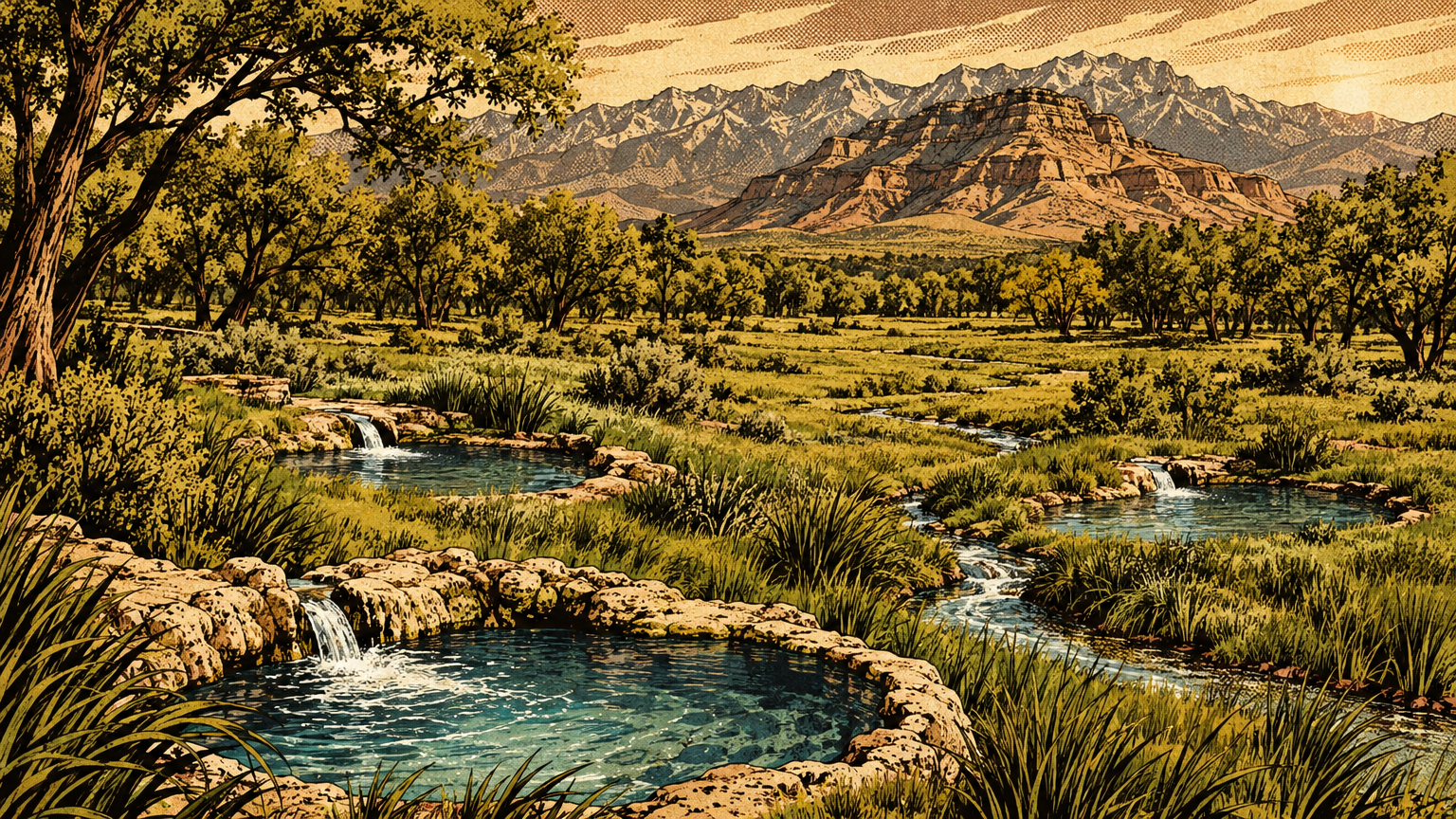
Keep that story in proportion, because the next piece in this series tells it in full. For this caravan, the point is practical: Rivera's scouting tied the Las Vegas Springs into the line west, and the springs became an essential stop on the road to Southern California.
The springs were no revelation to the people who already lived here. Southern Paiute families had used this water for centuries, and the trails the caravan followed were Indigenous trails first, as we traced in Indigenous Trade Connected the Desert Southwest.
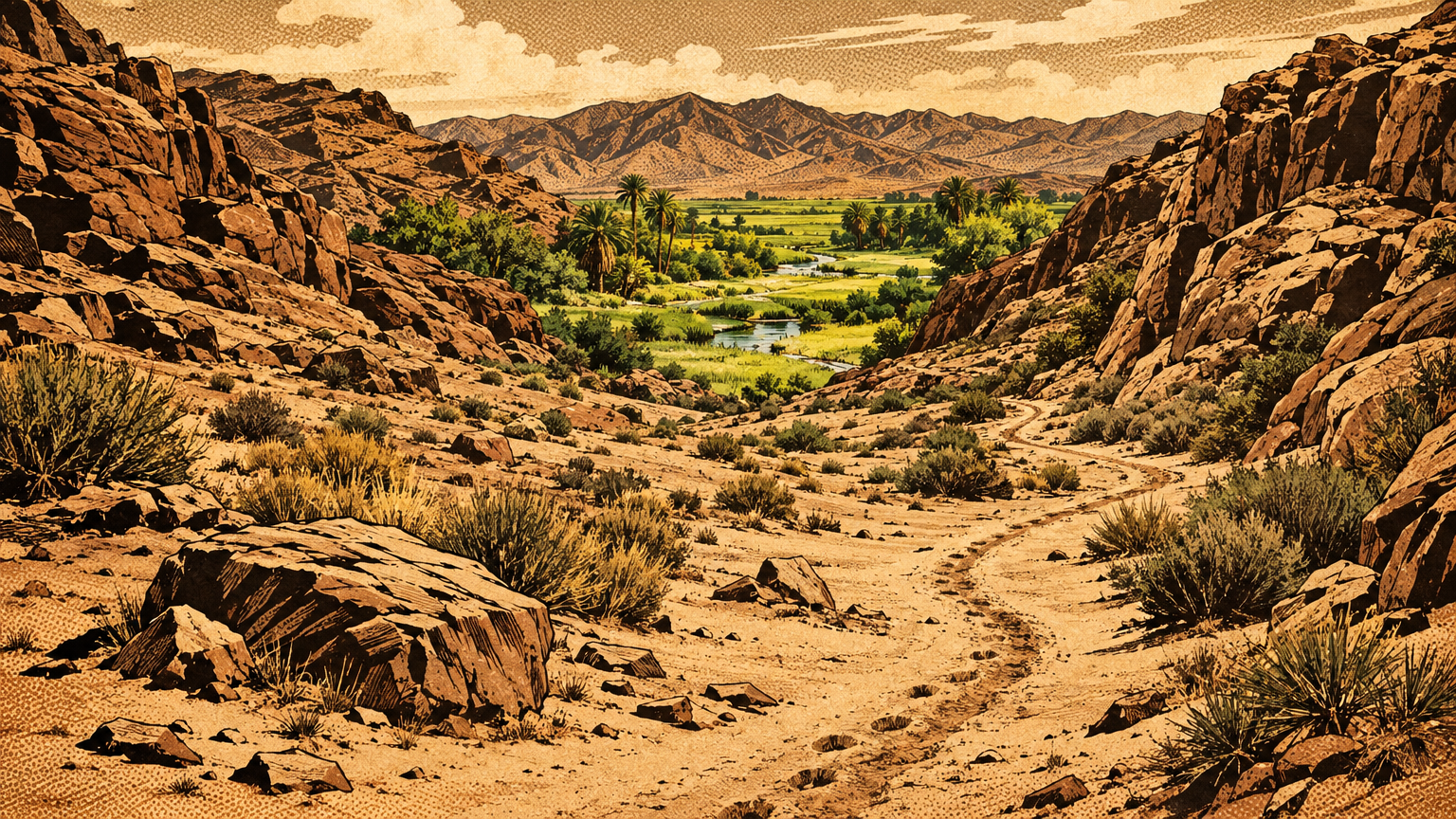
A state marker dates the valley crossing itself. On January 8, 1830, the first pack train to travel from Santa Fe to Los Angeles crossed the Las Vegas Valley, roughly sixty men under Armijo's command.
Documented travel versus later legend
Here is what separates this caravan from a campfire tale. Armijo wrote it down.
He kept a diary in Spanish, and the Park Service describes it plainly: mostly the route, the chronology of stopping points, and the lack of water. No speeches, no glory, just miles and thirst.
His report went to the governor of New Mexico and was published by the Mexican government on June 19, 1830. The National Park Service site at Lake Mead credits his party as the first to document their journey across southern Nevada and the Las Vegas Valley.
That dry, practical record is why historians can follow this trip at all. It also established what the Lake Mead account calls the shorter, more popular Spanish Trail between Santa Fe and Los Angeles.
Later legend added shine the diary never claimed. Retellings turned scouts into discoverers and a working trade road into a lone hero's path.
The record says something better. A merchant, sixty men, local trails, Indigenous knowledge, and a scout who found a shorter line to water did this together, and we corrected the emptiness myth behind those retellings in Why 'Empty Desert' Is the Wrong Las Vegas Origin Story.


What the caravan changed
The Old Spanish Trail network
The men of 1829 did not call their road the Old Spanish Trail. That name came later, after John C. Fremont and his guide Kit Carson mapped the route for the United States, as the Nevada preservation office records in its history of the Old Spanish Trail.
And it was never just one road. The trail that grew from Armijo's run became a network of branches across six states, and federal law now names four major routes: the Armijo Route, the Northern Route, the North Branch, and the Mojave Road.
Together they run about 2,700 miles from Santa Fe to Los Angeles. The Park Service tells Armijo's own story at its Antonio Armijo page, a good primary stop for readers who want the federal record.
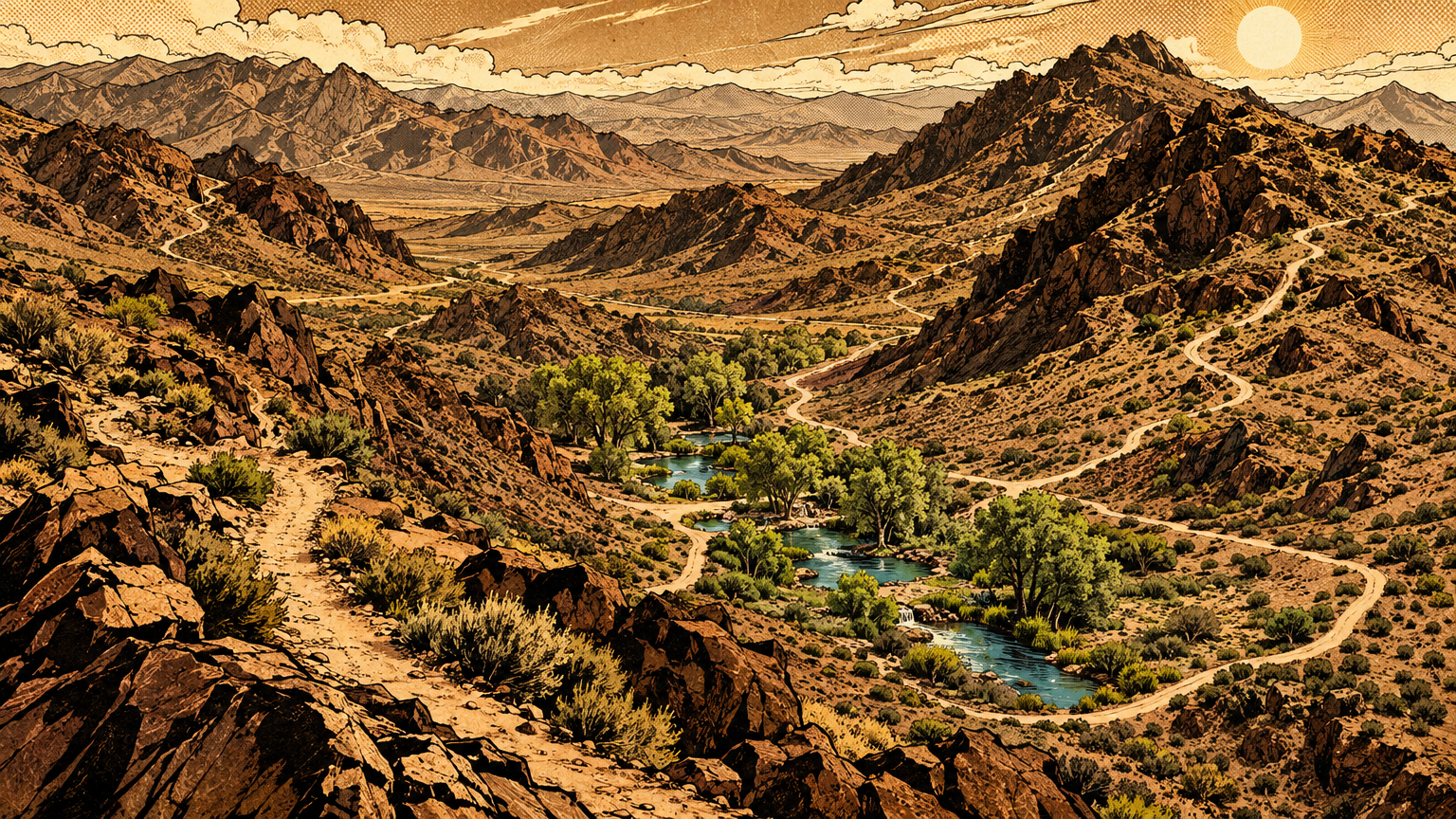
The working pattern Armijo proved became the trail's calendar. Caravans left Santa Fe each November with twenty to two hundred men and nearly twice as many mules, reached California in early February, and traded for about three months.
In April they turned east again, hoping the desert still held water and the rivers stayed low enough to cross. A good year sent several hundred horses and mules back into New Mexico.
That annual rhythm ran for years, and the designated trail period stretches from 1829 to 1848. Las Vegas sat inside it as a water stop, which in desert trade is the highest rank a place can hold.
We told the water's own story in Why the Las Vegas Springs Were a Desert Lifeline. Every caravan that stopped here was voting for that water with its animals' lives.
Effects on regional communities
Trade cuts both ways, and this trail did too. The preservation office credits it with giving landlocked New Mexico access to the ports of Los Angeles and cementing Los Angeles as a center for trade.
It also carried a small but significant stream of immigrants west into California. Families crossed on the same hard road the mule trains used, and some stayed to build new towns.
For the Las Vegas Valley, the change was position. A homeland known to its own people for centuries became a named, essential stop on an international trade line, visited every season by strangers who needed its water.
That attention brought pressure as well as trade. The preservation office is honest that the trail years also saw horse raiding on a huge scale and the trafficking of captured women and children, crimes that fell hardest on Indigenous communities.
A trade route is never only commerce. It moves goods, animals, people, and harm along the same line, and the communities along it feel all four.
The federal government finally wrote the trail into national memory in this century. Nevada's segments joined the National Register of Historic Places in 2001, and in 2002 Congress designated the Old Spanish Trail as the fifteenth National Historic Trail, co-managed today by the Park Service and the Bureau of Land Management.
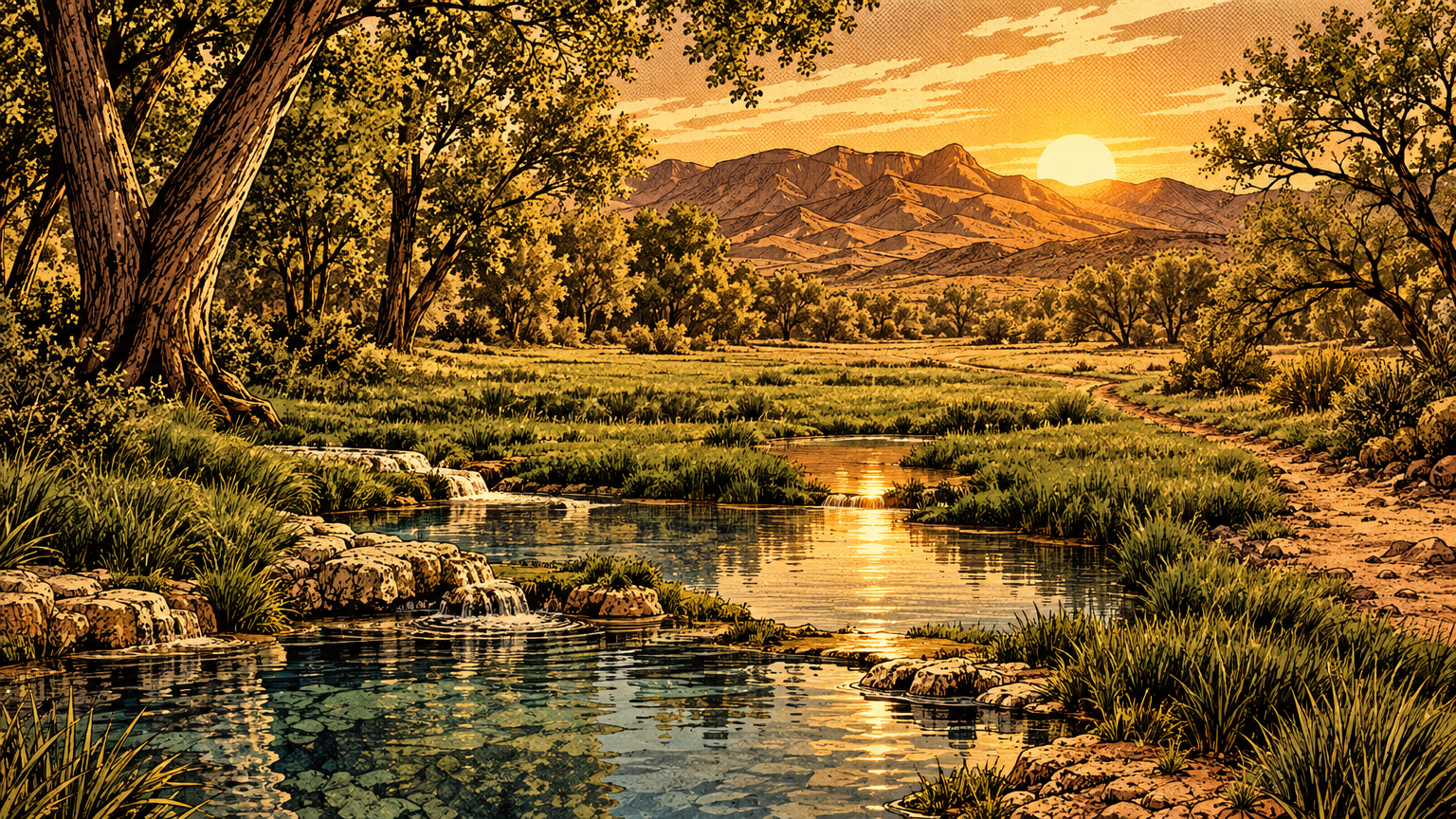
Stand at the springs today and the caravan is not hard to picture. Wool went west, horses came east, and for nineteen trading seasons this valley's water helped hold the whole line together.
Next in this series, the scout steps out of the caravan's shadow and into his own story, the young rider who left the main party, climbed the wash, and found the shortcut that changed this valley's place on the map: Rafael Rivera and the Story of the Hidden Springs.