Modern Las Vegas treats heat like a problem a machine solved.
Flip a switch, drop the room to 72, and forget the desert is out there. For most of human time in this valley, there was no switch.
There was knowledge instead. Deep, tested, passed-down knowledge about water, shade, timing, and storage, and it kept people alive here for centuries before the first compressor hummed.
Heat and seasons
Water, shade and shelter
Survival here started with one decision: live where the water already lives.
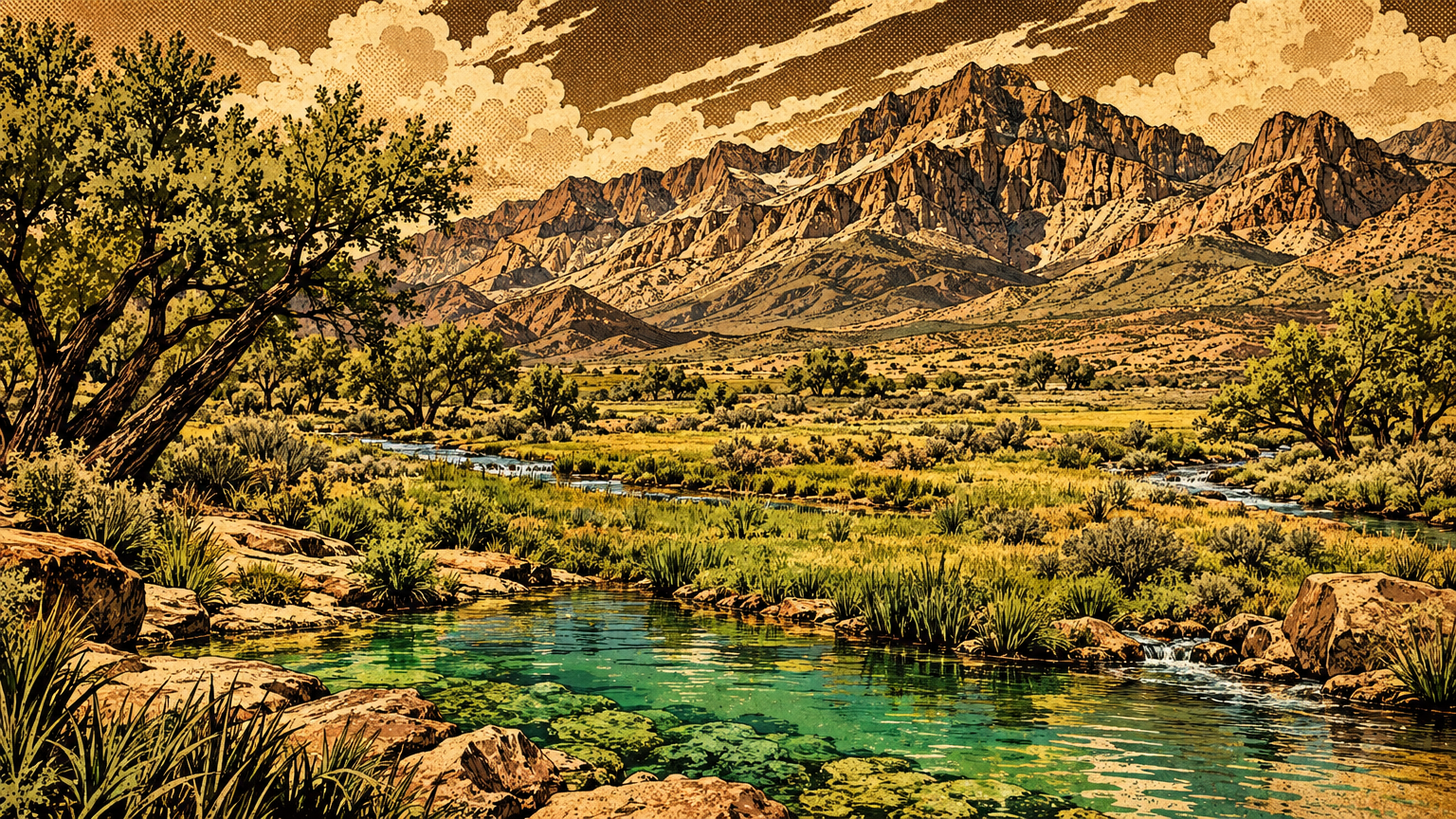
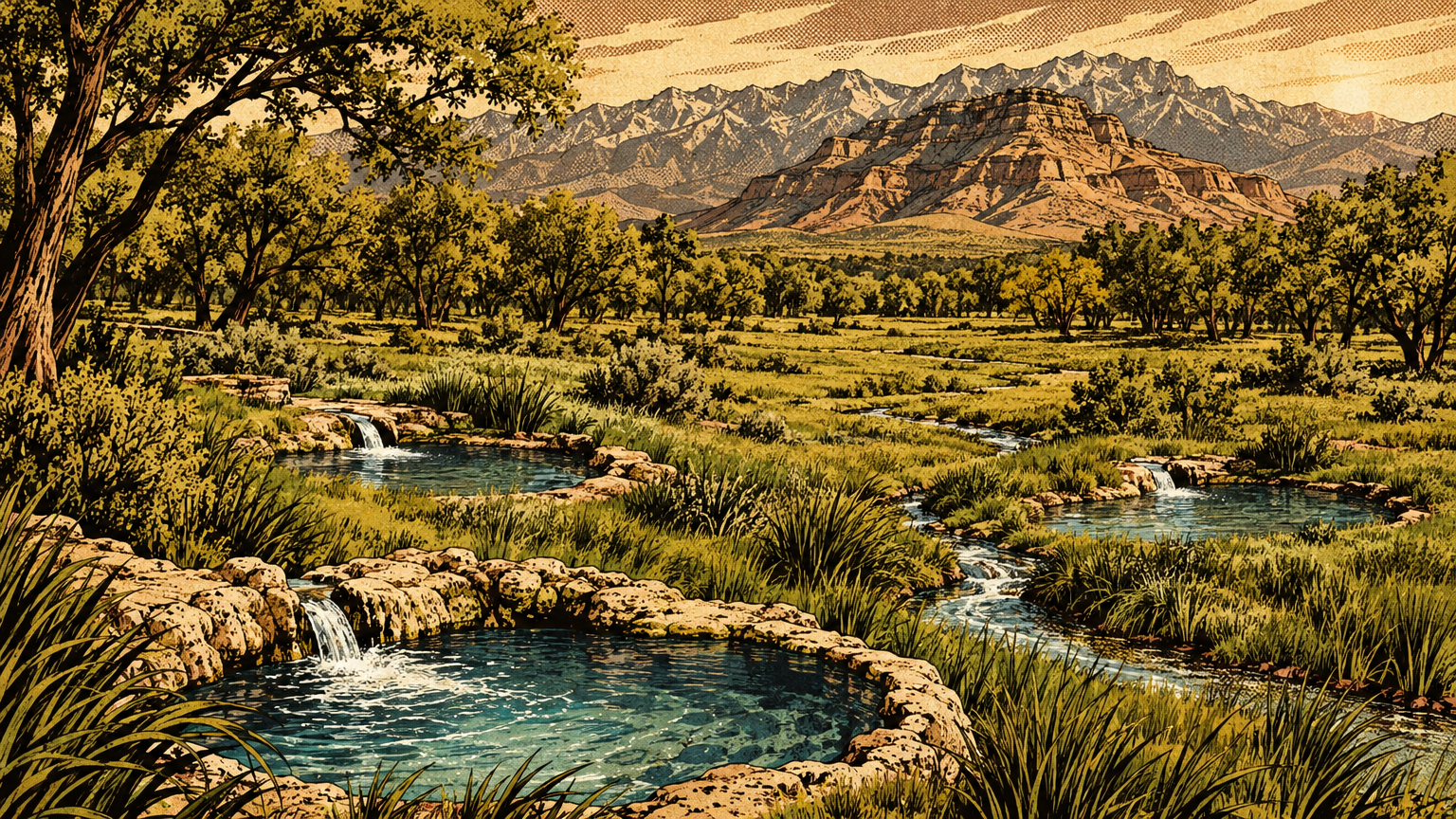
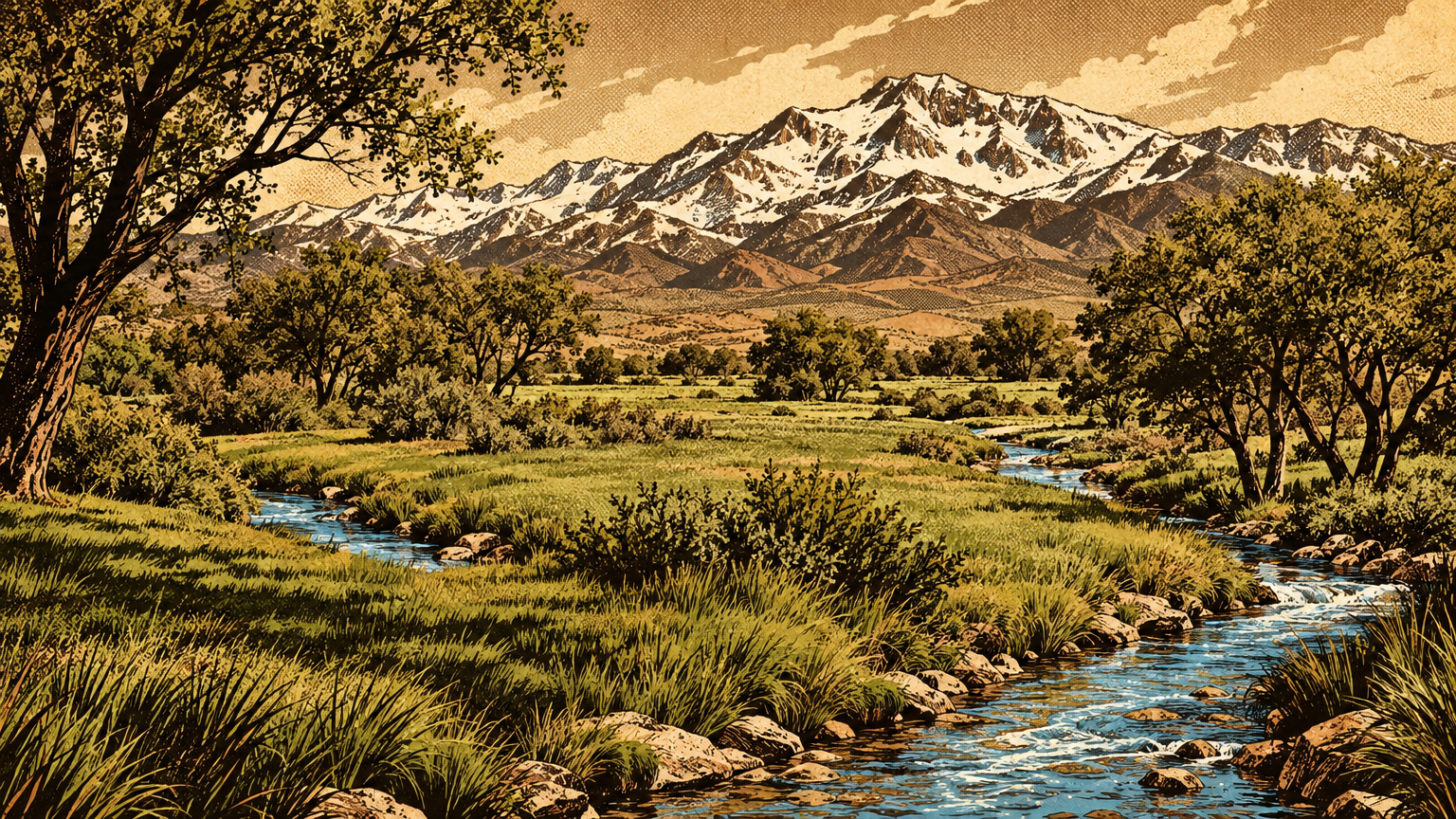
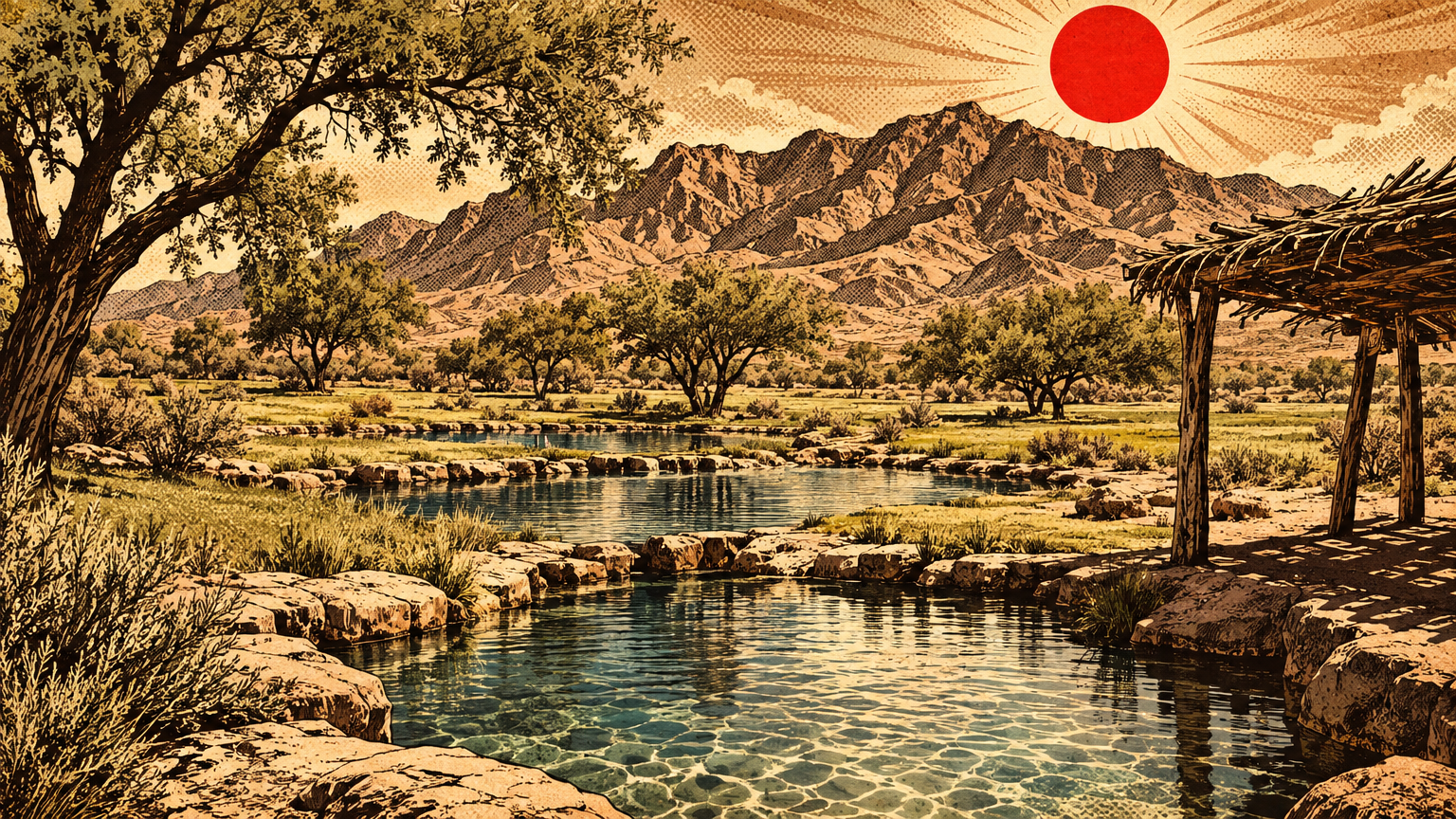
The Las Vegas Springs rose from the desert floor and sent two streams across the valley, feeding grasses and a mesquite forest. A state historic marker at the site calls that green ground the winter homeland of the Southern Paiute people.
That placement was the whole strategy in one move. Camp at the springs and the hardest desert problem, water, is solved before the day begins.
Shade was built, not found. The National Park Service describes the Southern Paiute shelter called a kahn, made from trees and brush such as juniper branches, willow, rabbitbrush, and sage.
The kahn was mainly for sleeping. It also gave an escape from the sun in summer, and lined with bark it became a refuge from cold wind in winter.
Most daily life happened outside the shelter, in open air. Cooking, toolmaking, and visiting all took place outdoors, with the fire pit at the center and families sleeping with their feet toward it.
New kahns were built each season, from materials close at hand. Nothing about the design wasted effort, and nothing depended on a supply wagon showing up.
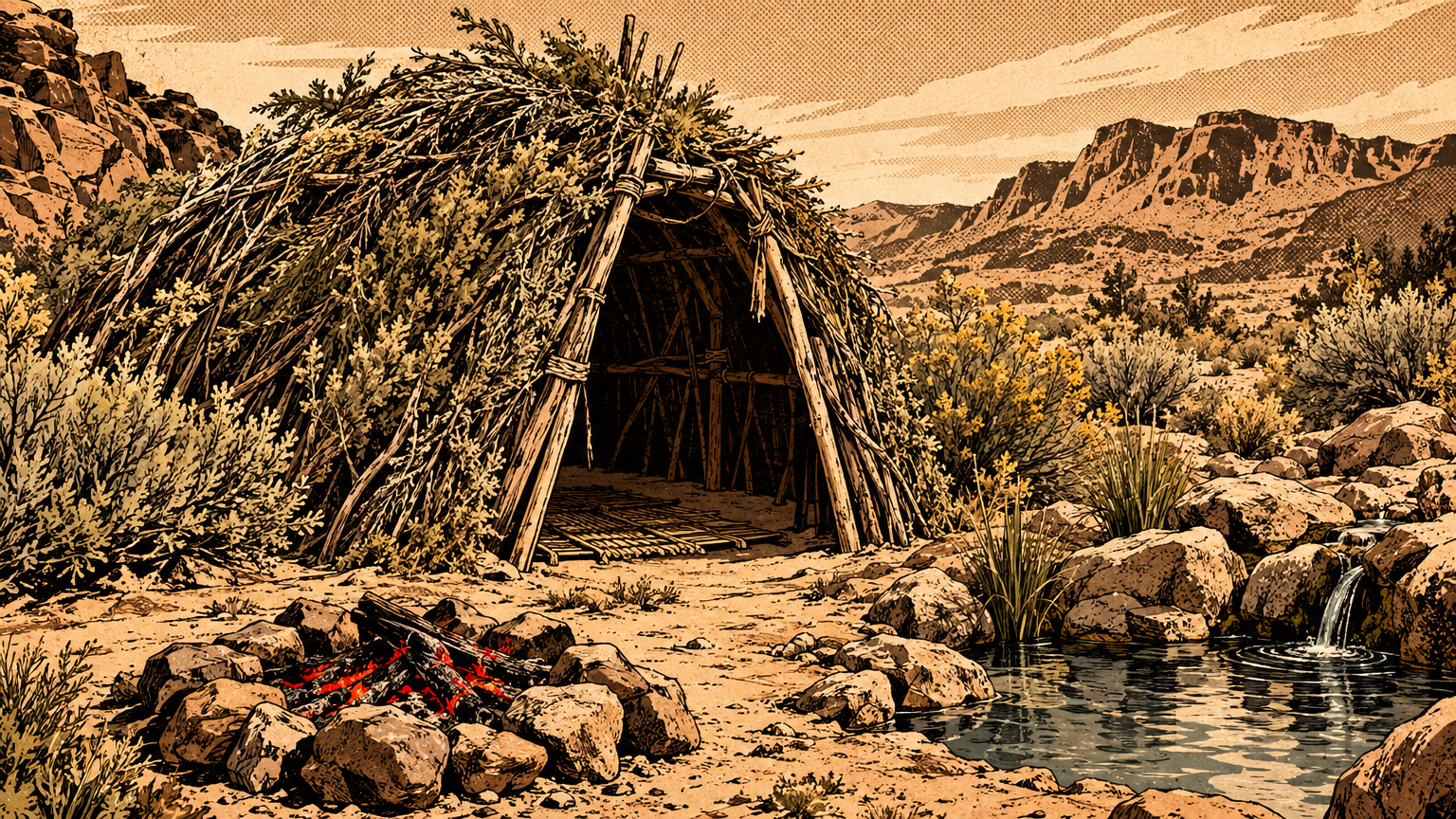
Winter versions got heavier. Park Service accounts describe extra layers added for the cold season: strips of juniper bark, rabbit skins, or deer hides over the brush frame.
One shelter idea, tuned twice a year. Light and open when the enemy was the sun, layered and closed when the enemy was the wind.
Rock shelters served too, where the country offered them. The pattern is the same everywhere you look: use what the land gives, build only what the season demands, and never fight the climate head on when you can step around it.
Daily and seasonal adaptations
The second decision was timing. In this valley, the calendar itself was a cooling system.
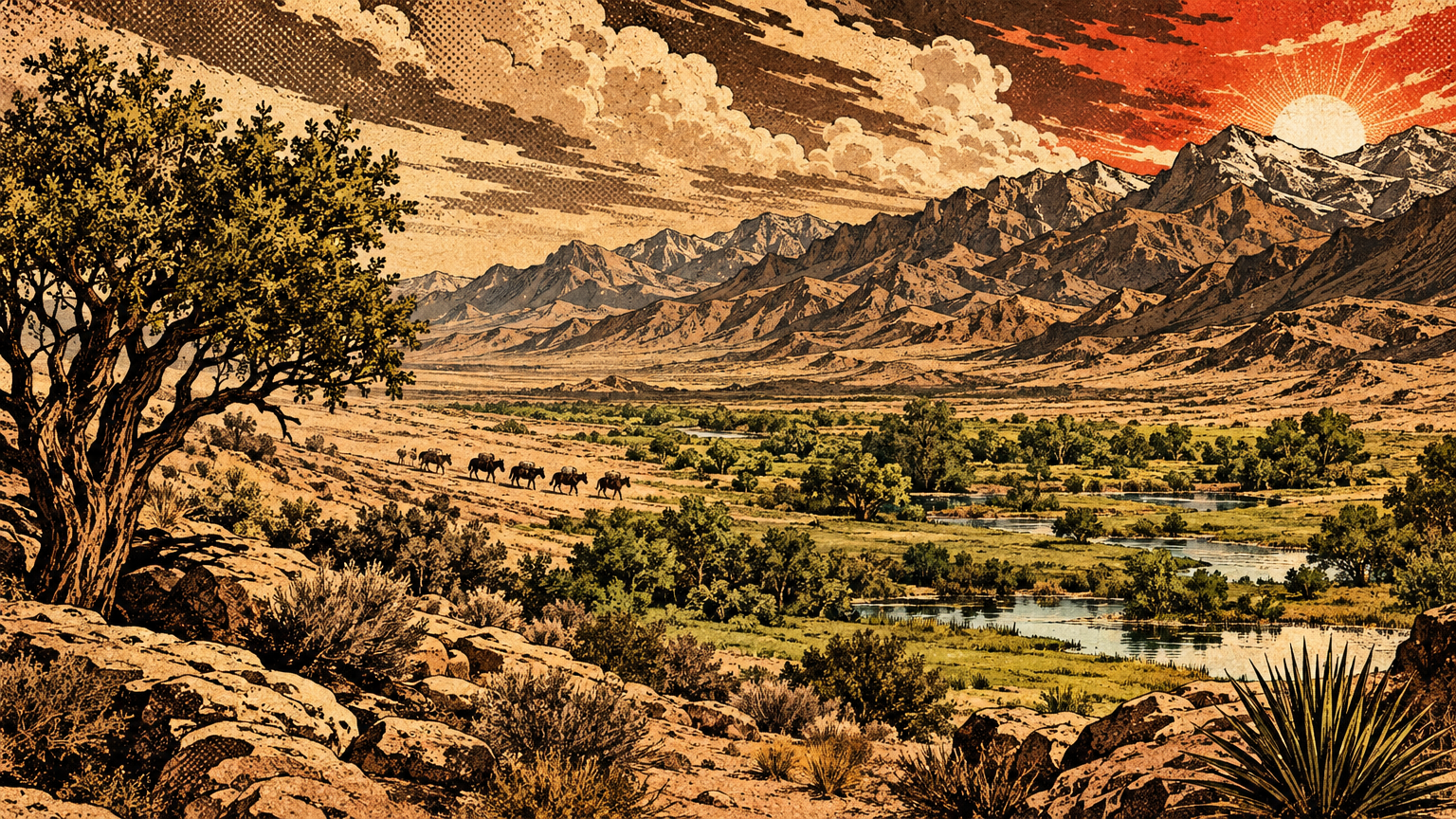
That same historic marker records the big move plainly. The springs country was the winter homeland, and summers were spent up in the Charleston Mountains, the range locals now call the Spring Mountains.
University of Nevada, Las Vegas archivists back the pattern from the other side. Paiute encampments at the springs usually lasted through the winter, a seasonal camp in a seasonal round.
Elevation did the work air conditioning does now. When the valley floor baked, the high country offered cooler air, pine forest, and a different menu of foods coming ripe.
The Forest Service cultural history of the Spring Mountains lays out the year like a work schedule. Spring was a busy season of gathering wild plants and hunting deer and rabbits.
Late spring and early summer meant tilling and sowing garden plots with corn, squash, beans, pumpkins, and sunflowers. Summer brought more gathering, and fall brought the biggest harvest push of all.
In fall, families moved up to the plateaus and mountains. Stronger, more substantial houses for winter were built in that same season, before the cold arrived.
Winter had its own indoor economy. It was the season for making baskets, cordage, and clothing, and the season for telling stories, the archive and the entertainment in one.
Read that calendar again and notice what is missing. Nobody tried to do heavy work at noon in August on the valley floor, because the whole system was designed so nobody had to.
Anthropologists who summarized the Southern Paiute year add the hard edge. Spring was the leanest season, when stored food ran low and new plants were not yet ready, so the fall harvest was never casual. It was insurance.
Skills and communities
Food preservation and material culture
Air conditioning preserves food now. Before it, preservation was a craft, and this valley was very good at it.
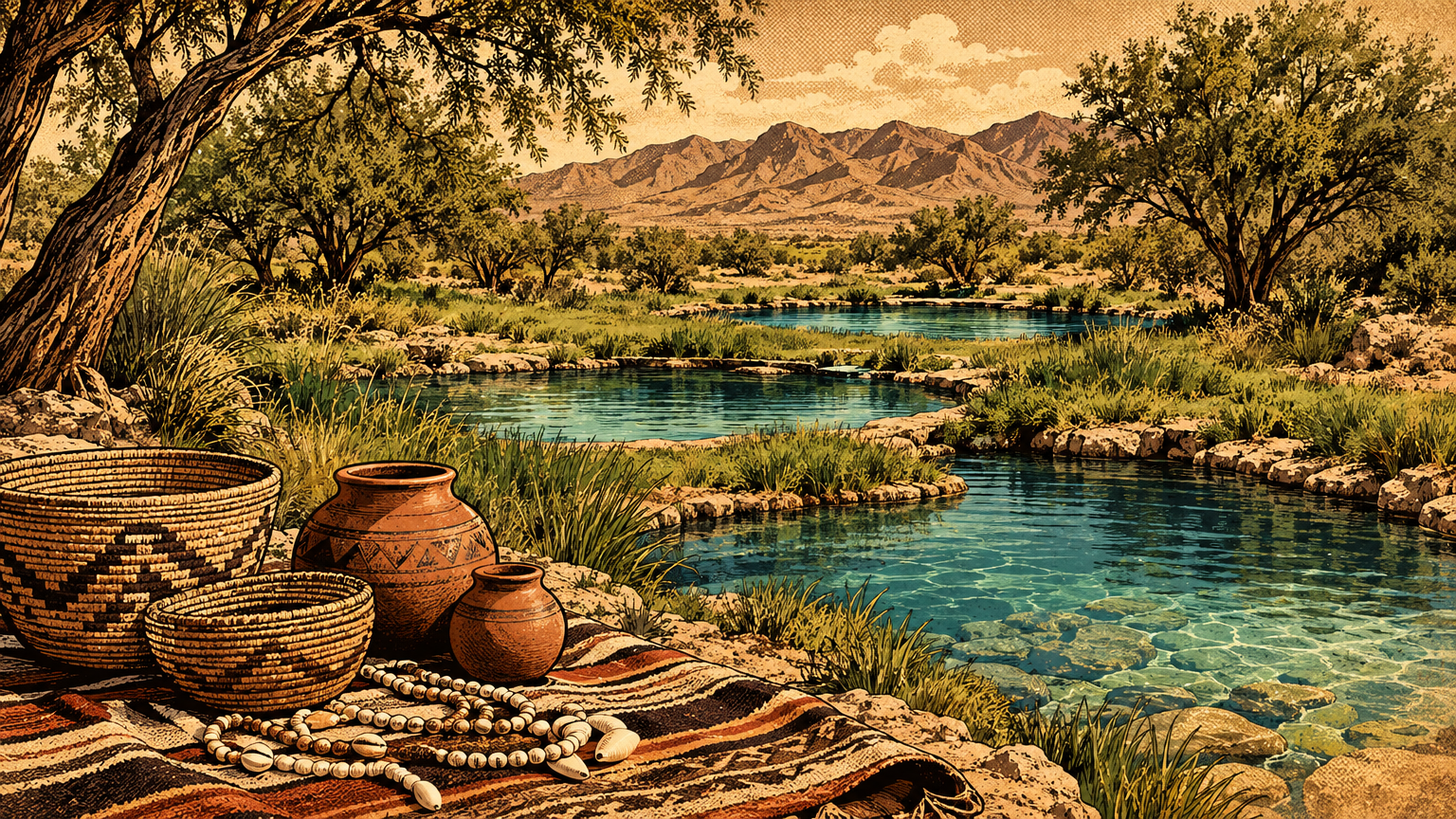
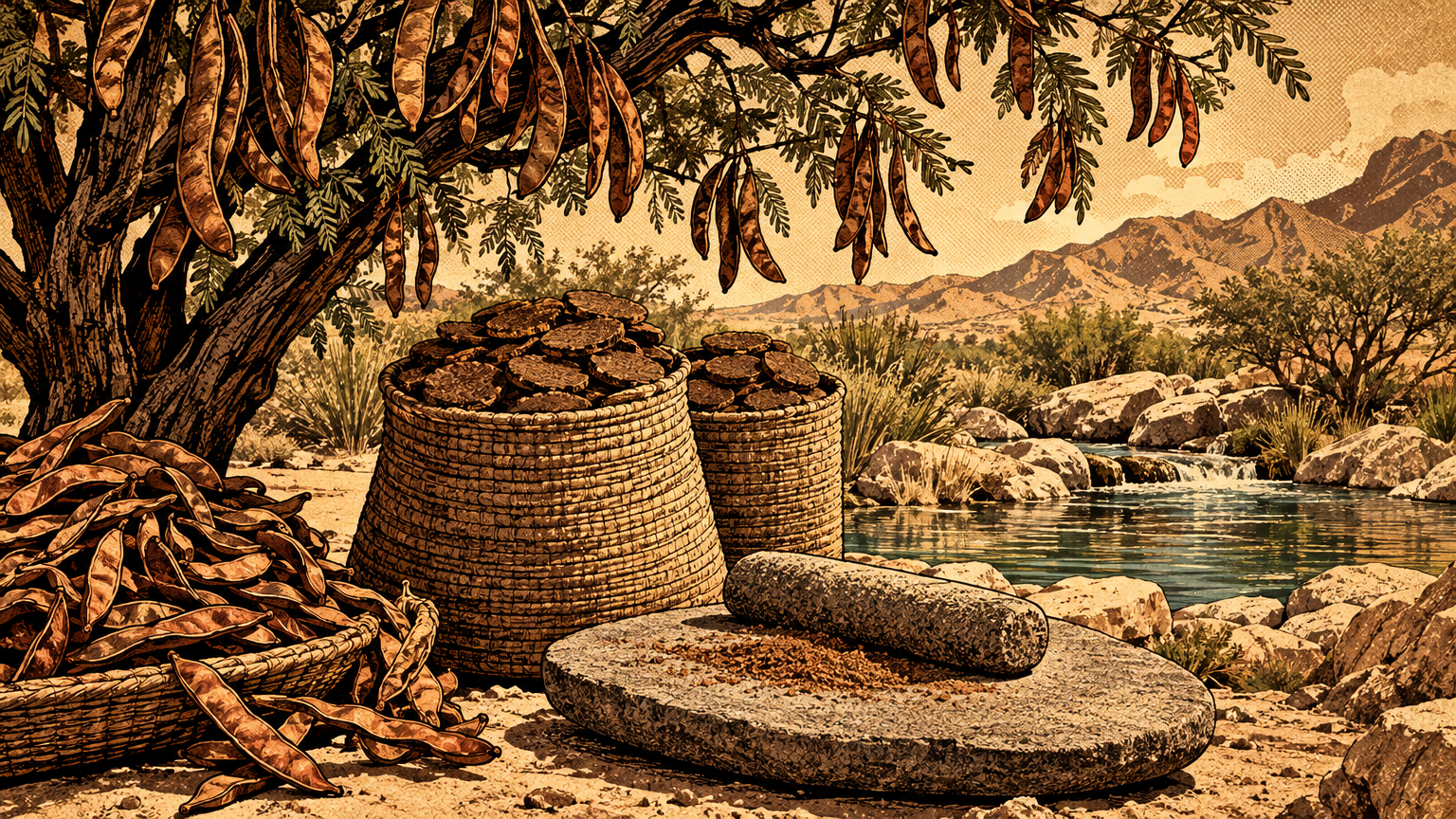
Start with mesquite, the tree that shaded the springs meadows. A National Park Service ethnographic overview for Lake Mead calls mesquite bean meal the staff of life for the Paiute people of this region.
The routine was precise. Beans were ground when they turned brown, and the meal was packed into conical baskets and dried in the sun.
The dried cakes kept. They were stored in winter houses near fires, or tucked into pot-shaped pits in the rear walls of rock shelters, the pits lined with grass to protect the meal.
When a family needed a meal months later, that solidified mesquite was the base of stews. Sunlight, the same force that made the desert dangerous, did the preserving.
Screwbean mesquite ran a parallel routine. Federal plant specialists record ripe pods pounded into fine flour, then dried and stored in baskets inside grass-lined or bark-lined pits in rock shelters and caves.
Pine nuts carried the winter. The Forest Service history says it in one flat sentence: pine nuts were the essential food stored for winter use.
That is why the fall move to the mountains mattered so much. The harvest up high, gathered and processed at camps used year after year, was the pantry the cold months would draw down.
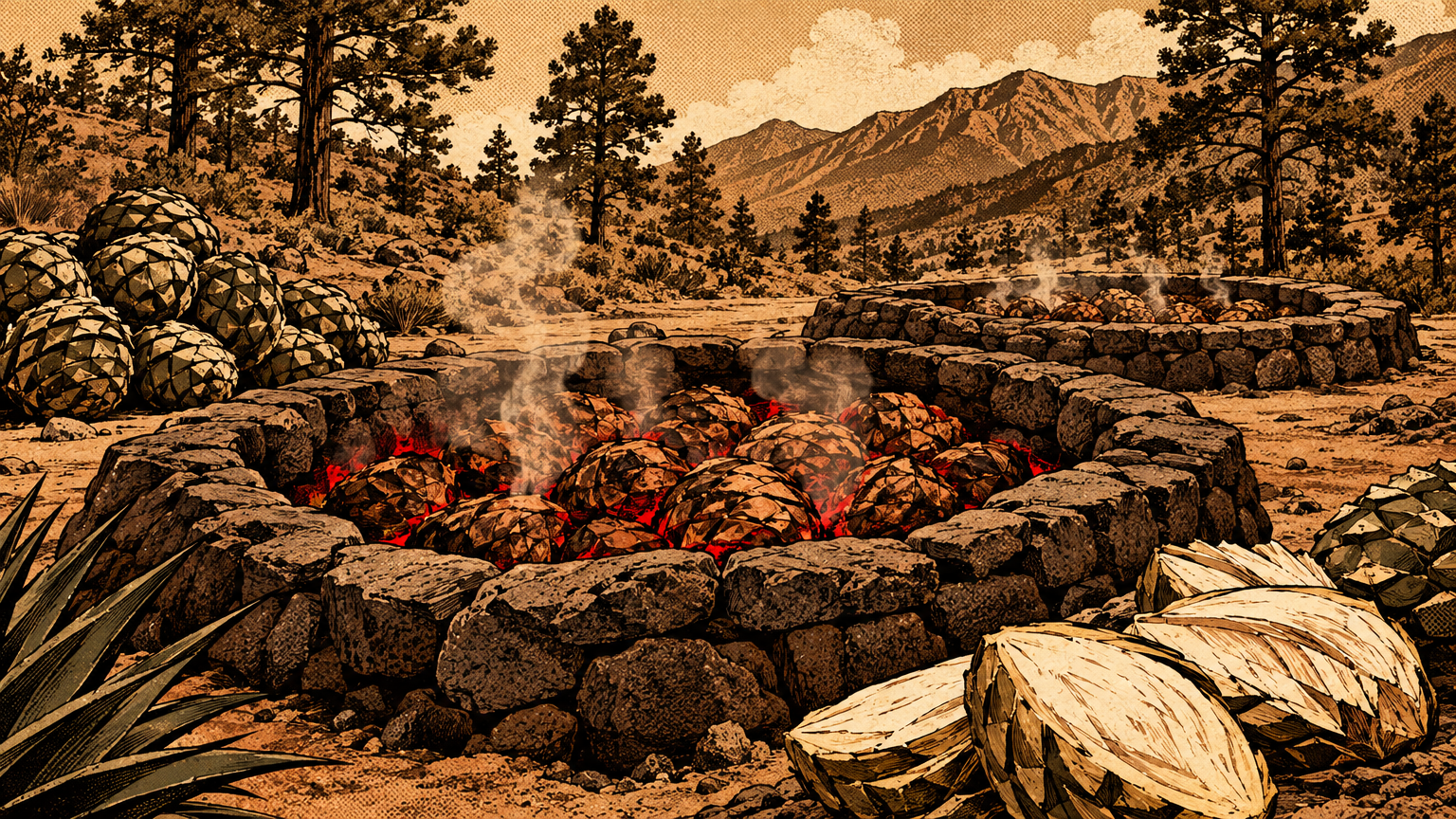
Agave took a different kind of patience. Archaeologists have documented hundreds of stone-lined roasting pits in the ranges around this valley, where agave hearts were covered with earth and roasted for a day or two.
Slow cooking in the ground turned a tough desert plant into sweet, storable food. The pits are still on the land today, quiet evidence of a food system built for the long haul.
Put the pieces together and the picture is not scraping by. It is a managed pantry spread across elevations: dried mesquite cakes in shelter walls, flour in lined pits, pine nuts cached from the fall harvest, and gardens by the springs.
For the plant-by-plant story of that pantry, see our earlier piece, The Desert Plants That Helped Sustain Early Valley Communities. For the water under it all, see Why the Las Vegas Springs Were a Desert Lifeline.
Knowledge held across generations
None of this worked as improvisation. It worked because the knowledge was held, taught, and checked across generations.
Knowing which canyon held water after a dry spring is not trivia. Knowing when mesquite turns, where the pine nut crop is heavy, and which shelter wall keeps meal dry is a library, carried in people.
The trade networks in our last piece, How Indigenous Trade Connected the Desert Southwest, moved more than shell and pottery. They moved news about conditions, routes, and resources across the whole region.
Winter storytelling belonged in that system too. The cold season, spent on stored food in stronger houses, was when accounts of places, hunts, and journeys got retold to the next generation.
That is also why the sources for this article lean on ethnography recorded from named Southern Paiute informants. Their remembered practice is evidence, gathered from the people who inherited the system, not a guess made from artifacts alone.
The discipline matters. A roasting pit proves agave was cooked. It takes recorded knowledge to explain the timing, the storage, and the teaching that made the cooking worth doing.


What modern Vegas forgot
Cooling and water-use comparisons
The town that replaced the springs camp took a long time to learn even part of this.
Early Las Vegas was a railroad town in the same sun, with none of the seasonal round available to it. People stayed put, worked fixed hours, and sweltered in fixed houses.
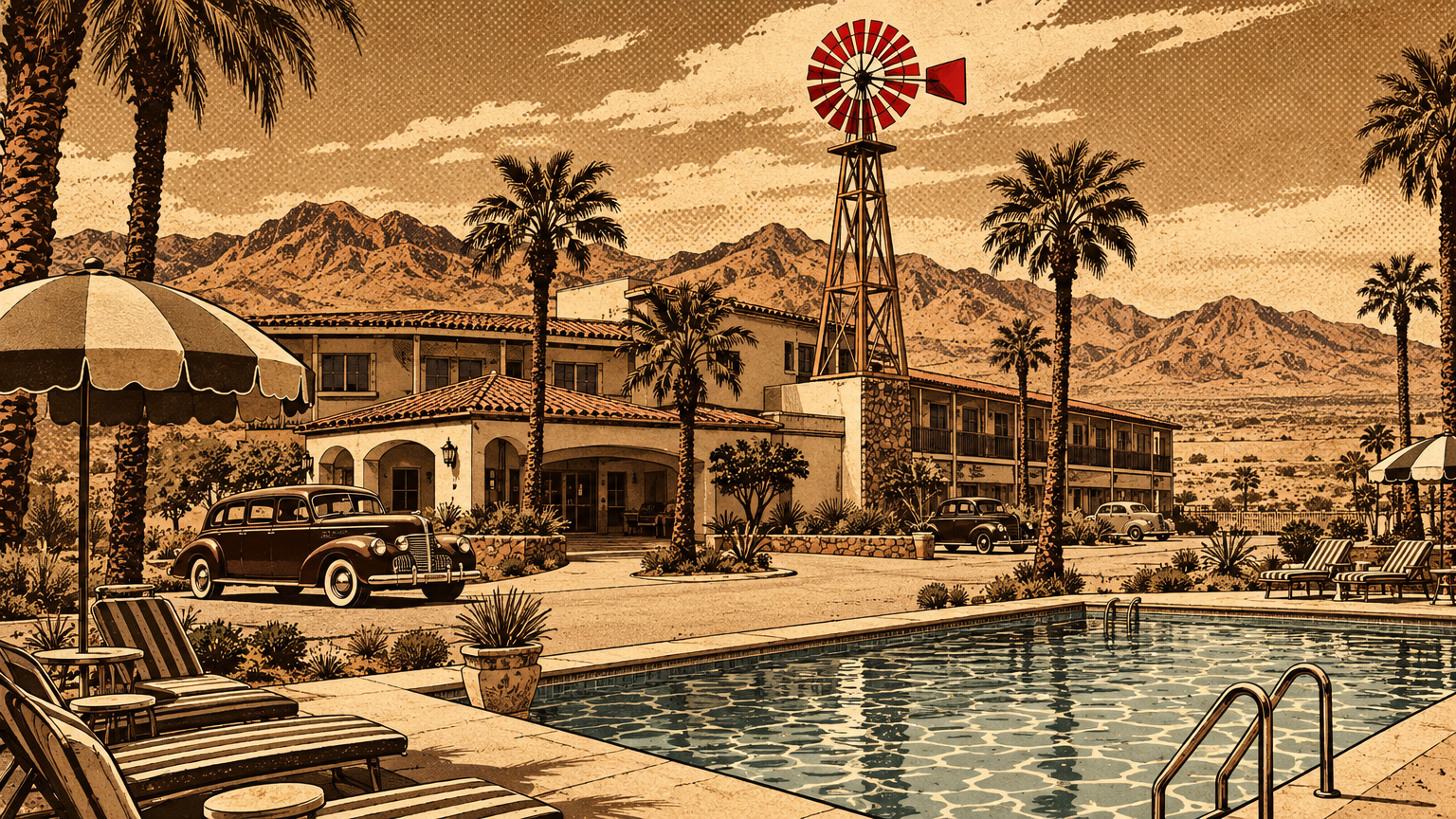
Mechanical relief came in stages. A Las Vegas air conditioning history drawing on University of Nevada, Las Vegas centennial material credits the Apache Hotel on Fremont Street, in the late 1920s, as the first local lodging to air-condition its lobby.
The Apache even engineered a curtain of cool, a flow of cold air at the lobby entrance that held the hot air out. One doorway, defended. The kahn builders would have understood the instinct.
The full change arrived in 1941. El Rancho Vegas, opened that year by Thomas Hull as the first resort on the future Strip, air-conditioned its rooms and advertised itself as 100 percent air-conditioned, with the cost built into the room rate.
Within ten years, the same history notes, central air conditioning was standard in every hotel built here. The desert city stopped adapting to the heat and started refrigerating it, room by room.
That bargain runs on water and power at a scale the springs camp never needed. Modern cooling lets millions live and visit here, but it also hides the climate instead of teaching anyone to read it.
The old system read the climate for a living. Move with the seasons, build light or heavy as the month demands, store the fall against the spring, and let the sun dry your food instead of only beating on your roof.
Tribal voices beyond survival stereotypes
One last correction, and it is the point of the whole piece.
Survival is the wrong headline for this history if it makes the people sound like victims of their own homeland. The Southern Paiute were not stranded in a hostile desert. They were home, with a system that fit it.
The Las Vegas Paiute Tribe is still here, a sovereign nation governing from 1 Paiute Drive, Las Vegas, NV 89106. The knowledge in this article is inheritance, not archaeology alone.
Readers can start learning it the respectful way at the springs themselves. The Springs Preserve at 333 S. Valley View Blvd, Las Vegas, NV 89107 protects the ground where the winter homeland stood, and its archaeology work is summarized by the Springs Preserve team.
The Park Service telling of the kahn, at Pipe Spring National Monument, is worth your time too. It treats the shelter the way its builders did: as smart design, rebuilt each season on purpose.
So the next time the power flickers on a July afternoon, remember the older answer to this desert. It was not a colder room. It was a better calendar, a lighter house, a full pantry, and a community that taught all three.
Las Vegas did not become livable when air conditioning arrived. It had been livable, expertly, for a very long time. Next time, we read the map the way its namers did: The People Behind the Place Names of Southern Nevada.