Discover more Las Vegas stories
13 published stories tagged “Las Vegas Springs”.
Rafael Rivera scouted for Armijo's sixty-man caravan in January 1830 and tied the Las Vegas Springs into the Old Spanish Trail. The documented record, the Park Service's careful probably, and why first discovery is the wrong word for a Southern Paiute homeland.
In November 1829 Antonio Armijo led sixty men and one hundred pack mules from Abiquiu toward Los Angeles with wool blankets, opening the first commercial caravan route between New Mexico and California and tying the Las Vegas Springs into the Old Spanish Trail.
Las Vegas was never an empty desert waiting for a founder. It was a Southern Paiute homeland of springs, meadows, gardens and trade trails, and the vacant land story was built later by railroad townsites, boosters and cropped photographs.
Las Vegas means the meadows, Nevada means snow-clad, and the oldest map of this valley was never printed at all. It was sung. The people, and the arguments, behind the names on every map of Southern Nevada.
No switch, no compressor, no cold room. For centuries, people in this valley beat the desert heat with a better calendar, a brush shelter tuned twice a year, and a pantry of dried mesquite and pine nuts stored against the lean spring.
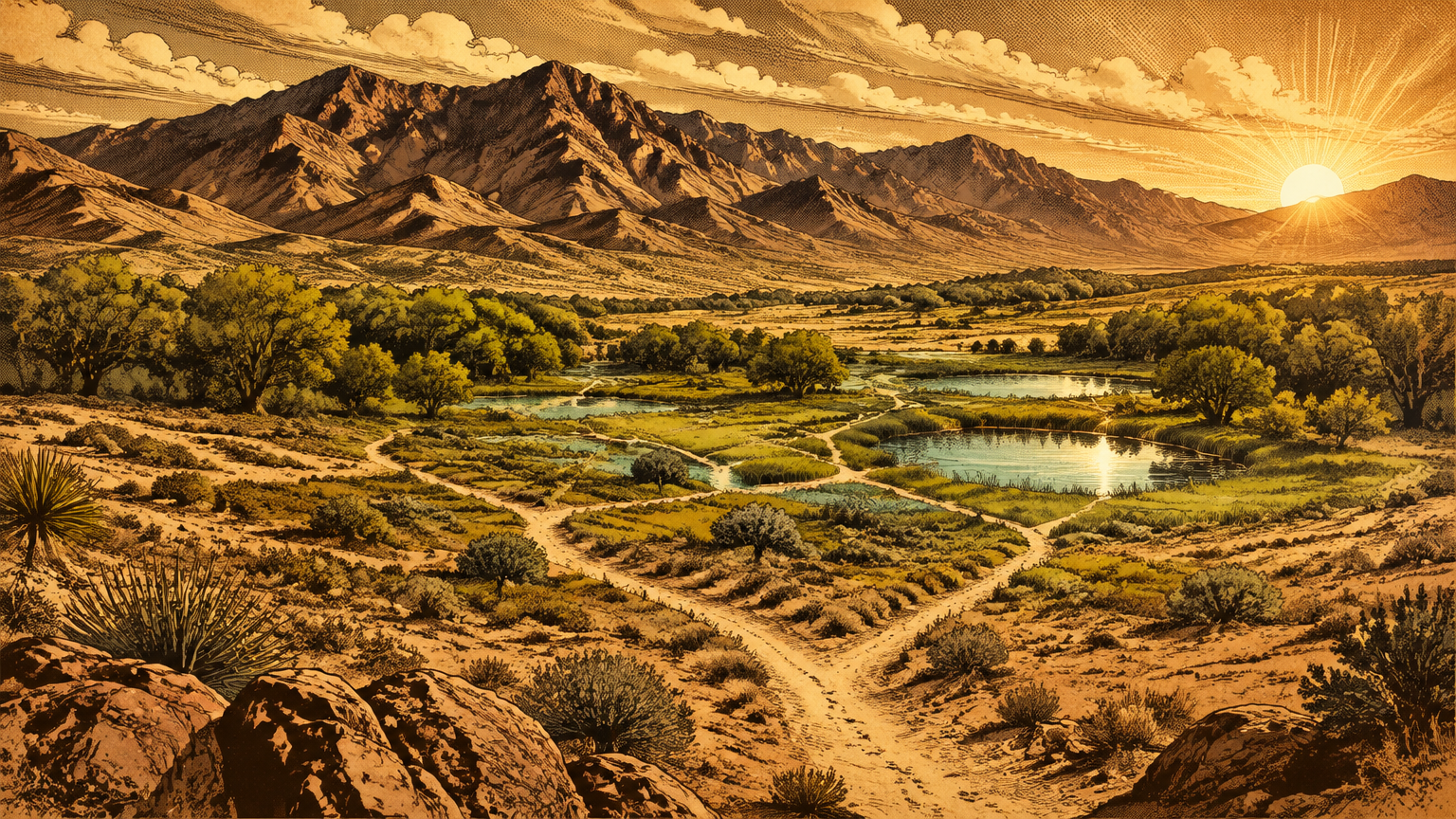
Before the street map, there was a water map: three artesian springs sending two streams east, a creek past the fort and ranch, and a 12-mile wash draining the whole valley to the river. This is that map, and how pipes and wells redrew it.
Before the pavement, this valley was a creosote desert cut by green ribbons: spring meadows, mesquite bosques, grass pockets, and a wash that ran east. This is the landscape the city replaced, and the two big pieces of it you can still walk today.
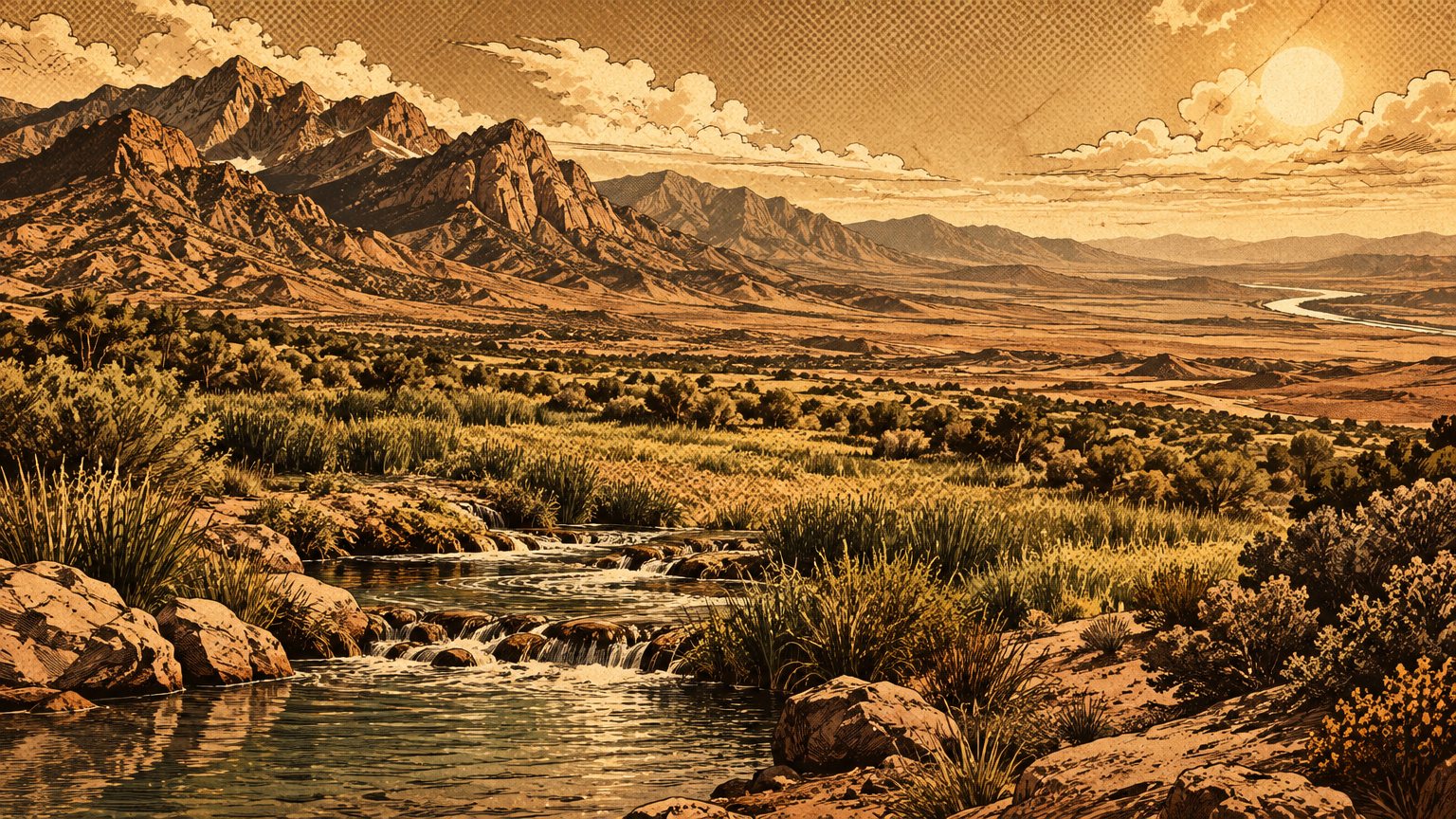
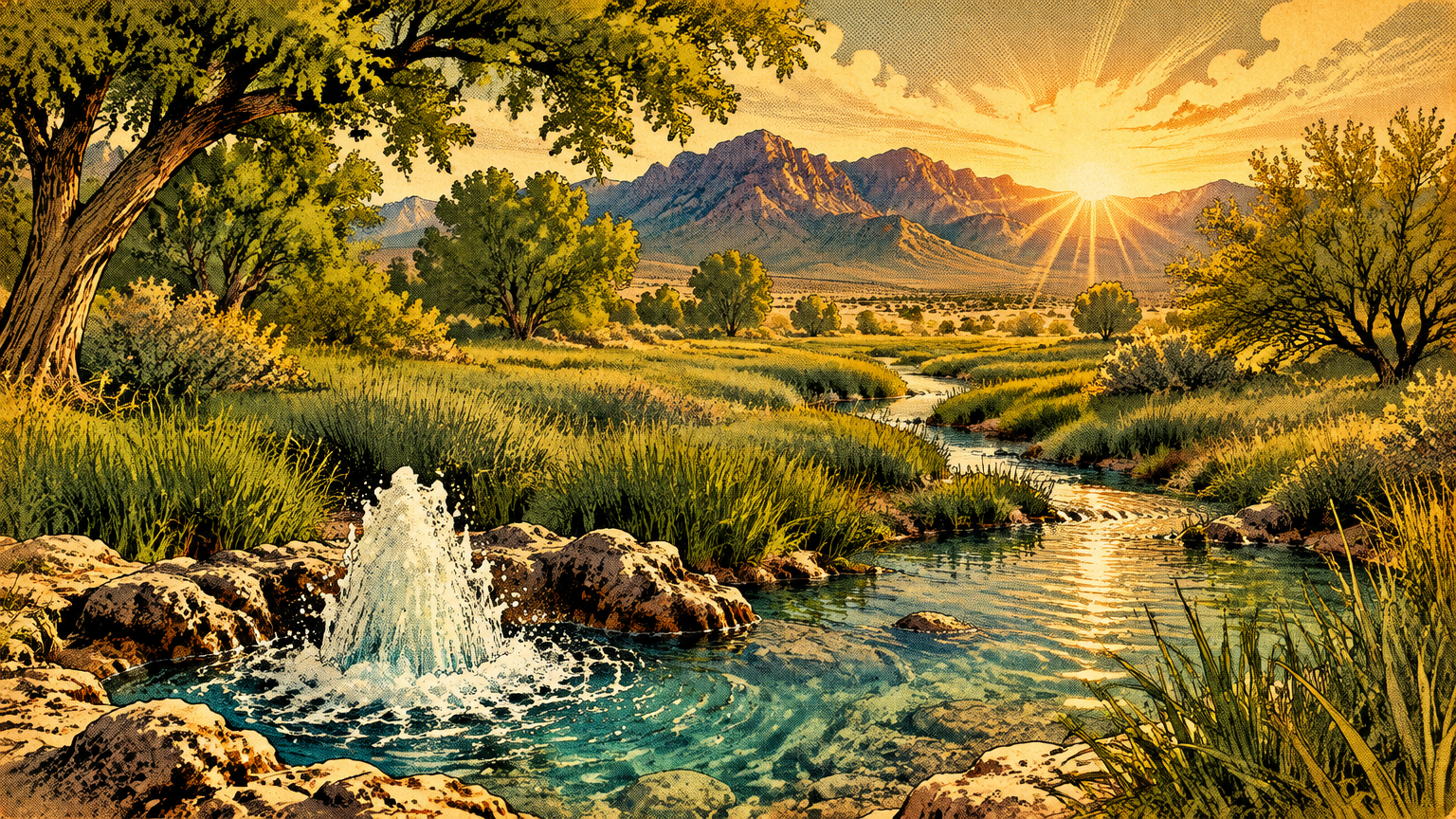
Three springs, one pressurized aquifer, and a green mile of meadow in the middle of the Mojave. How the Las Vegas Springs worked, what they fed, and how a thirsty city pumped the pressure out of them by 1962.
Before the highways, the valley was already a junction. Its first routes ran spring to spring on foot, and the honest map of them is certain at the water, probable across the desert, and gone under the city.
Before it was a city, this valley was a homeland. The Southern Paiute, the Nuwu, have names, a language, songs that map the desert, and a sovereign nation that still governs from Paiute Drive.
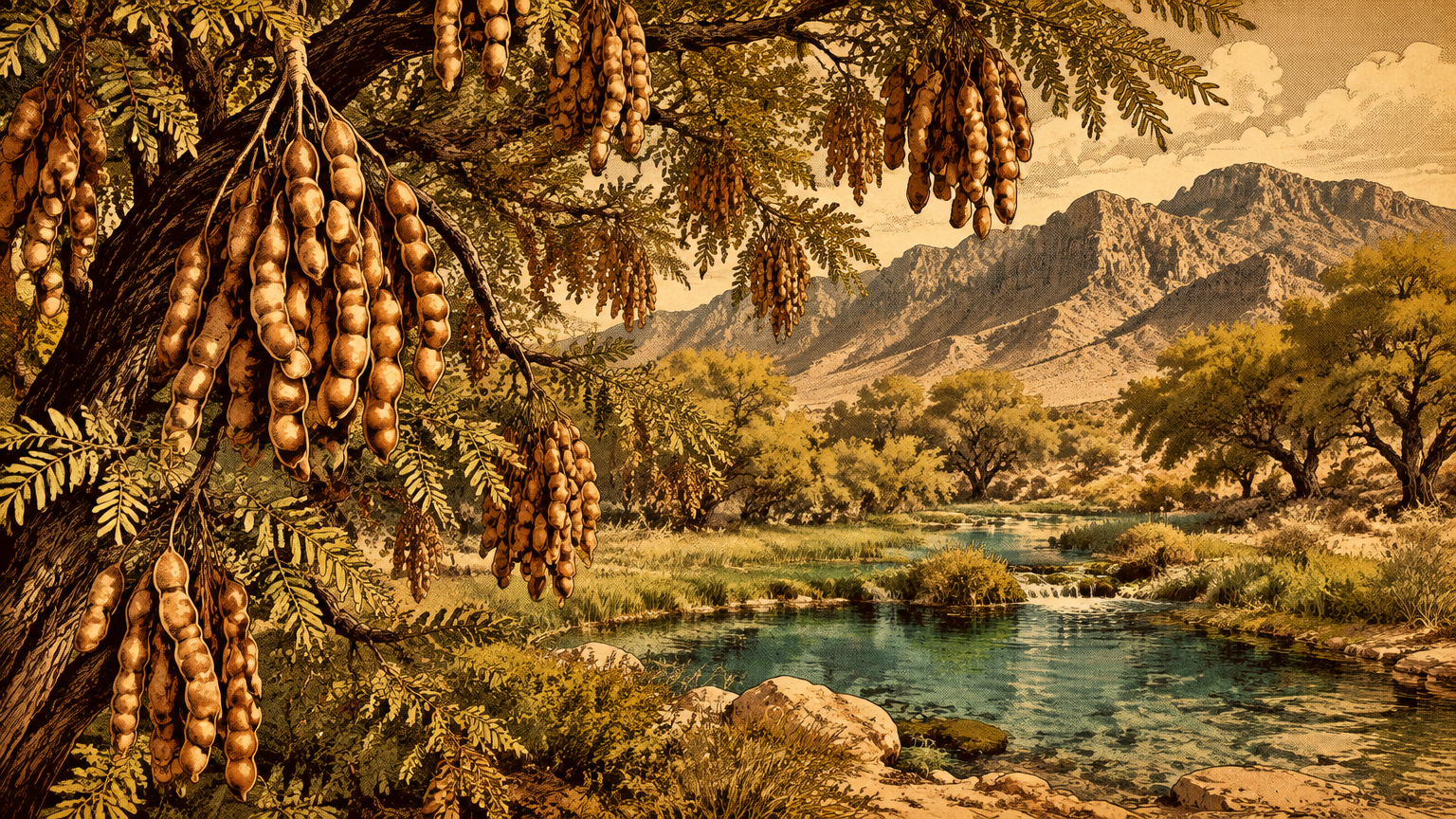
Before the neon, this valley ran on a pantry written into the land itself: mesquite ground into flour that kept all winter, pine nuts cached in the mountains, agave roasted in stone lined pits, and gardens beside the springs.
Long before the railroad, people lived, gardened, and traveled through this valley for well over a thousand years. The evidence is stone, shell, and charcoal, and knowing exactly what it can and cannot prove is the real story.
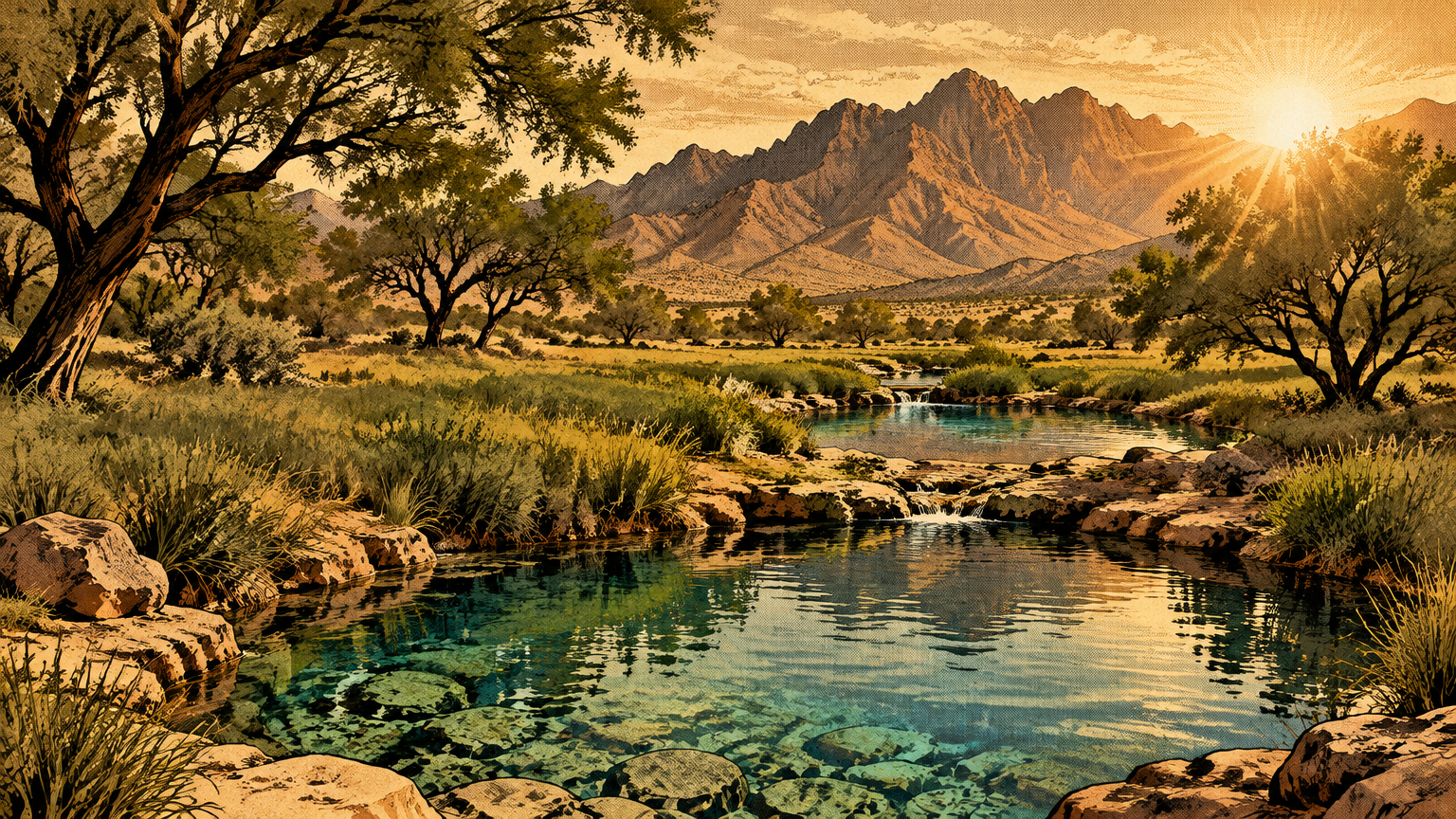
Before the casinos, before the Strip, before Las Vegas was even a city, natural springs transformed a patch of Mojave Desert into a place people couldn't afford to ignore. This is where the story of Las Vegas begins.