Standing on the Strip Before It Existed
Before Las Vegas sold dreams, the valley offered something money couldn't buy: water.
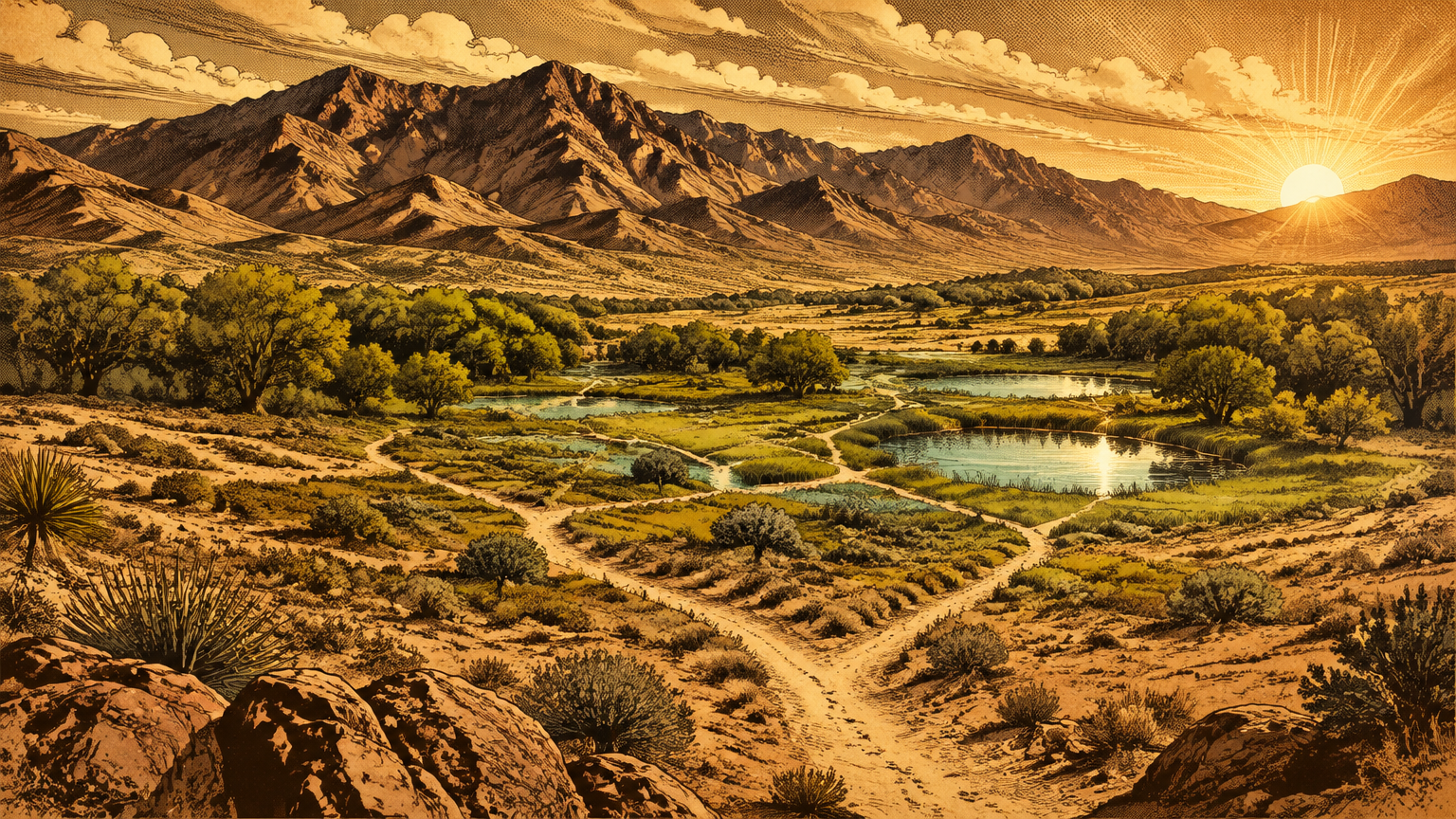
Picture the Las Vegas Strip with everything familiar stripped away. No Bellagio. No Caesars Palace.
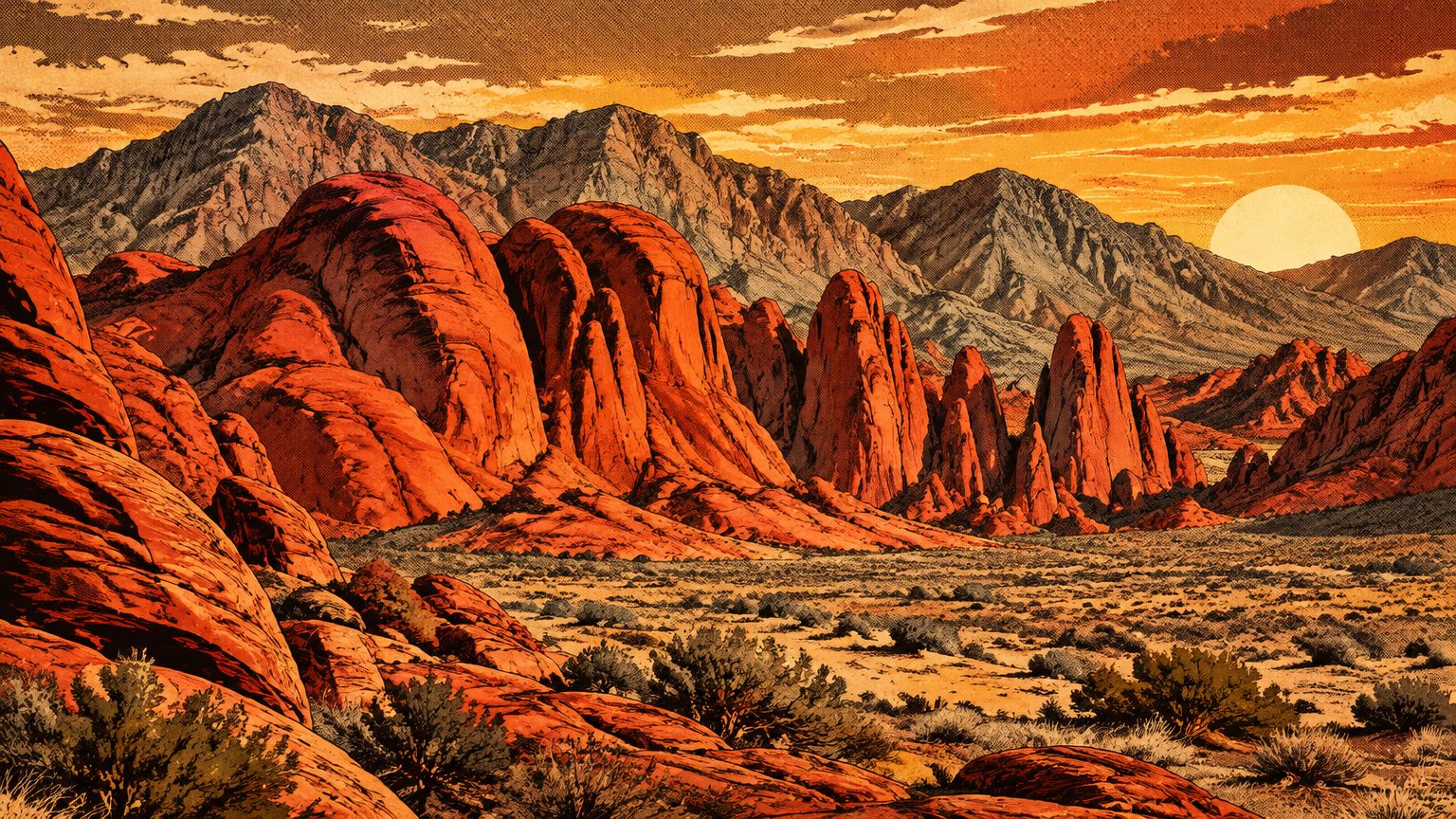
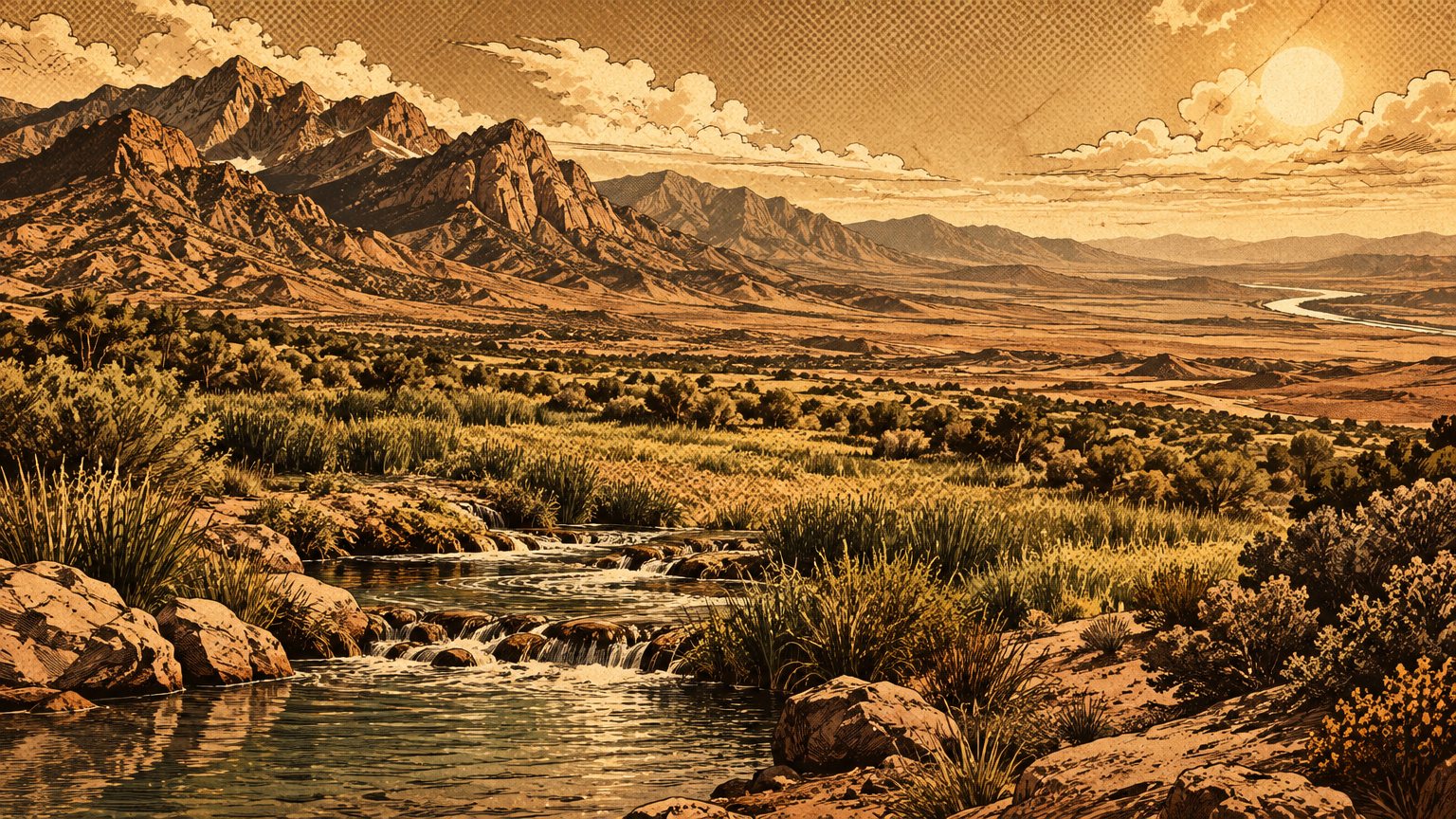
No Fremont Street. No casinos, no neon, no towers, no paved boulevards. Nothing but Mojave Desert in every direction, ringed by bare mountains that catch the first and last light of the day.
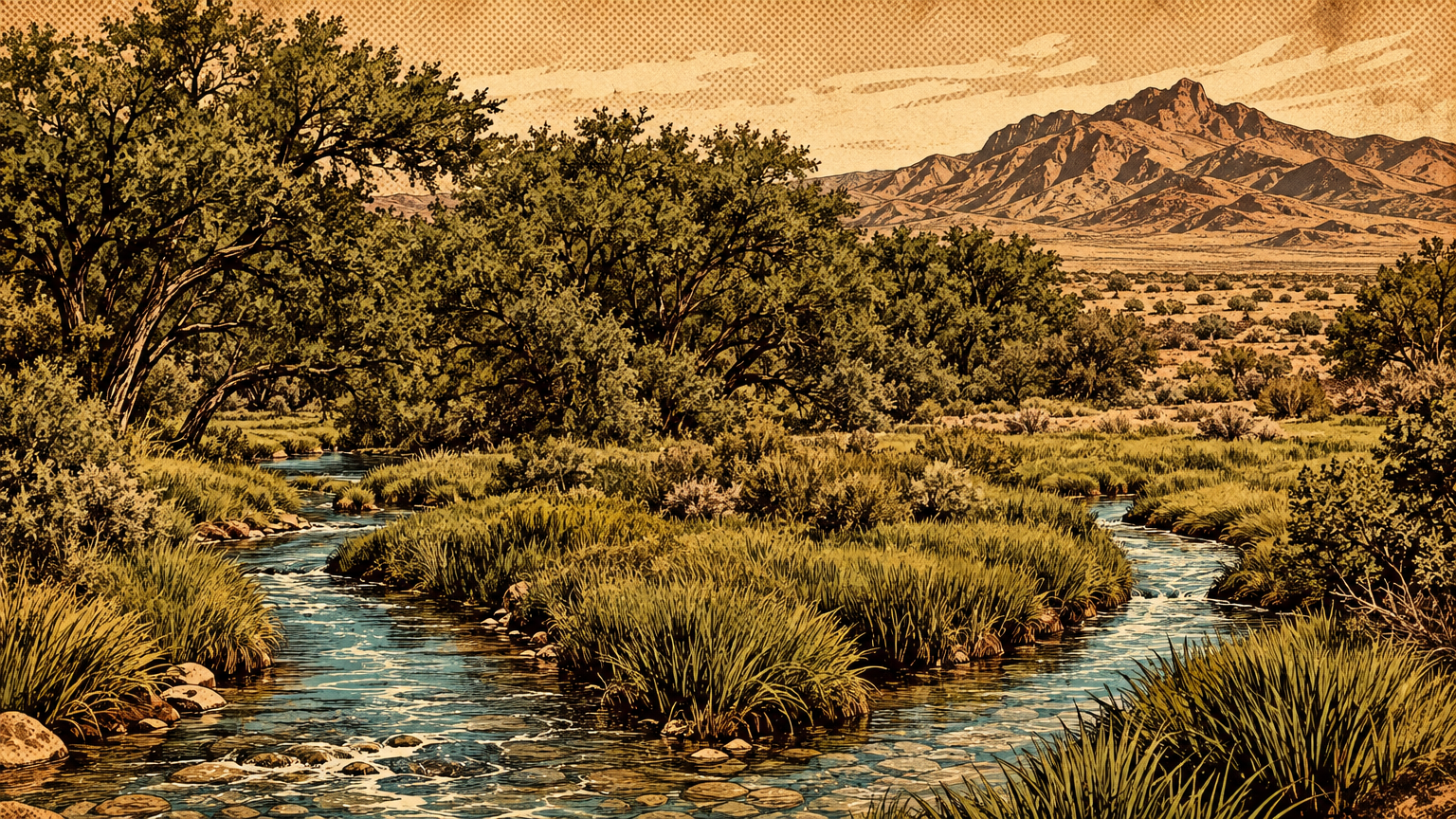
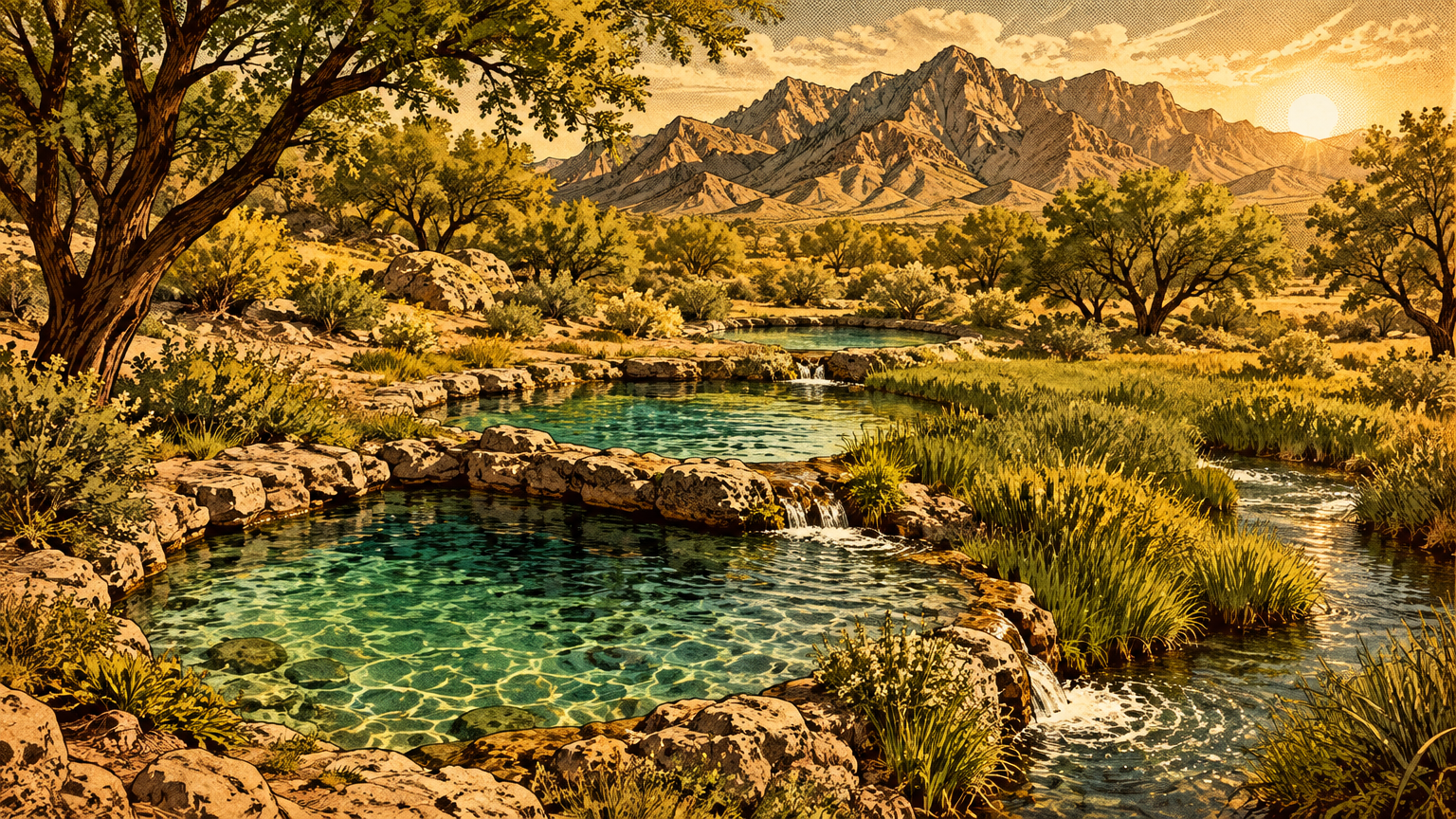
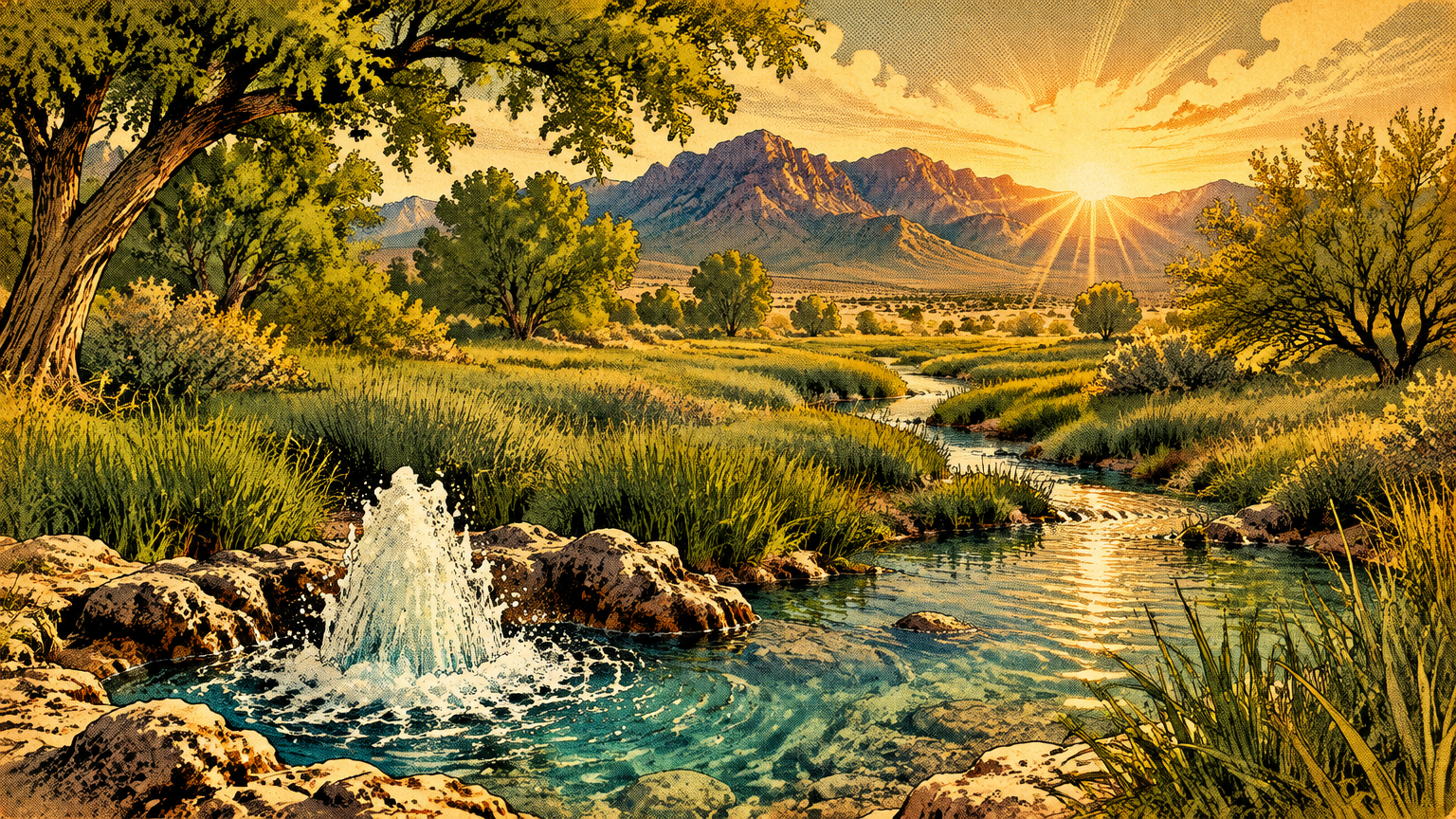
Now look closer at the valley floor. In one corner of that dry expanse, something impossible is happening. Water is rising out of the ground on its own.
Grass is growing thick and green around it. Mesquite trees are throwing shade. Birds, rabbits, and bigger game are coming in to drink.
In a desert, that is not scenery. That is survival. That is a place worth finding, worth returning to, worth building a life around.
Every empire this valley has ever held started at the same address: wherever the water came up.
So here is the question this whole series starts with. How did a desert oasis become one of the most famous cities on Earth?
The Desert Was Never Empty
Start with the most important correction in Las Vegas history. This valley was never empty, and it was never waiting to be discovered.
People were living around the Las Vegas Springs thousands of years before any outsider arrived. Archaeological evidence at the springs tells the story in stone tools, clay pots, campfire remains, and foodstuffs left behind by generation after generation of Indigenous families.
Pueblo peoples and Patayan ancestors used these waters. So did the people who held this valley longest and know it best.
The Southern Paiute call themselves the Nuwuvi, or Nuwu. The Las Vegas Paiute Tribe is known as the Tudinu, the Desert People. According to the Tribe and Springs Preserve, Nuwuvi ancestors have inhabited Southern Nevada since at least 1100 A.D., and the Tribe speaks of a living connection to this land stretching back some 9,000 years.
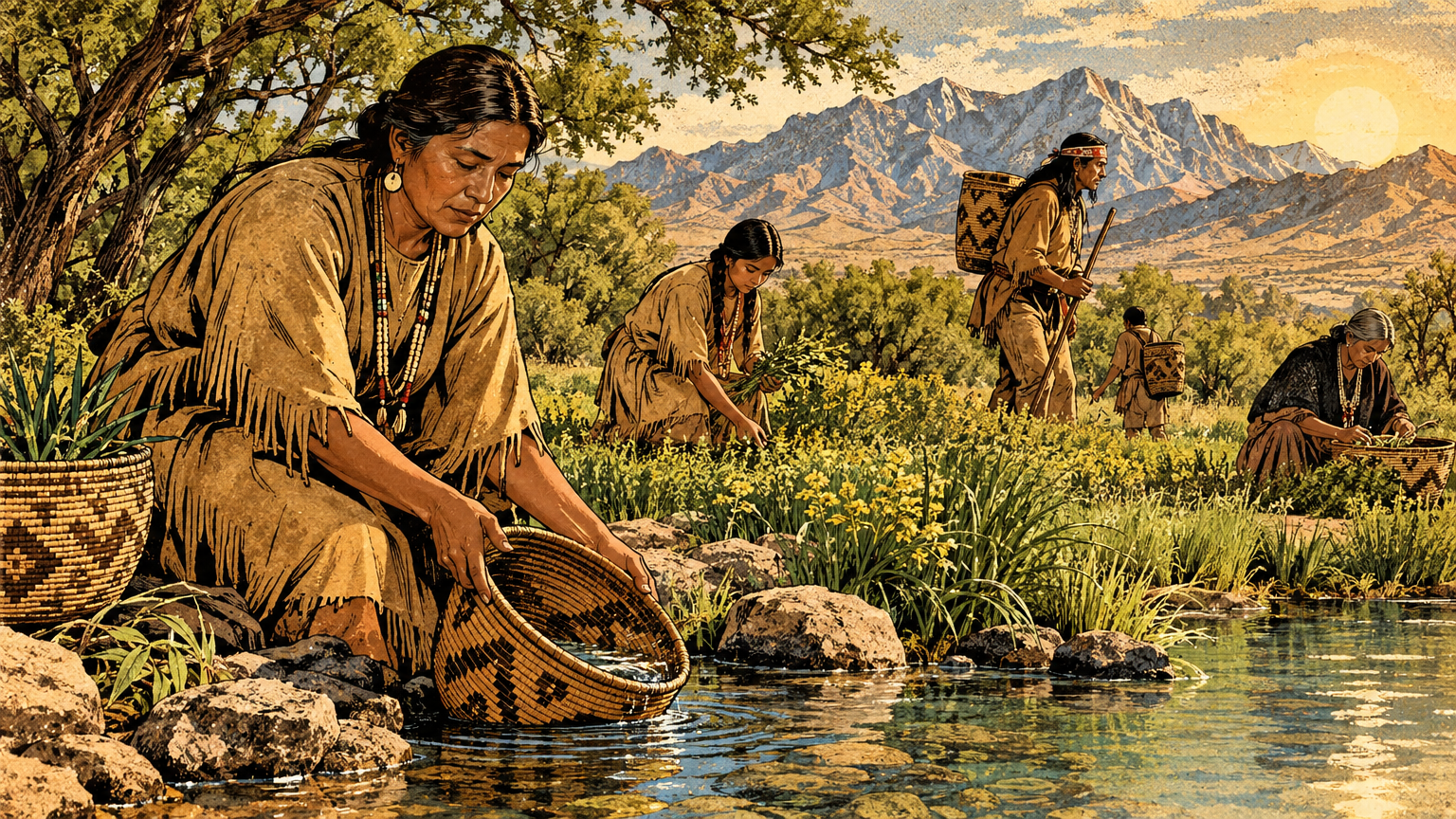
The springs made that life possible. Families built gardens and small settlements near the water. Some Indigenous groups raised stone and adobe pueblos.
Others built houses of creosote and willow brush. The remains they left behind, tools, pottery, and the ashes of old fires, are still being found in the ground around the springs.
The meadows were a winter homeland, while summers were often spent up in the Charleston Mountains, which the Nuwu know as Nuvangatu, their traditional and spiritual birthplace. People moved with the seasons, traded along desert routes, and read this landscape the way you would read a map you drew yourself.That knowledge mattered. Knowing which plants fed you and exactly where water rose out of a dry valley was the difference between a homeland and a wasteland.
So no, the modern city was not here yet. But people absolutely were.
What made this valley so important wasn't what stood above the ground. It was what came out of it.


The Water That Shouldn't Have Been There
Rain that falls in the mountains around this valley does not all run off or vanish. Some of it sinks deep underground and travels, slowly, through rock. When that buried water reaches the low ground near the springs, pressure pushes it upward, and it breaks the surface on its own.
Geologists call that an artesian spring. Out here, people just called it a miracle with a schedule.
The Las Vegas Springs sent two streams of water across the valley floor, running east toward Sunrise Mountain. Those streams fed the grasses and the mesquite woodland that gave the place its character: a green, living oasis in the middle of the Mojave, with shade, forage, and game in a landscape that offered little of any of them for miles in any direction.
You can stand where it happened. The historical springs sat northwest of today's downtown, at the site now protected as Springs Preserve.
They were never under the Strip. The famous boulevard came much later, and in a different part of the valley.
Reliable water is the rarest luxury a desert can offer. For Indigenous families, it meant gardens and game.
For travelers crossing the Mojave, it meant their animals lived to walk another day. For everyone who came later, it meant this one spot on the map was worth fighting over.
Hold that thought, because it carries a beautiful irony. The city that would one day become world famous for spectacular artificial water displays, dancing fountains and man made lakes, began with water that needed no engineering at all. It simply rose out of the desert, free to anyone who reached it.
Las Vegas Didn't Mean What You Think
Here is a piece of trivia that rearranges how you see this city. Las Vegas is Spanish. It means "the meadows."
Not the lights. Not the action. Grass.
The name described exactly what travelers saw when they reached the springs: green meadows in a brown desert, so unusual that the landscape itself became the landmark. Long before the word Vegas meant a weekend, it meant pasture, water, and rest.
Who coined it? Honestly, nobody knows for certain.
Nevada Historical Marker No. 40, which stands at the springs, credits an unknown Spanish speaking traveler with the name. History kept the meadows and lost the man.
And that is fitting, in a way. The name was never about a person. It was about a place so green it demanded to be named after the thing that made it possible.
Think about how unusual that is. This town would name its streets and towers after explorers, mobsters, performers, and empires.
But the town's own name, the two words on every postcard and poker chip, belongs to no one. It belongs to a landscape: grass, fed by springs, in a desert that had no business growing it.
The name survived everything that followed. It fit the fort, the ranch, the railroad town, and the neon city equally well, because underneath every version of Las Vegas sat the same green ground.
The most famous gambling destination on Earth was named after grass.
The Original Vegas Visitors Weren't Tourists
The first outsiders who built their plans around this water were traders, and they were not sightseeing.
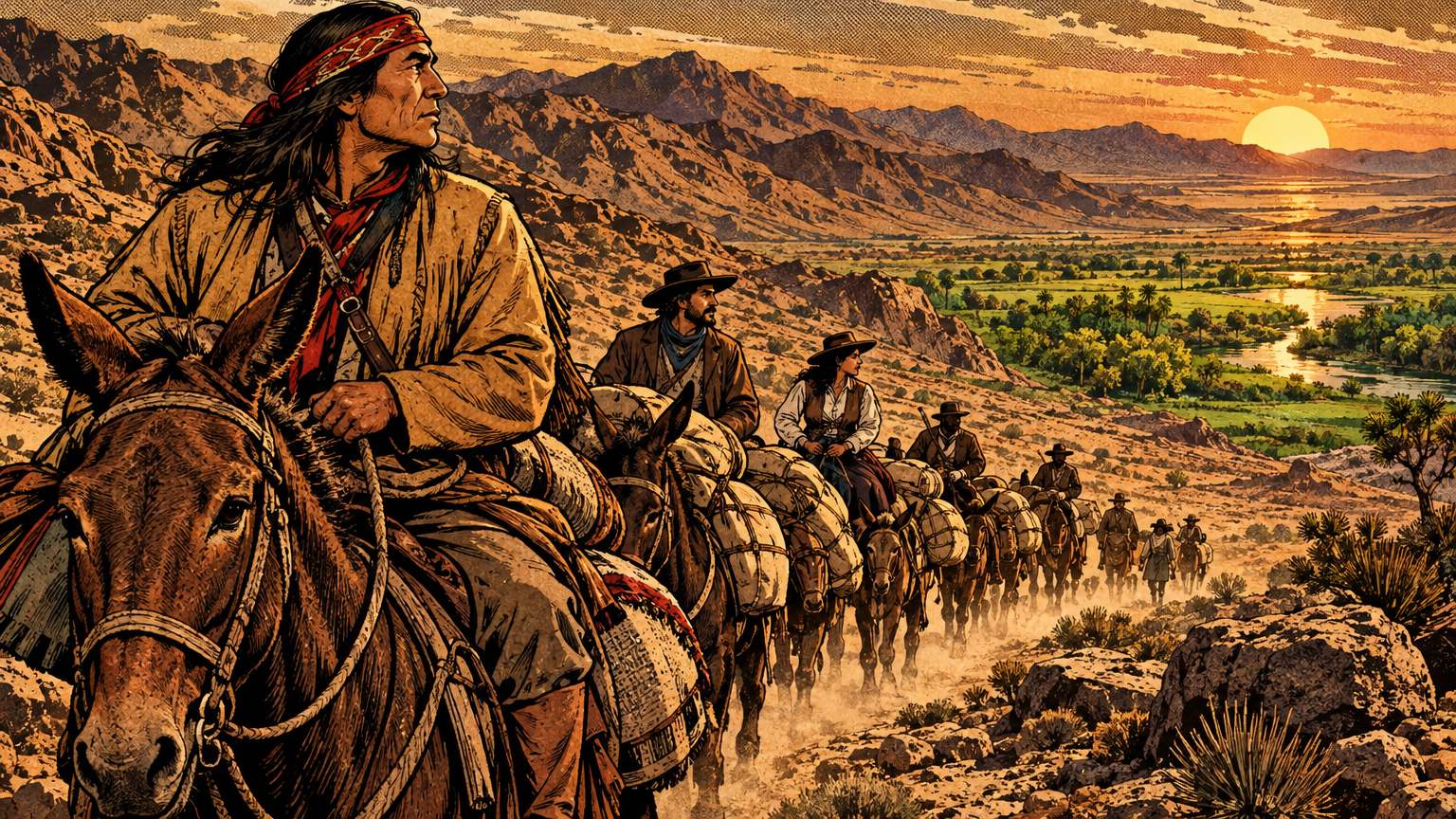
In 1829 and 1830, New Mexican merchant Antonio Armijo led a trading expedition from Santa Fe toward California, opening the route that became the Old Spanish Trail. During that journey, a young scout named Rafael Rivera separated from a scouting party, found his way to the springs and meadows, and led the caravan in to water.
Rivera deserves his place in this story. But let's be precise about what it is. He was not the first human to find this valley.
Indigenous families had known these springs for thousands of years before he was born. He was a scout who connected an old homeland to a new trade route, and that connection changed everything.
The trail turned the springs into one of the great rest stops of the desert Southwest. Pack animals drank. Traders rested.
Goods moved between New Mexico and California through a valley that could keep both alive. Later, hundreds of wagon trains camped beside the springs, and thousands of sheep and horses were driven across the Mojave to California, watering at the meadows on the way.
In 1844, John C. Frémont camped at the springs on May 3 and put Las Vegas on the map in the official sense, carrying its name into American records. Later, the Mormon Road carried wagon trains and mail through the same green ground.
Eventually, travelers weren't satisfied with simply passing through. Some wanted to stay.
1855: A Fort, a Mission, and a Very Big Ambition
In June of 1855, thirty Mormon settlers led by William Bringhurst arrived in the valley with orders to build something permanent: a mission and way station on the Mormon Road between Salt Lake City and California. They even reused the materials of a small structure a Mormon mail contractor had built in the valley in 1852.
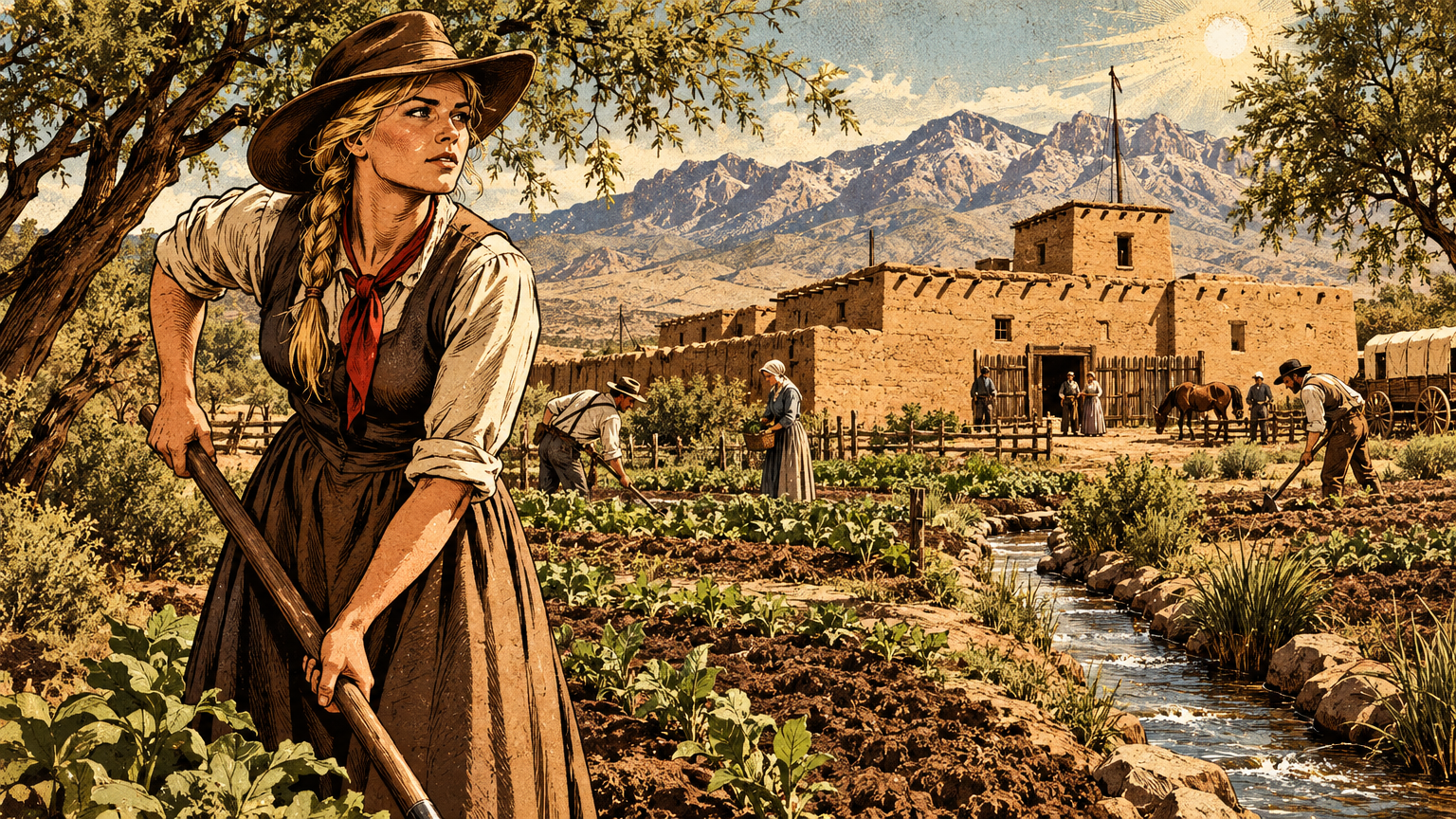
With help from local Paiute people, they raised an adobe fort beside Las Vegas Creek, a few miles east of the springs. Its walls ran about 150 feet, with two bastions and a row of two story buildings inside. They diverted creek water to irrigate crops, planted trees, and set about building a settlement and sharing their faith with the Southern Paiute families whose homeland this was.
It should have worked. There was water.
There was grass. There was traffic on the trail.
Instead, the mission unraveled. Crops failed or disappointed. A lead mining effort tied to Mount Potosi produced metal so full of zinc that it made poor bullets.
Leaders fell into dissension. The welcome wore thin on both sides as settlement pressed against Paiute land and Paiute water.
The records do not line up to the month, and honest history should say so. Most of the settlers abandoned the fort in 1857, and by 1858 the mission was empty, its people called elsewhere.
Las Vegas did not begin as an instant success story. Its first permanent settlement was a failure. Part of that fort's original eastern wall and southeast bastion still stand today at Old Las Vegas Mormon Fort State Historic Park, a few quiet acres that hold the oldest building story in the city.
The missionaries left. But the water remained. And someone else saw a future in the valley.
That failure deserves its own telling, and it will get one. This chapter has a ranch to visit first.
Before There Were Casinos, There Was a Ranch
In 1865, Octavius Decatur Gass acquired the old fort site and turned it into a working ranch, the Las Vegas Rancho. The fort's rooms sheltered travelers again. The ranch grew grain, vegetables, and fruit, and sold food and supplies to miners working El Dorado Canyon and to travelers crossing the valley.
Gass understood the real asset. In 1872 he filed on most of the water from the springs, and one by one the valley's other landowners sold out to him. Whoever held the water held the valley.
Then his luck turned. Gass borrowed money from rancher Archibald Stewart, a bad crop season wrecked his plan to repay, and the ranch passed to Stewart. In April of 1882, Archibald moved his family to the ranch: his wife, Helen, and their children.
Helen Stewart had not wanted the lonely ranch life. She got roughly two years of it with her husband. In 1884, Archibald Stewart was killed in a gunfight at the nearby Kiel Ranch, leaving Helen pregnant, with four children, at the edge of the map.
She stayed. A few weeks later she gave birth to a son, Archibald, named for his father. Then she went to work.
For nearly two decades, Helen Stewart ran that ranch: feeding travelers, raising her children in a remote desert outpost, and buying land until she became the largest property owner in Lincoln County. She served as the valley's first postmaster, a post she held for ten years.
Her story is tangled up with the valley's first people, too. She collected Paiute baskets, contributed land for a Paiute colony, and helped establish a school for Paiute children, even as her own prosperity rested on land that had been taken from the Paiute.
History remembers her as the First Lady of Las Vegas, and for once, a nickname undersells the story.
Because the next buyer who came for her ranch was not a miner or a farmer. It was a railroad.
1902: When the Railroad Saw Something Big
By 1902, Senator William A. Clark of Montana was building the San Pedro, Los Angeles and Salt Lake Railroad, a line meant to connect Southern California with Utah. His engineers faced a simple mechanical problem: steam locomotives drink water, constantly, and the Mojave does not offer it often.
Las Vegas offered it. The springs, the creek, and the meadows sat right where a railroad needed a watering and refueling stop between Utah and California.
Clark's railroad did not just want Helen Stewart's ranch. It needed what flowed under it.
In 1902, Helen Stewart sold. The price was $55,000, a fortune at the time, worth well over a million in today's money. The railroad acquired roughly 1,864 acres of land and water rights, the heart of the old ranch and the springs that fed it.
The railroad moved fast on its prize. It created the Las Vegas Land and Water Company to run the valley's first water distribution system, laid redwood pipes, and built protective houses over the springs to guard the supply. The oasis was becoming infrastructure.
Helen, meanwhile, did not leave. She bought land beside the family plot, built a second home, and stayed on in the town rising out of her ranch.
She did not sell everything. The Stewart family's four acre burial plot stayed hers, and so did a small share of the water from Las Vegas Creek. Even in the biggest land deal the valley had ever seen, Helen Stewart kept the ground where her husband lay and a piece of the water that had sustained them.
Understand what the railroad actually bought. The land mattered. The location mattered.
But the dependable water is what made this particular patch of desert commercially valuable. The same water that had drawn Indigenous families, traders, missionaries, and ranchers now drew a corporation.
The railroad had arrived. The land was being divided. And the desert was about to experience a very unusual real estate event.
May 15, 1905: The Desert Goes Up for Sale
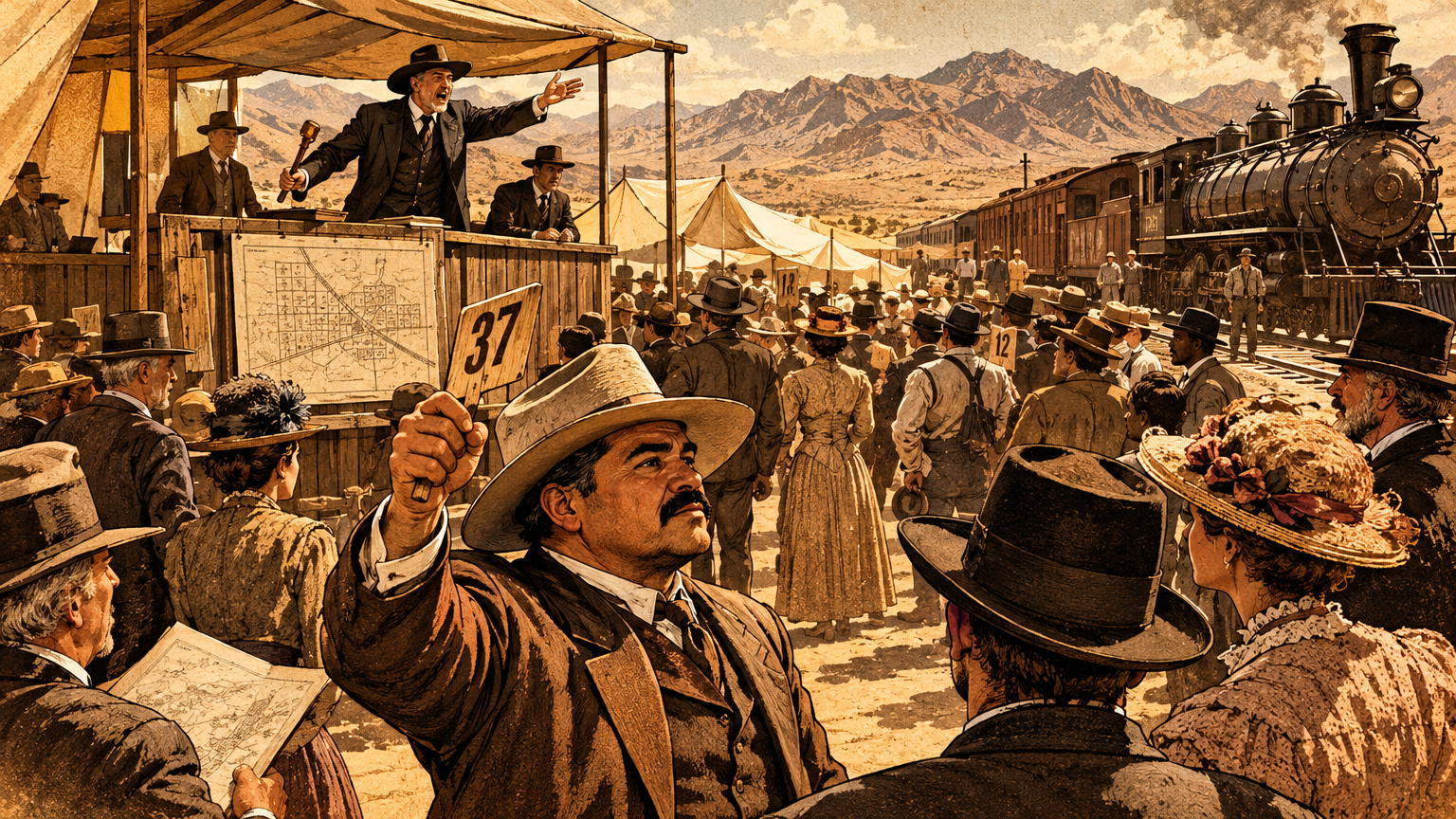
On May 15, 1905, the railroad's land company put a brand new townsite on the auction block: 110 acres laid out in a grid between Stewart Avenue, Garces Avenue, Main Street, and Fifth Street, the street the world now knows as Las Vegas Boulevard. The auction ran two days, and buyers came ready. Lots for homes and businesses sold in the desert heat, and a permanent town began rising on the spot that is downtown Las Vegas today.
The heat that day was the honest desert kind, and still they came: speculators, merchants, families, and fortune hunters, bidding on surveyed lots in a place most Americans could not have found on a map a year earlier. Within weeks, a meat market, a hotel, and stores were open on the grid, trains were stopping, and spring water was refilling the locomotives that made it all move.
That is why May 15, 1905 is celebrated as the birthday of Las Vegas. The railroad had tracks, water, and now a town to serve both.
But here is the detail that keeps historians honest. Clark's townsite was not the only Las Vegas on the market. Surveyor J. T. McWilliams, who had surveyed Stewart's ranch, had put his own townsite up for sale in January of 1905, on land west of the railroad tracks.
For a moment, two towns named Las Vegas competed across the rails. The railroad's townsite, holding the water rights, won. McWilliams' townsite became the Historic Westside.
And one more distinction matters. The 1905 auction founded the town, but Las Vegas did not formally incorporate as a city until June 1, 1911, when voters approved incorporation 168 to 57. A birthday and a city charter are two different milestones, and Las Vegas has both.
The oasis had attracted people for generations. The railroad had transformed it into a commercial opportunity. And now an entirely new chapter of Las Vegas history was beginning.
The City Grew. The Springs Went Silent.
Every success story in this valley runs on water, and success has a thirst.
Starting in 1907, residents began drilling private wells into the aquifer beneath the valley. Many wells were never capped, and water gushed out around the clock, wasted by people who believed the supply underneath them was endless.
It was an easy mistake to make. The water came up with such force, for so long, that it felt permanent.
It wasn't. Farming drank deeply. The town drank deeply.
Population climbed through the Hoover Dam years and past them, and the valley kept pulling from the same underground account faster than nature refilled it. By 1935, Las Vegas Creek, the stream the springs had fed for centuries, dried up in the summer.
Colorado River water began arriving through new systems, and the growing city leaned on it more and more. But the original source kept falling.
According to Springs Preserve, by 1960 nearly 3,000 wells had been drilled in the Las Vegas Valley, and groundwater levels were dropping about two to four feet every year. Read that again. The water table under Las Vegas was falling by the height of a man, then another, every single year.
By 1962, the Las Vegas Springs stopped flowing altogether.
Be clear about what that means, because the distinction matters. Las Vegas did not run out of water. Wells still pumped.
River water still arrived. The city kept growing. What ended was the natural flow, the water rising on its own out of the desert floor, the way it had since long before anyone wrote this valley's name down.
For thousands of years, the springs sustained life in this valley. Then the city they helped create grew beyond their capacity to survive.
No single person did that. No single generation did that. A whole century of people, each using water that seemed limitless, added up to a limit.
That is not a villain story. It is something more useful: a reminder that the resource a place is built on is never automatically forever.
The Birthplace of Vegas Is Still Here
The springs went silent, but the site refused to disappear.
In the 1970s, highway plans threatened to pave the old springs ground. An archaeological survey led by Dr. Claude Warren of the University of Nevada, Las Vegas documented the site's long human occupation, and the expressway was routed around it. In 1978, the Las Vegas Springs site was listed on the National Register of Historic Places.
In June of 2007, Springs Preserve opened on the old springs ground: 180 acres of exhibits, trails, gardens, and preserved landscape sitting three miles northwest of downtown. You can walk the land where the meadows were. You can stand near the spring mounds and understand how much green once lived here.
The fort survived, too. The surviving walls of the 1855 mission stand at Old Las Vegas Mormon Fort State Historic Park, and Helen Stewart's story is written across the ranch land that became downtown.
And the first chapter of this valley's story is still being written by its first people. The Las Vegas Paiute Tribe remains a sovereign nation in this valley, its citizens the descendants of the families who knew the springs when the springs were the whole world.
You know the Vegas of today. Wait until you discover the Vegas that came before it.
Before the World Knew Las Vegas
Go back to the valley floor one last time. Desert. Mountains.
Green meadows. Water rising out of dry ground, asking nothing and giving everything.
That water made a homeland. It watered gardens and guided traders across a desert that killed the unprepared.
It tempted missionaries, sustained a ranch, filled the boilers of steam locomotives, and sold a townsite lot by lot on a hot day in May of 1905. Then it carried a city as far as it could, and went quiet.
Before the neon, there was water. Before the casinos, there were meadows. Before anyone imagined a city that would attract millions, there was a desert oasis that people had depended on for generations.
The springs eventually went silent. Las Vegas didn't. Every fountain and pool in this town is an echo of a meadow.
And the greatest show in the desert was only getting started.
The Story in Dates
- Thousands of years ago: Human activity at the Las Vegas Springs.
- Before European arrival: Indigenous peoples inhabit and use the valley's natural resources.
- 1829-1830: Armijo expedition and Rafael Rivera's scouting through the region.
- 1844: John C. Frémont visits the region.
- 1855: Mormon mission established.
- 1857-1858: The mission is abandoned.
- 1880s: The Stewart family operates the ranch.
- 1902: Helen Stewart sells ranch property and associated water rights.
- May 15, 1905: Railroad townsite auction.
- June 1, 1911: Las Vegas officially incorporates.
- By 1962: The natural springs stop flowing.
- 1978: The springs site is listed on the National Register of Historic Places.
- 2007: Springs Preserve opens to the public.
Next on Vegas, Back Then
Chapter 002: The Fort That Failed: Las Vegas' First Big Gamble Before Gambling
In 1855, a group of Mormon missionaries arrived in the Las Vegas Valley with plans to establish a permanent settlement. They built an adobe fort, planted crops, and tried to carve a future out of the desert. Within a few years, their mission had fallen apart.
What went wrong? And what did they leave behind?
Coming next in Vegas, Back Then, only on Extra Super! BIG®.