Every Las Vegas kid learns the name early. Rafael Rivera, the young scout who found the hidden springs and gave this valley its start.
It is a great story. It is also only half true, and the true half is better.
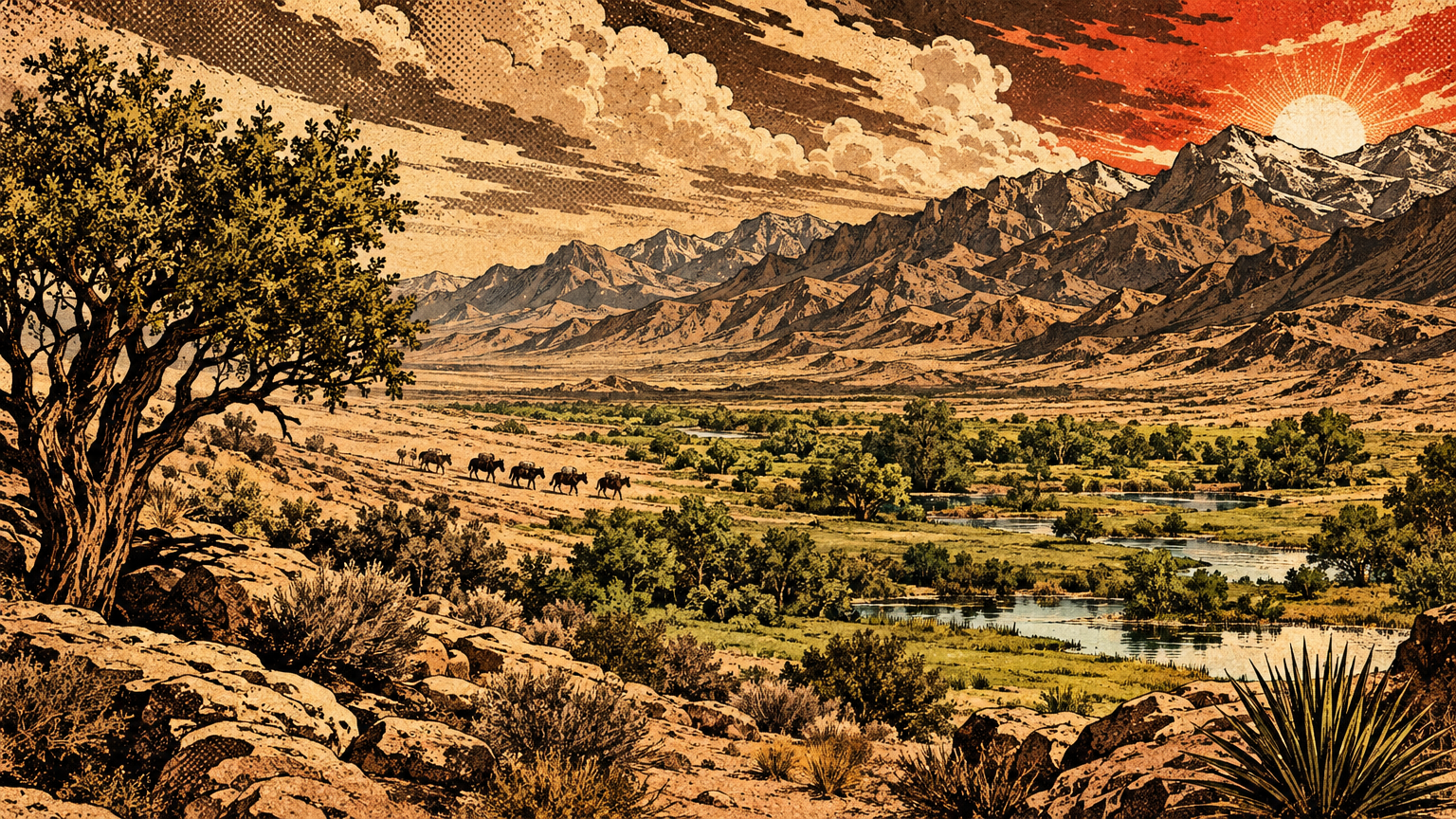
Rivera really did ride ahead of a sixty-man caravan in the winter of 1829 and 1830. He really did change this valley's place on the map. But the springs were never hidden, the valley was never empty, and the most careful sources refuse to say more than the record proves.
A scout in the desert
Rafael Rivera in expedition accounts
Start with what the documents actually hold. Nevada's historical marker for Rivera, Marker 214, calls him the first European American of record to view and traverse Las Vegas Valley.
Read that phrase slowly, because two words in it do heavy work. Of record. The marker is talking about the written record, not about everyone who ever saw this valley.
Rivera scouted for Antonio Armijo's sixty-man trading party out of Abiquiu, New Mexico. We told that caravan's full story in The Caravan That Put Las Vegas on a New Trade Route.
The City of Las Vegas tells the same core fact in plainer words. Rivera was a Mexican scout who came across the Las Vegas Valley in January 1830 while searching for water, the first non-native American to make it into Las Vegas.
Notice what neither source gives you. No diary from Rivera's own hand, no speech, no dramatic scene at the water's edge.
The expedition's documentation came from Armijo, whose diary tracked the route, the stopping points, and the lack of water. Rivera survives in the record as a working scout doing a scout's job: ride ahead, find water, find the way through.
That thin record is exactly why legend rushed in to fill the gaps. A young rider, a desert, a green valley over the next rise: the myth almost writes itself.
Hold the story to the sources instead. They are fewer, drier, and far more interesting, because they show how much weight one careful word can carry.
Where his route may have gone
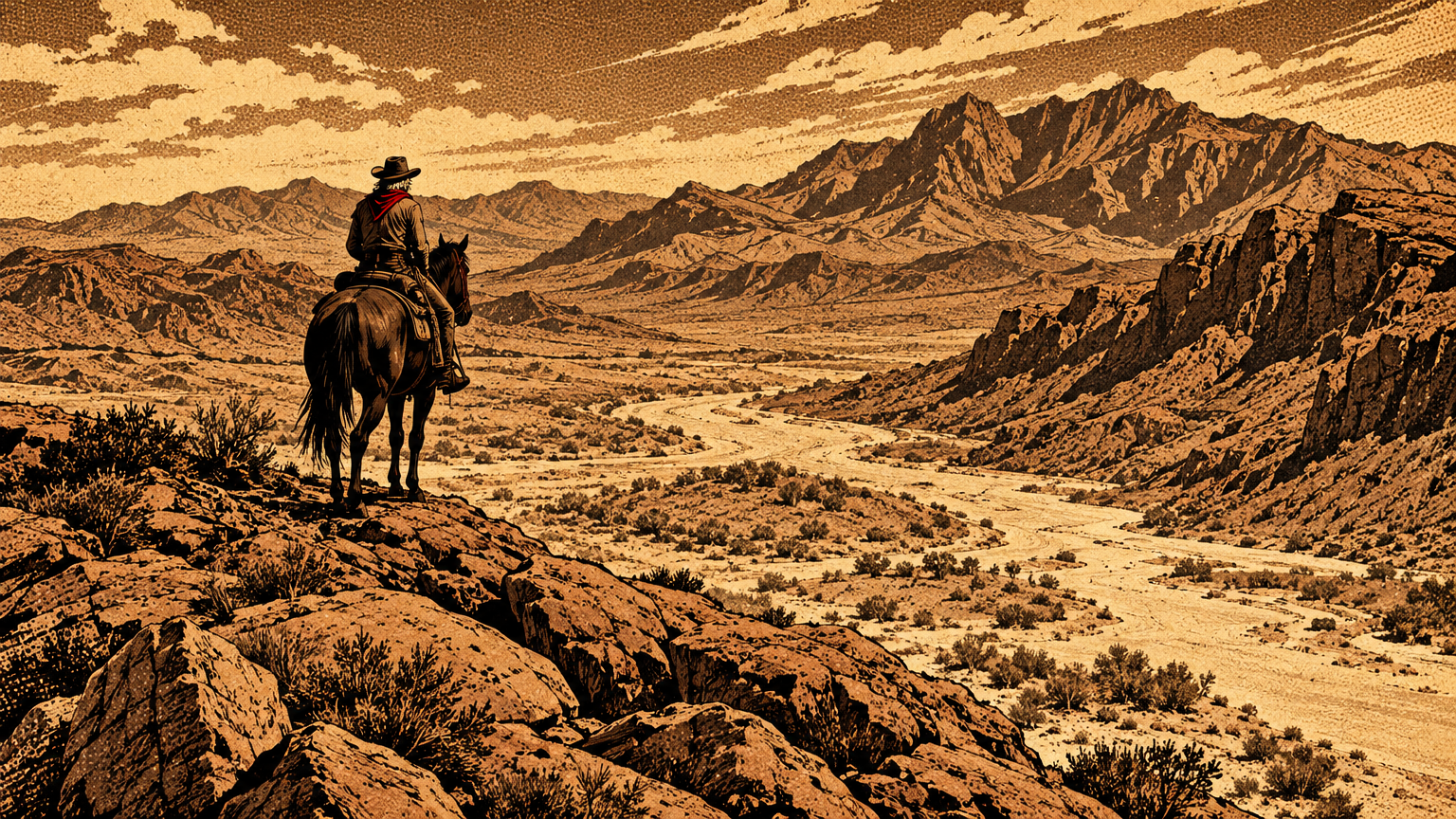
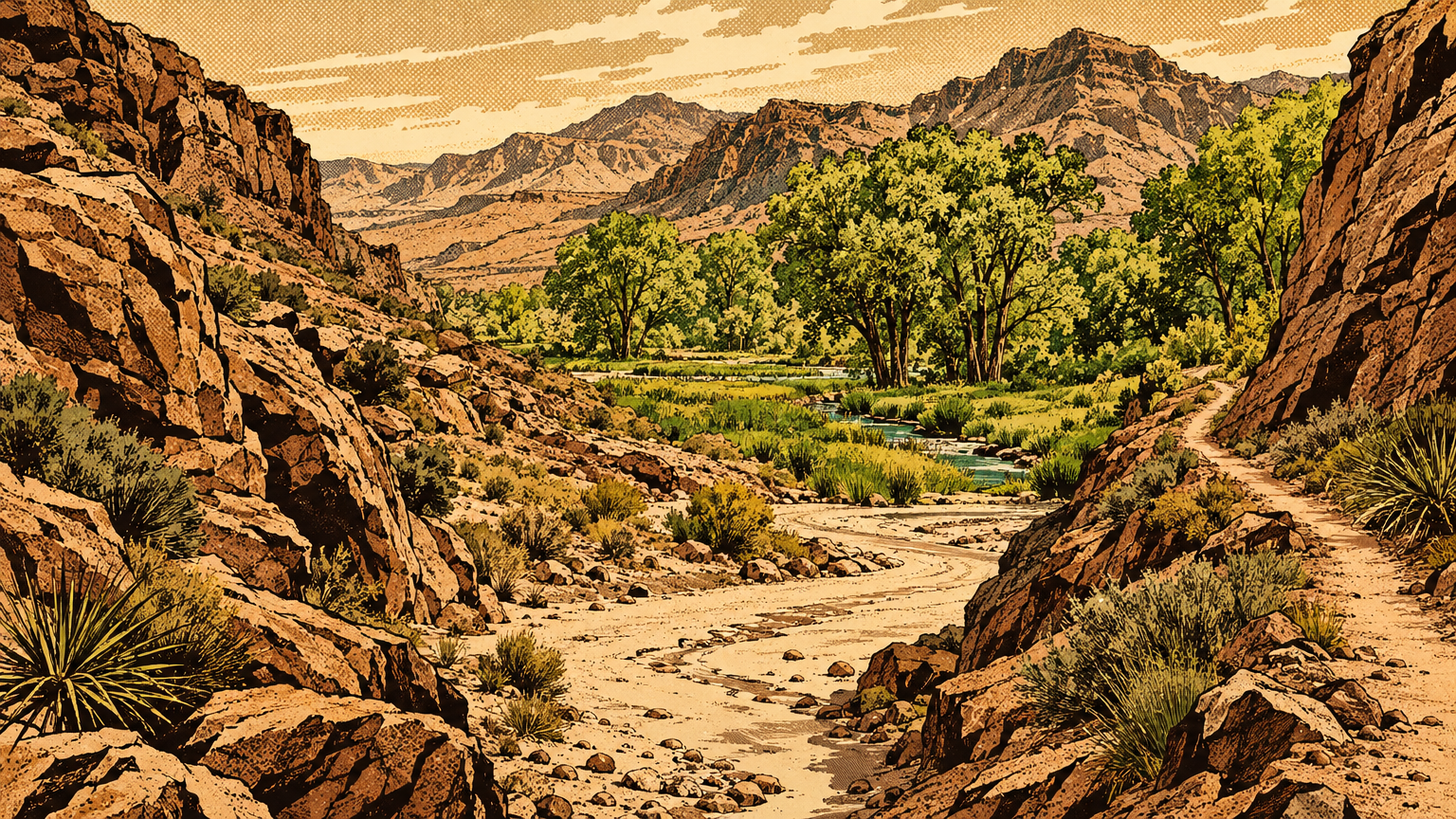
The National Park Service, writing the history of Las Vegas Wash, chooses its verb with real care. Rivera went ahead, the Park Service says, probably discovering the shorter fifty mile waterless route from the Muddy River to the Vegas spring.
Probably. That is the Park Service's own word, and honest history keeps it in place.
The same account credits him with the spring-lined route onward to the Mojave River, near present day Baker, California. Nevada's marker tells the onward leg from the valley side: in January 1830, young Rivera ascended Vegas Wash, twenty miles east of the marker, and blazed a route to the Mojave River by way of the Amargosa River.
Two institutions, one ride, told from opposite ends. The Park Service follows him from the Muddy River toward the spring, and the state marker follows him up the wash and out toward California.
Meanwhile the main party took the river road. It came down the Virgin River to the Colorado, then to the mouth of Las Vegas Wash, and camped there until the scouting party returned.
That camp sits under Lake Mead today, about three hundred feet below the surface. The waiting is part of the story: sixty men and a hundred mules parked at the river while the scout settled whether the shortcut existed.
When the scouts came back, the line west had a new shape. A dry fifty mile jump to spring water, then a spring-lined road onward, instead of the long river detour.
Finding a way through
Las Vegas Wash and the spring oasis
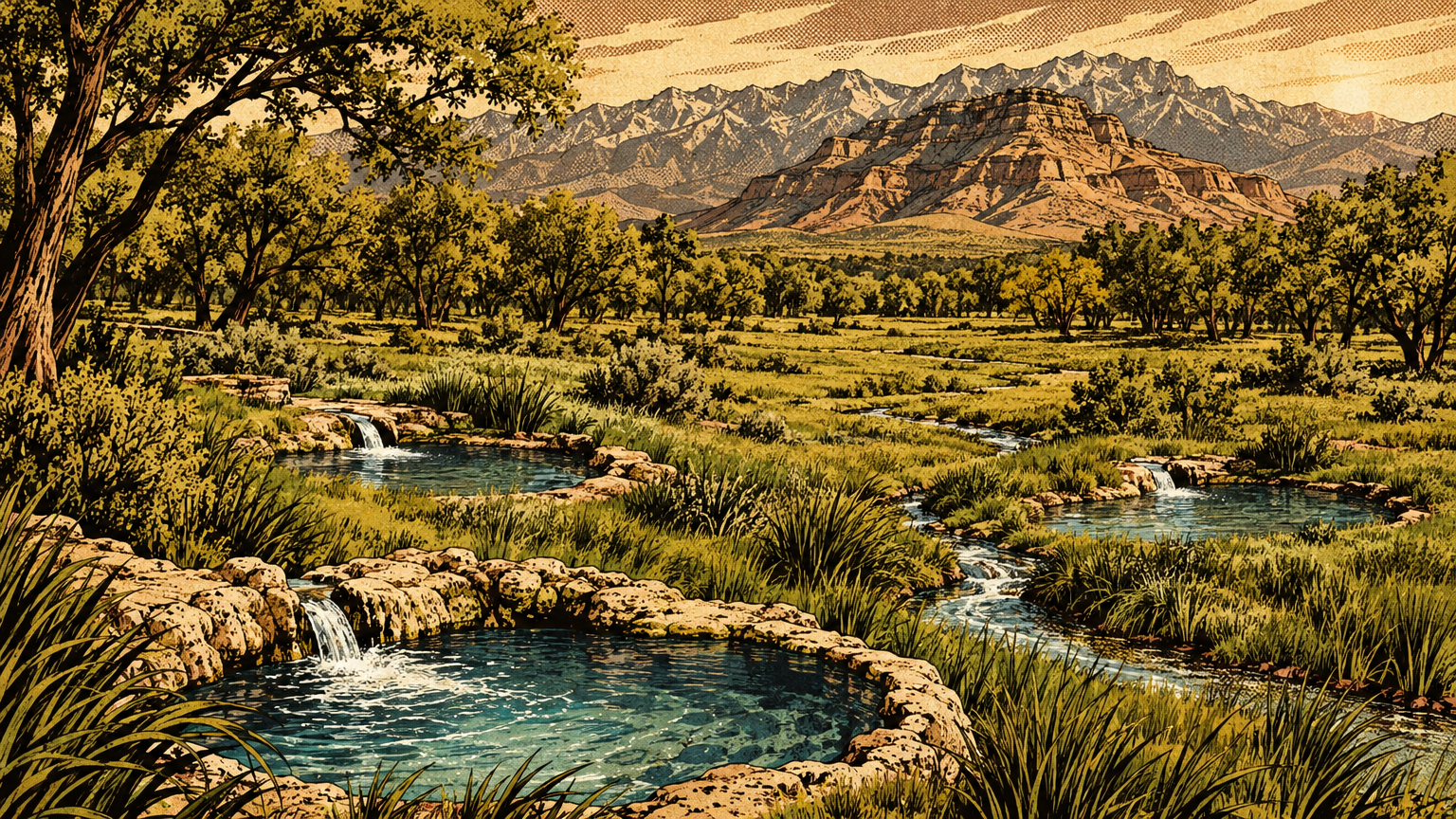
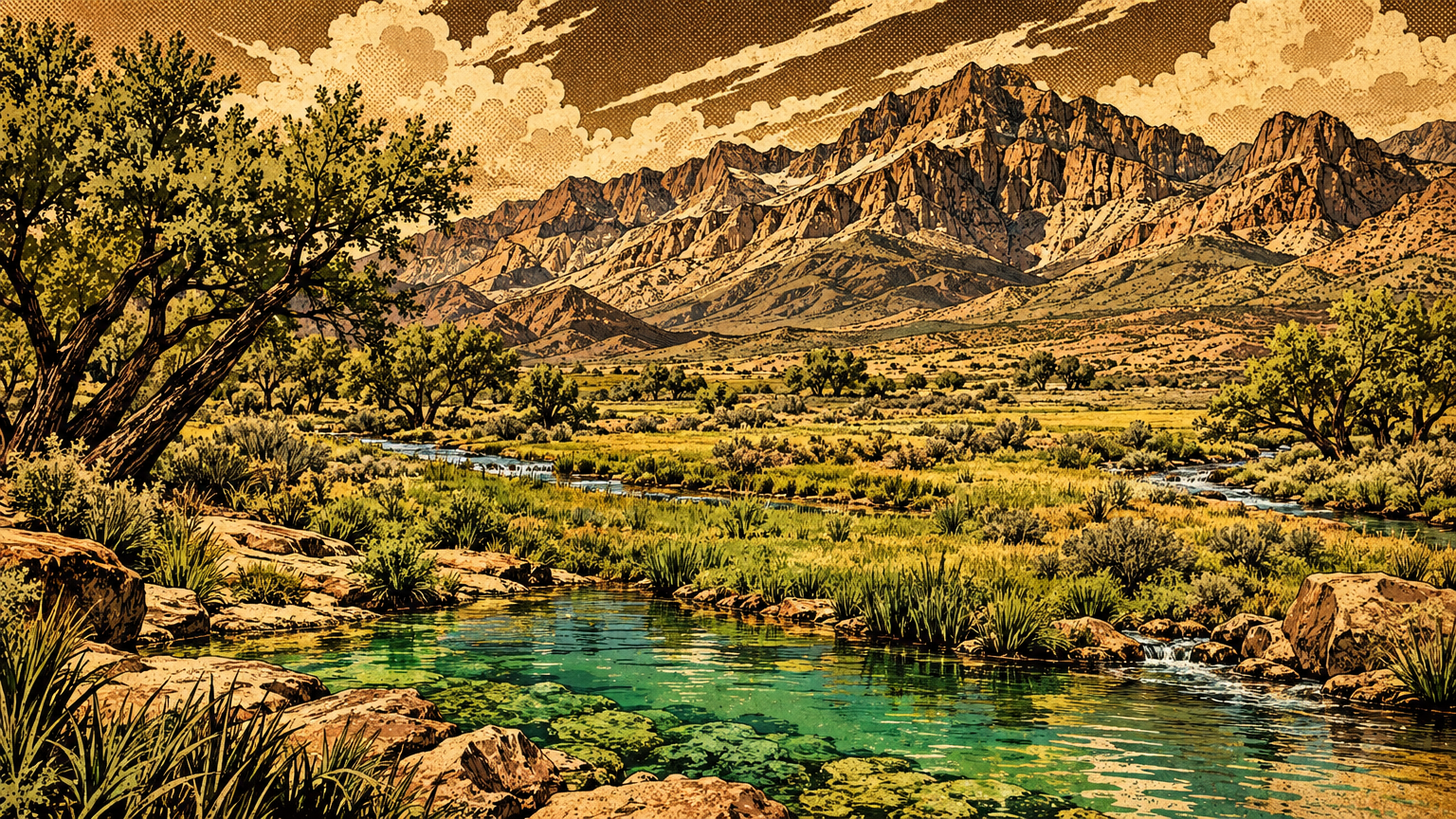
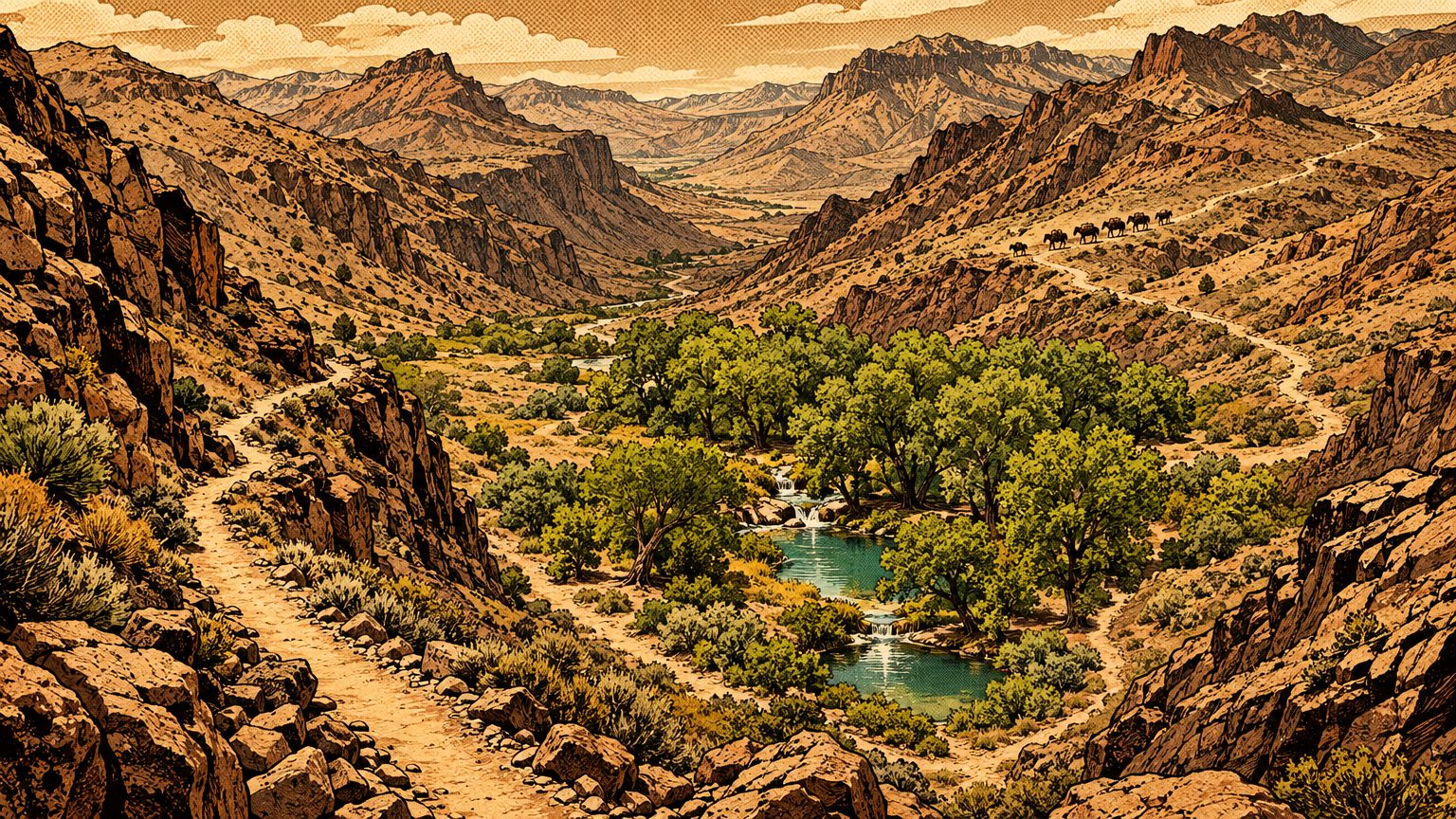
To see why the shortcut mattered, look at the water itself. The Las Vegas Springs rose on the west side of the valley and sent two streams across the valley floor, in the words of the state's marker at the springs.
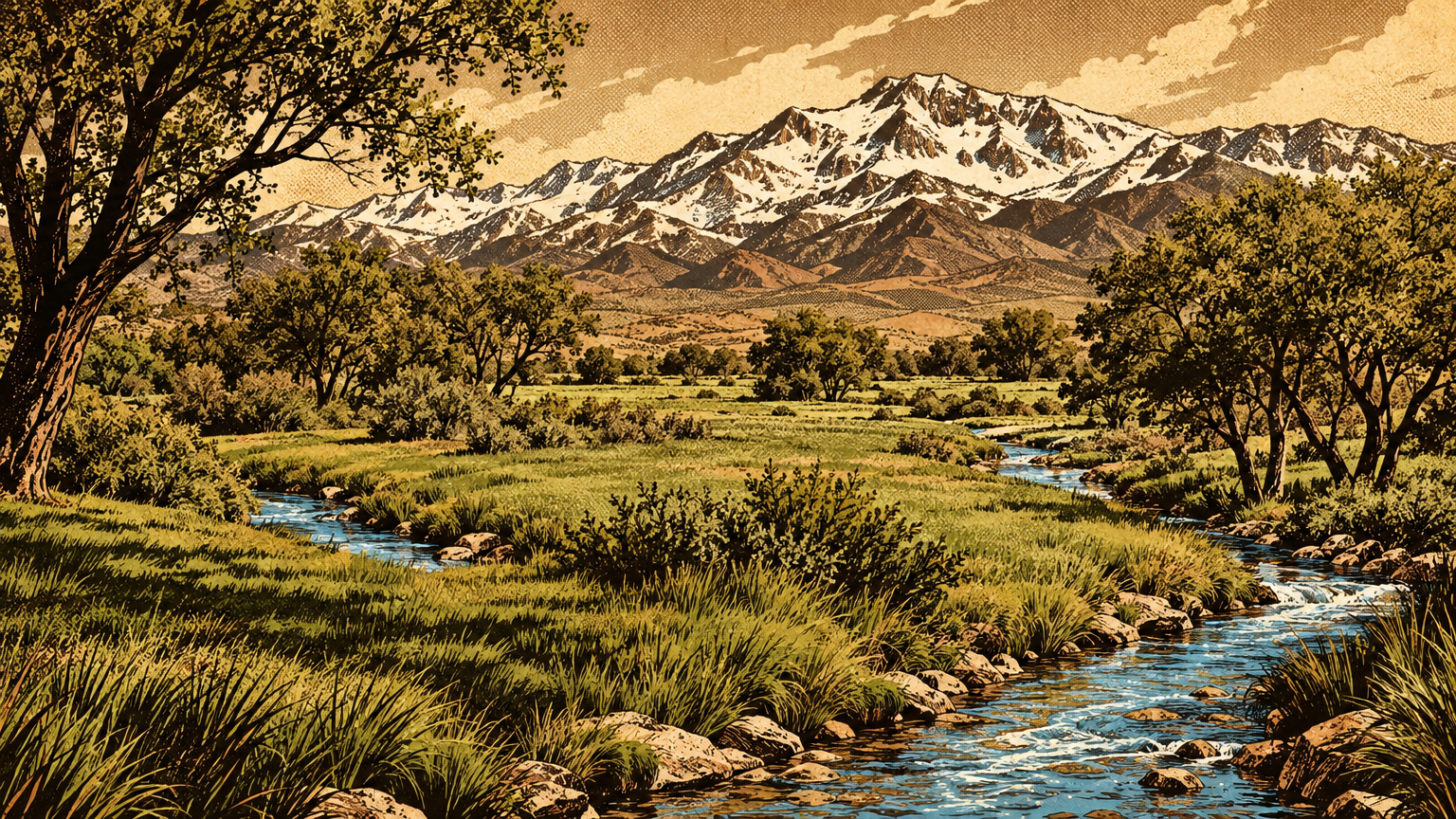
Those streams nurtured native grasses and built lush meadows toward Sunrise Mountain. In the Mojave, that is not scenery. That is fuel, food, and survival for every animal on a trade route.
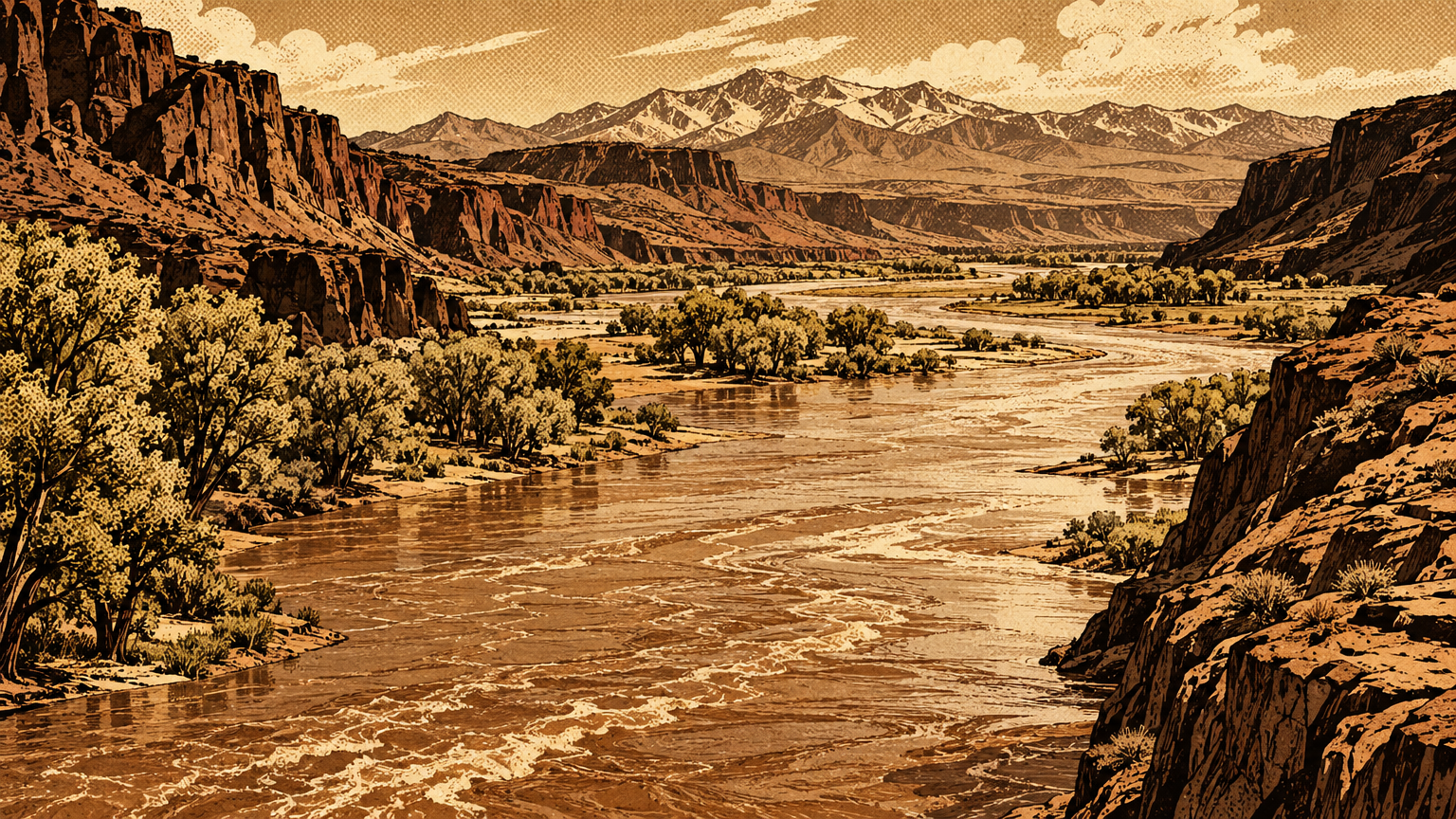
Las Vegas Wash drained the whole basin eastward toward the Colorado River. A rider climbing the wash was climbing the valley's own plumbing, from the river side straight toward the springs.
Rivera's link made the springs an essential stop on the route to Southern California, as both the state marker and the city account agree. It shortened the trip to Los Angeles, and in desert travel, shorter means alive.
We traced the water's longer story in Why the Las Vegas Springs Were a Desert Lifeline. The springs were the reason a route could exist here at all.
Today you can stand on the original springs ground at the Springs Preserve, 333 S Valley View Blvd, Las Vegas, NV 89107. The meadows are restored now, but the geography Rivera rode still reads the same way: wash, springs, open desert beyond.
Comparing institutional narratives
Line the sources up side by side and they agree on the skeleton. A scout named Rafael Rivera, riding for Armijo in January 1830, connected the Las Vegas Springs into the road west, and the springs became an essential stop.
Where they differ is confidence, and the differences are the lesson. The state marker states the ride flatly, while the Park Service hedges the cutoff with probably, because Rivera left no account of his own.
The city adds the human framing: a young Mexican scout, searching for water, who broke off from the group toward ground the caravan had not traveled. Same ride, three registers, one shared core of fact.
Then there is the claim none of them makes. Popular retellings often say Rivera named Las Vegas, but the state's own marker at the springs credits the name to an unknown Spanish-speaking sojourner.
Unknown. The marker standing on the ground itself declines to name the namer, and no institutional source hands Rivera the naming.
So the honest version keeps three piles separate.
Documented: the scouting, the wash, the route, the essential stop. Probable: the fifty mile cutoff from the Muddy River. Myth: the lone discoverer, the naming scene, the empty valley waiting for him.
That sorting is not nitpicking. It is the difference between a scout who did a hard, useful job and a statue that history never actually cast.


Who was already here
Why 'first discovery' is misleading
Now the part the old telling skipped. The springs Rivera reached were the winter homeland of the Southern Paiute people, in the words of the state's own historical marker.
Families wintered at the meadow and mesquite forest, then spent summers in the Charleston Mountains. Winter at the water, summer in the cool high country, a seasonal round run for centuries.
The trails Rivera followed were not new either. Indigenous trade routes webbed this desert long before 1829, as we traced in How Indigenous Trade Connected the Desert Southwest.
So what did Rivera actually do? He carried knowledge of the springs into a written expedition record and tied that water into a commercial route between New Mexico and California.
That is a real achievement, and it needs no exaggeration. He did not discover a place. He connected a homeland to a trade map, and the mapmakers wrote his name down while leaving the homeland's people mostly unwritten.
We corrected the bigger myth behind this one in Why 'Empty Desert' Is the Wrong Las Vegas Origin Story. The valley was a home, a pantry, and a crossroads long before it was a caravan stop.
Even the marker's proud phrase admits it, once you read it whole. First of record means first in the paperwork. The meadows had names, gardens, and winter fires for generations before the paperwork started.
How Rivera entered Vegas memory
The route he helped open kept his name attached to this valley. John C. Fremont mapped the trail in 1844 and camped at the springs that May, fixing the road, and the place name Las Vegas, into official American records.
The state marker follows the thread forward: three years after Fremont, an extension toward the Salt Lake Valley made the route known here as the Mormon Trail. Today the Old Spanish Trail closely parallels Interstate 15, so the valley still commutes along the scout's corridor.
The fullest telling of that road is the Nevada preservation office's Rafael Rivera marker page, and the Park Service keeps its own careful account on its Las Vegas Wash history page. Read both and you get the documented Rivera, which is the only one this series prints.
The modern city put his name on the ground for good. Rafael Rivera Park, the Rafael Rivera Community Center, and Rafael Rivera Way all carry it, and the community center serves a predominantly Latino neighborhood in the city he scouted into the record.
There is something right about that ending. A Mexican scout, working for a New Mexico merchant, remembered by name in the city that grew from the water he rode to, while the valley's first people are remembered too, at last, in the same telling.
Keep the probably. Keep the of record. The scout was real, the ride mattered, and the springs were somebody's home long before they were his shortcut.
Next in this series, the road itself takes the lead, the long trade line that turned Rivera's shortcut into a working highway across six states: The Old Spanish Trail: The Original Long-Distance Vegas Route.