Every Las Vegas origin story starts the same way. An empty desert, then a gambler, a railroad man, or a visionary shows up.
A city rises out of nothing.
It is a great story. It is also wrong in its first three words.
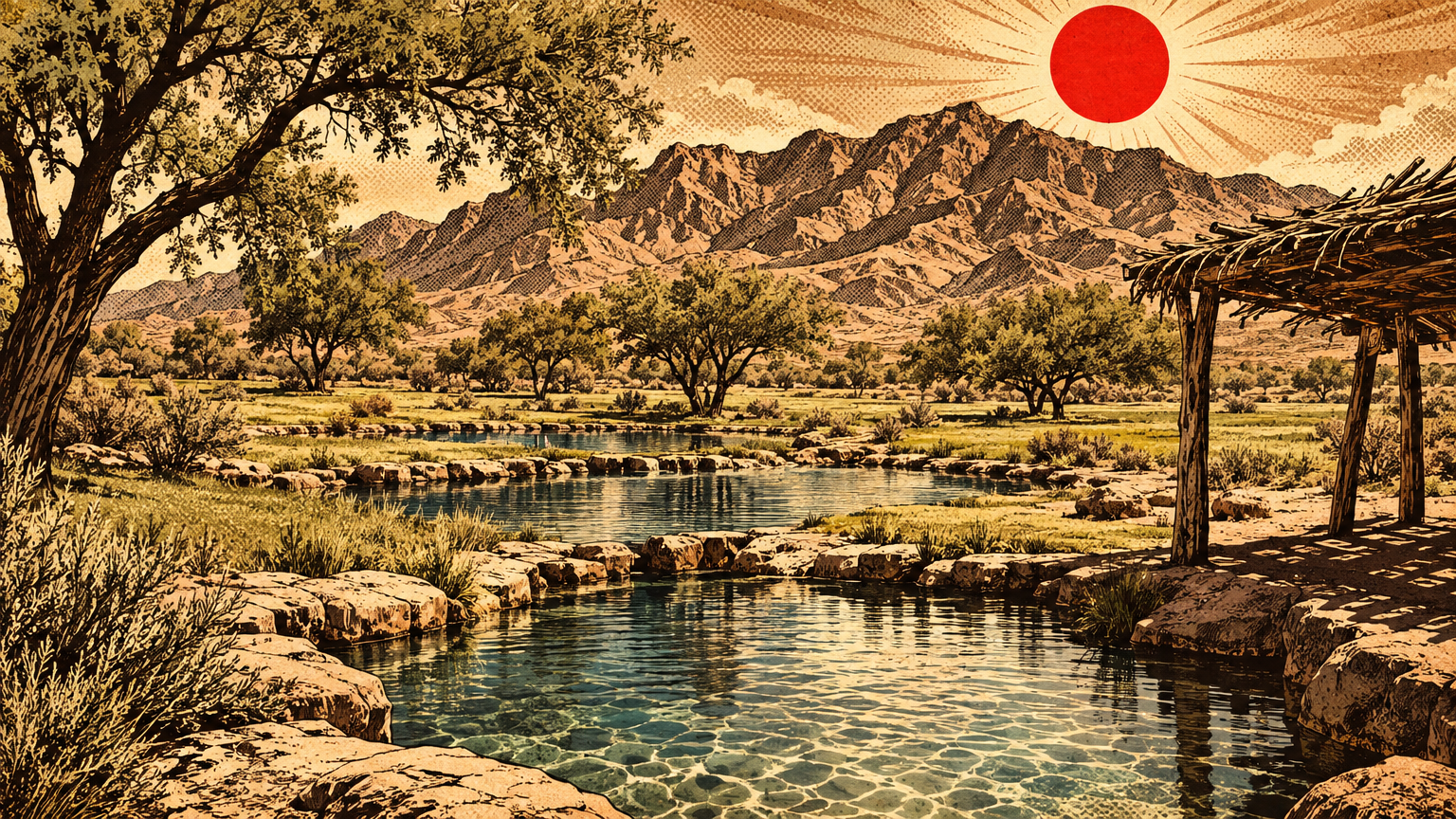
The desert was never empty, and this valley was never nothing. Long before the first lot was sold, this was a homeland, a pantry, a crossroads, and the greenest ground for miles in every direction.
The proof is not hidden. It sits in the city's own name.
What the cliché misses
Indigenous homelands and movement
Start with the people the myth deletes. The Springs Preserve, the institution that guards the original springs, says it flatly: the area was not completely uninhabited.
Indigenous peoples had occupied this valley for thousands of years. The springs country was not a rest stop on somebody else's map. It was home ground.
Since at least AD 1100, the Nuwuvi, the Southern Paiute people, lived in Southern Nevada. The Las Vegas Paiute Tribe, a federally recognized sovereign nation, traces its ancestors in this region to that same deep past.
The tribe's own name for its people is Tudinu, desert people, part of the greater Nuwu. This was a homeland with names, laws, kinship, and memory, not a blank space waiting for a deed.
And people moved through it on purpose. The springs were the winter homeland of the Southern Paiute, in the words of the state's own historical marker.
When summer heat built on the valley floor, families moved up into the Charleston Mountains, the Spring Mountains. Winter at the water, summer in the cool high country.
Archaeologists call that pattern a seasonal round. Families in this valley ran it for centuries, gardening near the springs, gathering in the foothills, and hunting and harvesting pine nuts up high.
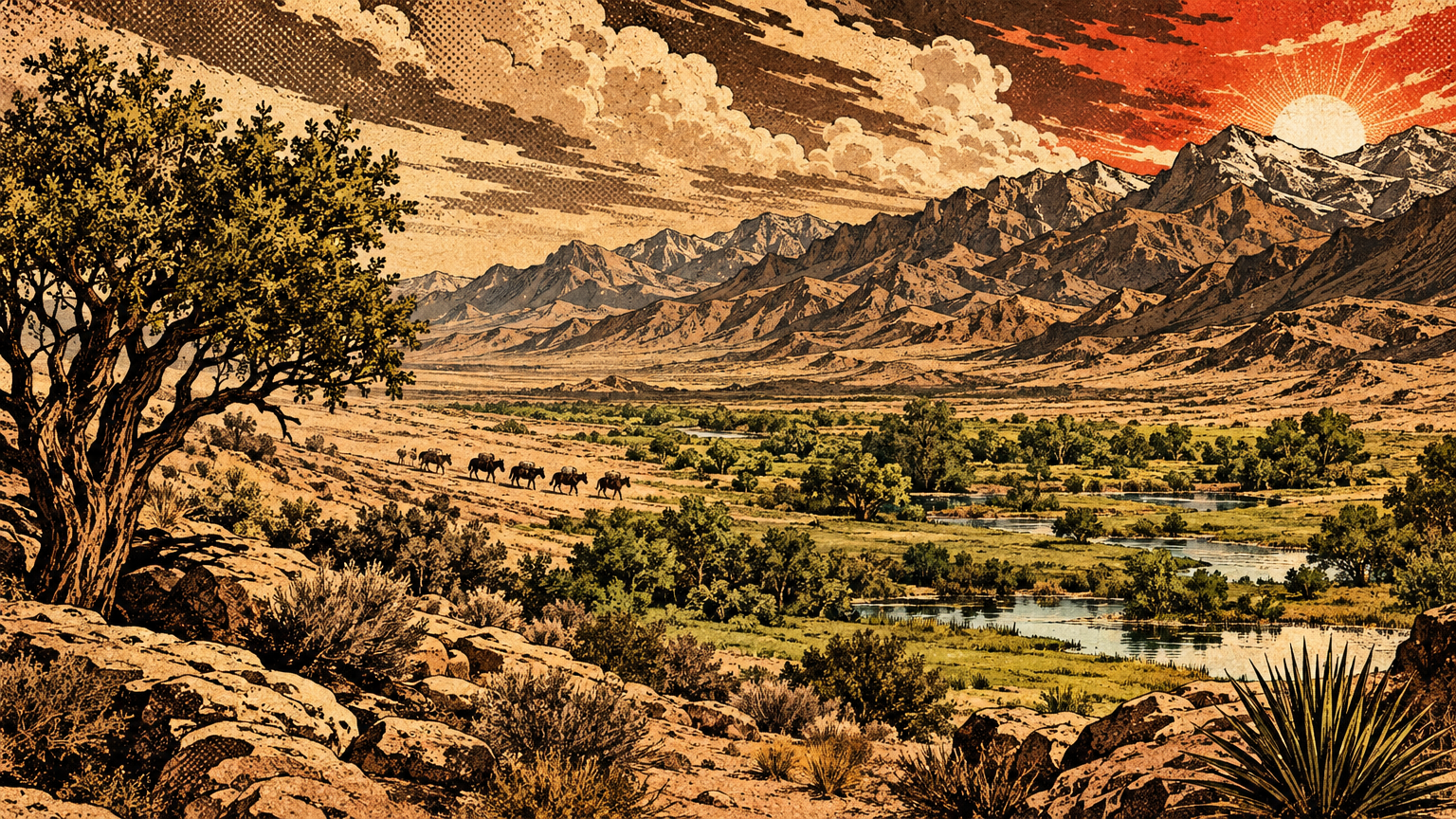
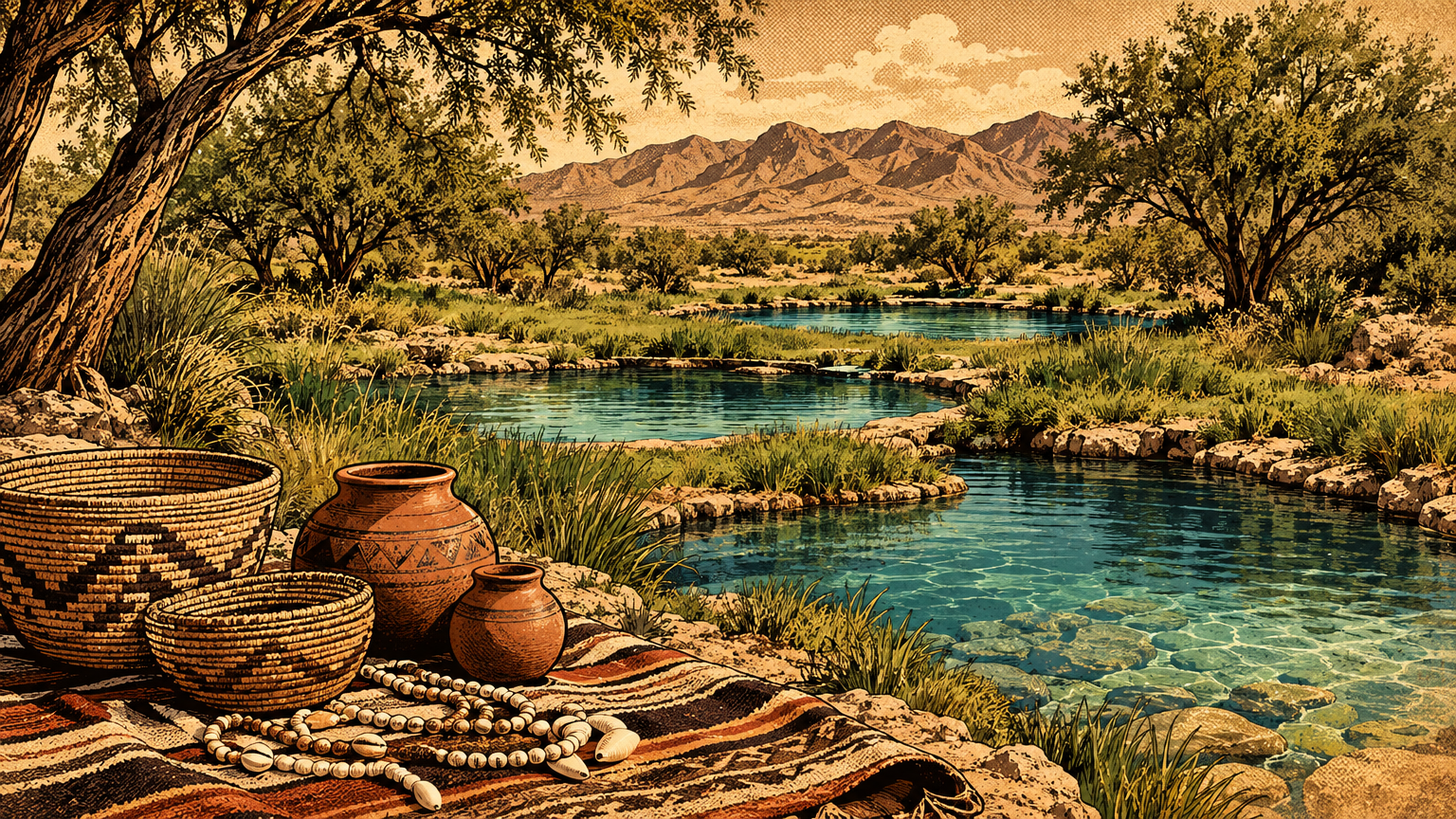
Movement was connection, too. Trails tied the springs to the Colorado River, to the mountains, and to neighboring peoples across the desert Southwest.
Shell, pottery, and stone traveled those trails. So did news, marriages, and songs.
An empty place does not build trade networks. A lived in homeland does.
Natural abundance around water
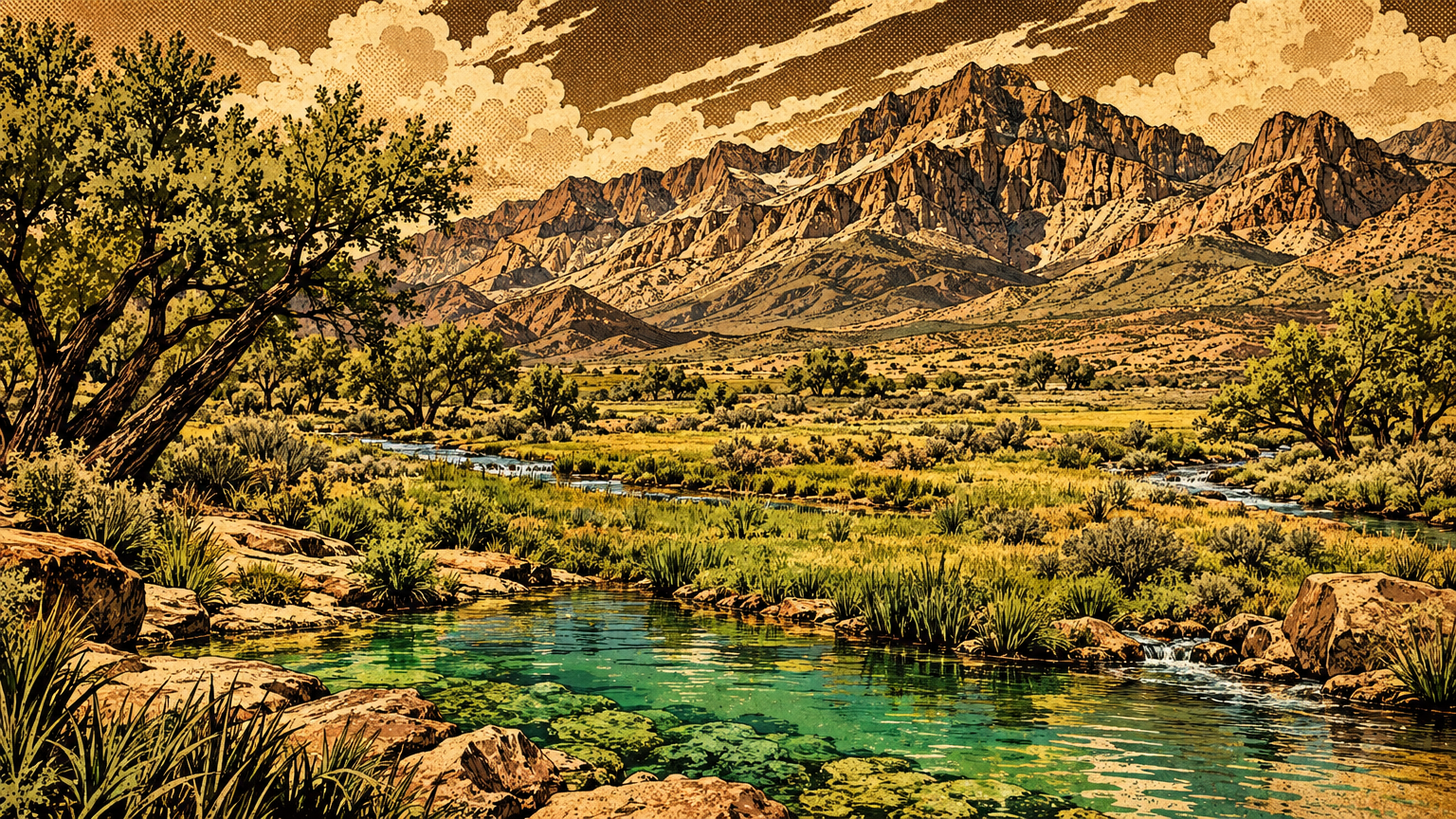
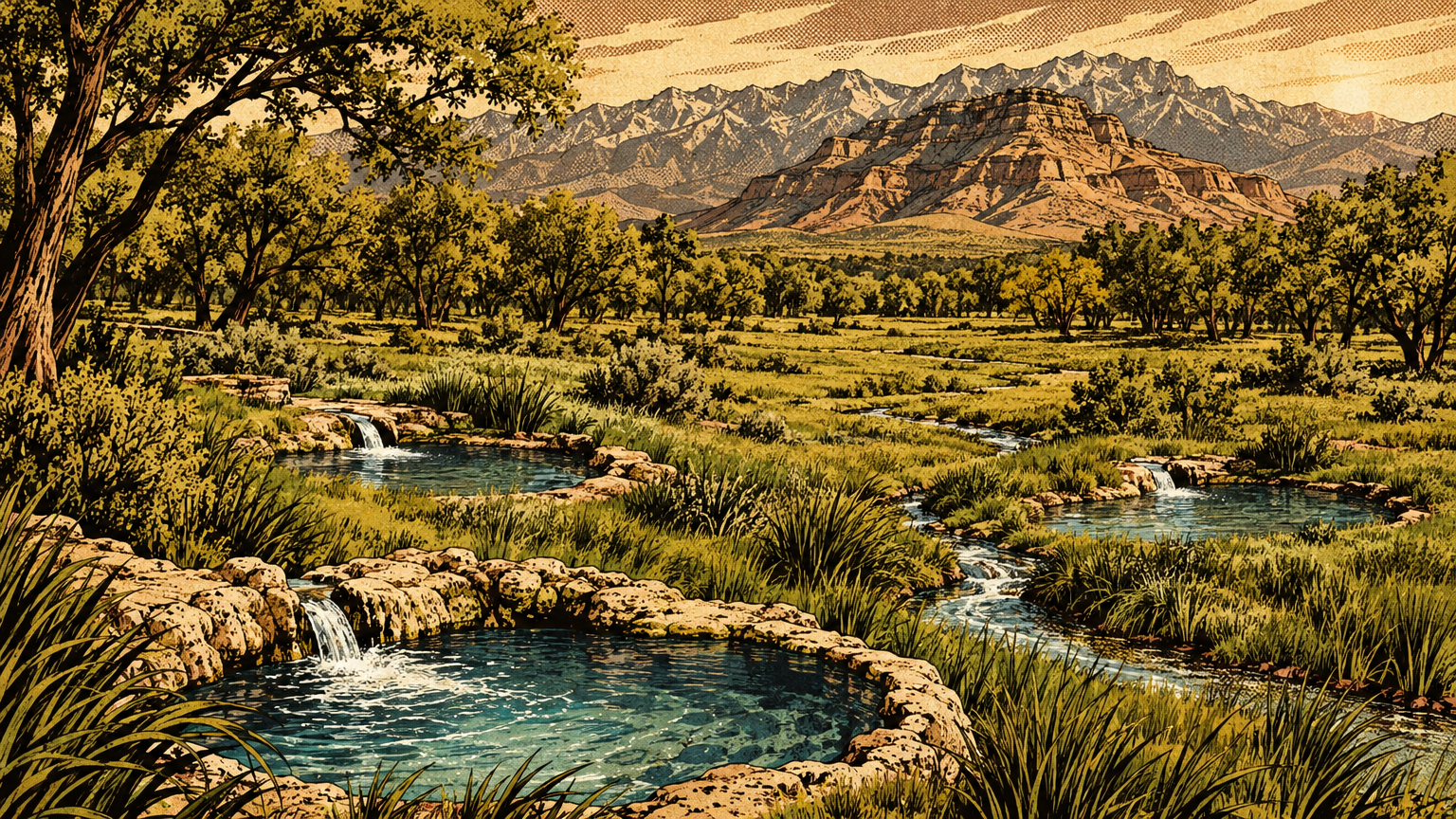
Now look at what the myth calls barren. Three springs rose on the ground that is now the Springs Preserve, and they sent two streams across the valley.
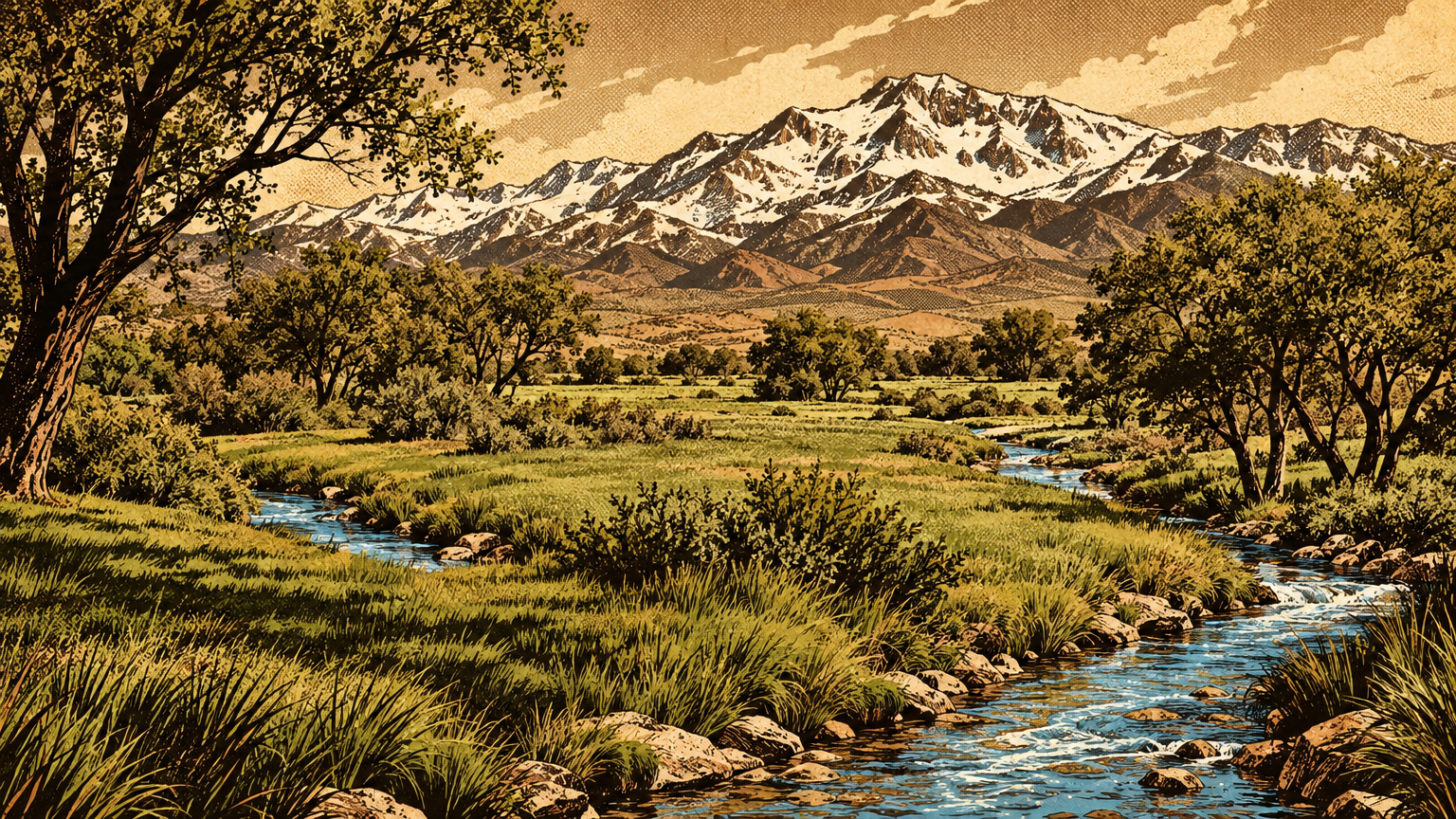
Those streams nurtured native grasses and built lush meadows all the way toward Sunrise Mountain. The state's marker calls the place a natural oasis of meadow and mesquite forest.
That is why the city carries the name it does. Las Vegas means the meadows, named by a Spanish-speaking traveler who saw green, not a void.
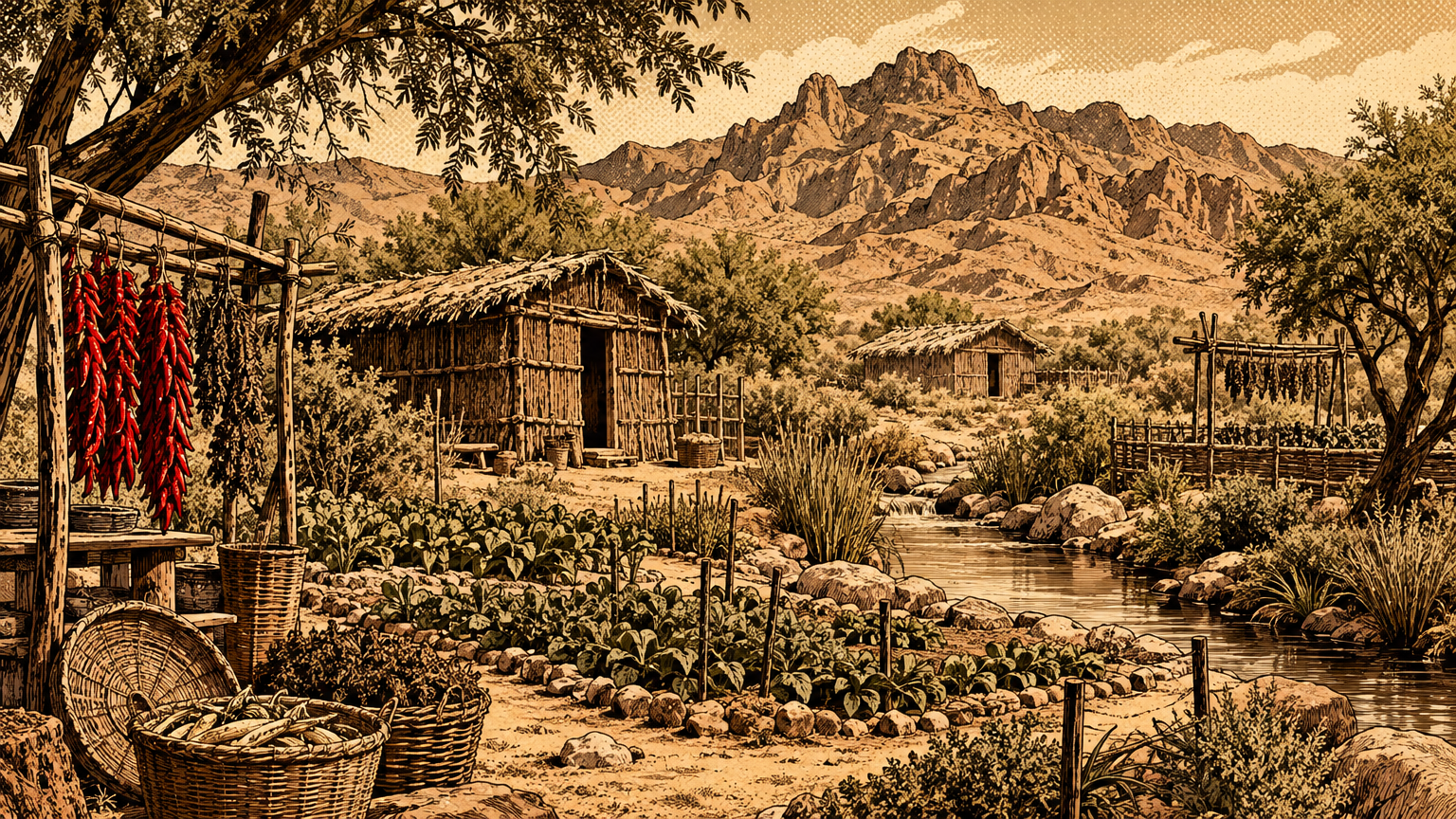
The wet ground was a working pantry. Mesquite beans were a staple of the Southern Paiute diet, gathered mostly by women and ground into meal that stored well.
Near the springs and washes, Indigenous families built gardens and small settlements. The Pueblo peoples, the Patayan, and the Nuwuvi all used the Las Vegas Springs and Las Vegas Creek.
That run of use lasted until Euro-American ranching took over in the 1860s. Thousands of years of gardening ended in a single generation of fences and cattle.
The green was older than any garden, too. The white rocks of the Las Vegas Formation are dried spring deposits, and they preserve 573,000 years of marshes, meadows, grasslands, and streams.
Federal researchers call that record the best and most complete wetlands sequence of its kind anywhere in the world. The empty desert turns out to have a half million year archive of water.
We told the springs' own story in Why the Las Vegas Springs Were a Desert Lifeline. The short version is simple: everything in this valley organized its life around that water.
How the myth spread
Tourism marketing and booster narratives
So how did a watered homeland become an empty desert in the telling? Partly, because empty land is easier to sell.
A valley with owners, gardens, and graves is a negotiation. A valley described as vacant is an opportunity. The second story moves lots.
The cleanest example comes from the railroad. A 2023 UNLV dissertation on the rival 1905 townsites found that the railroad's version of history claimed its May 1905 lot auction was the inaugural moment of Las Vegas.
That claim, the dissertation shows, intentionally obscured the townsites that already existed.
J.T. McWilliams had planted his townsite in December 1904, months before the auction, and his townsite prospered first.
Its success is what pushed the railroad to hurry its own townsite into being. The famous auction was a response to competition, not a creation from nothing.
And the auction story buried far more than a rival surveyor. Behind it stood the Mormon fort of 1855, a half century of ranches, and the Paiute homeland underneath everything.
Boosters kept the habit. The Chamber of Commerce, founded in 1911, promoted the valley's farm prospects on the strength of its artesian wells and pitched Las Vegas as a tourism center for the scenic Southwest.
When Boulder Dam neared completion, the Chamber pushed tourism hard, sending out thousands of promotional folders and placing ads across the Southwest. The pitch was a playground rising in the desert, thrilling because it supposedly started from zero.
Every retelling shaved the story down. The fort became a footnote, the ranches became scenery, and the Paiute became a paragraph that many versions skipped entirely.
Historical photographs versus reality
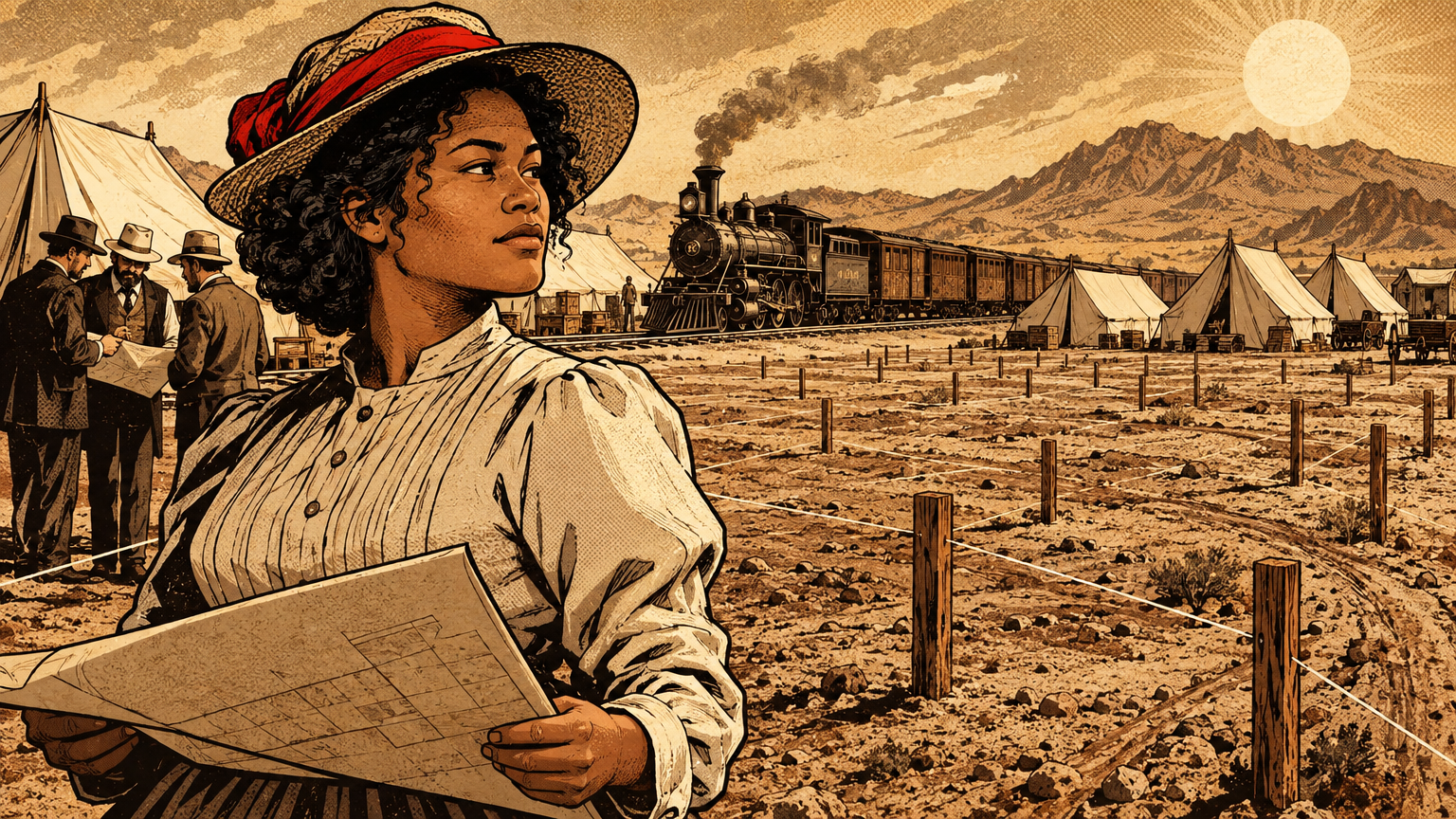
Photographs helped the myth, because photographs feel like proof. A camera at the 1905 auction shows tents, dust, and raw lots under a hard sun.
All of that is real. It is just not the whole valley.
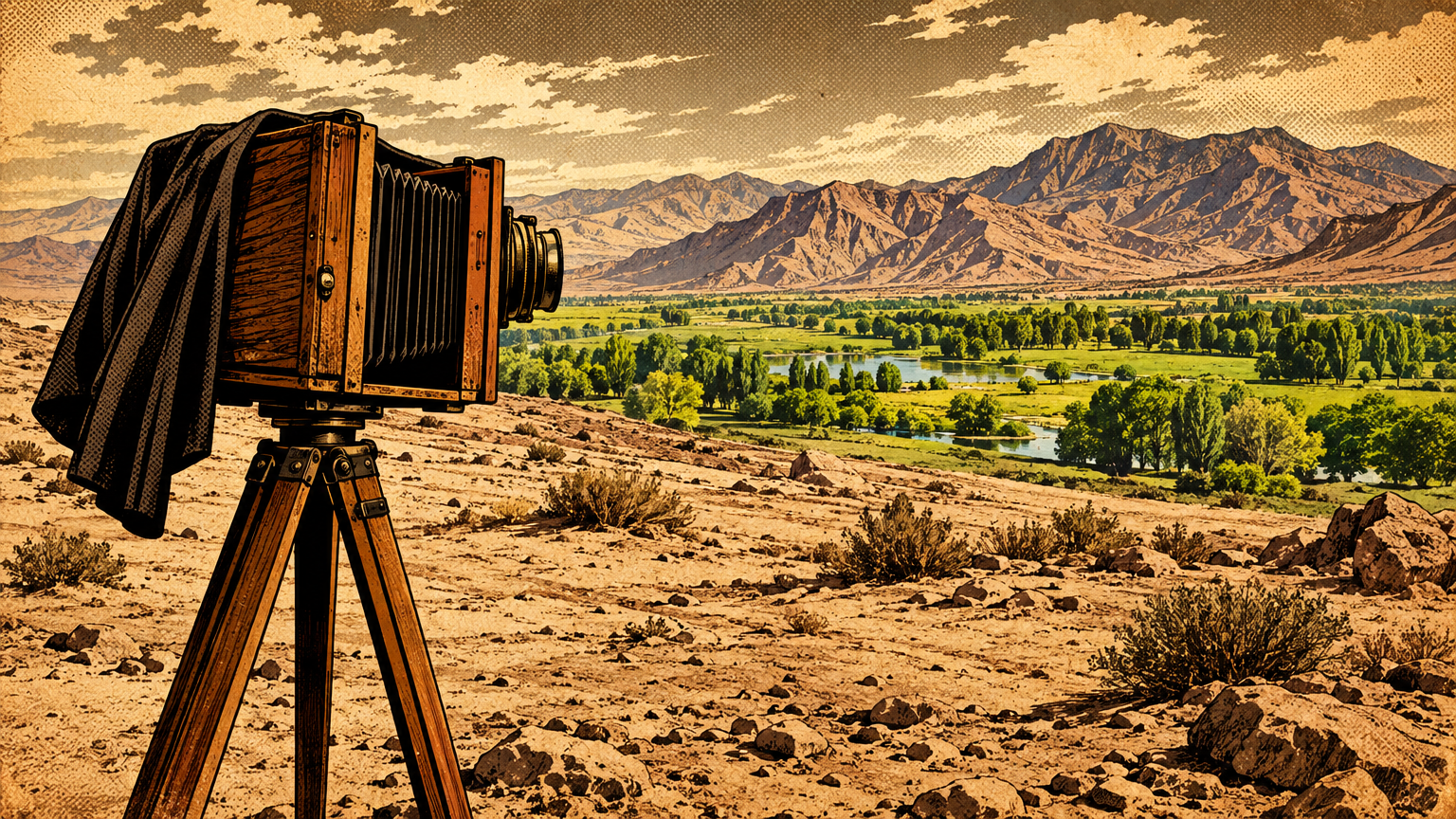
The townsite sat about three miles east of the springs, beside the creek. Point a camera at a land sale on a dry townsite flat and you get a desert. Walk three miles west and you were standing in meadow grass.
The UNLV townsite research makes the same point from the archive. Working from property records, letters, newspapers, ads, and photographic evidence, it challenges even the mythic numbers for how many people attended the auction and how many lots sold.
In other words, the most famous pictures of the founding were selling something. Auction photography was advertising, and advertising crops.
The springs themselves rarely made the poster. Flowing water and Paiute gardens complicate a pitch built on conquest of a wasteland, so the wasteland is what got printed.


A better way to tell history
Tribal and archaeological sources
The fix is not a new myth. The fix is better sources, and they exist.
Start with the tribe. The Las Vegas Paiute Tribe publishes its own history, its own timeline, and its own account of this land, and it is still here to be read. We told that story in The Southern Paiute Homeland That Predates Las Vegas.
Then go to the ground itself. At the Springs Preserve, archaeologists documented a pithouse dated to about AD 700, with stone tools, ceramics, shells, and charcoal.
Radar suggests two more pithouses nearby. The springs site joined the National Register of Historic Places in 1978, and the Preserve pairs archaeology with oral histories instead of treating either one as decoration.
The institution's own history page is the easiest correction a reader can make today: the Springs Preserve history of the Las Vegas Springs. It says, in plain words, that this place was occupied for thousands of years.
End the tour where the myth ends, at the springs themselves. The Springs Preserve stands at 333 S Valley View Blvd, Las Vegas, NV 89107, 180 acres on the original springs ground.
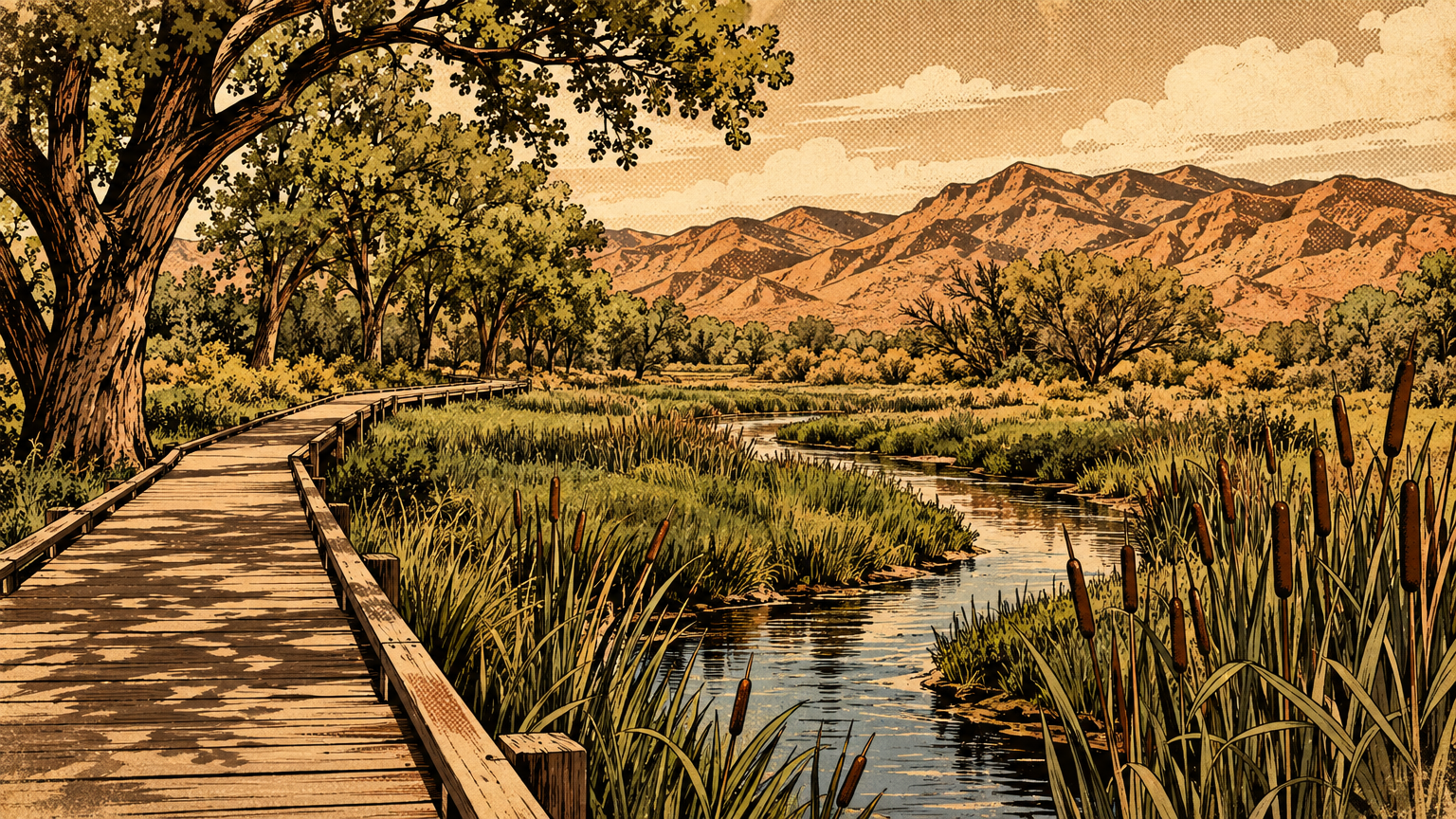
Go stand in the restored cienega, the wet meadow, and read the land the way the first storytellers should have. Green, used, named, and loved, long before it was ever sold.
Words to leave behind
Language is where the myth hides, so language is where the correction starts. A few swaps do most of the work.
Leave behind discovered. A scout reaching the springs in 1829 found a place that other people already lived in, gardened, and named.
He arrived. He did not discover.
Leave behind empty, untouched, and virgin. Every one of those words erases the gardens, the trails, the trade, and the families the record documents.
Leave behind founded in 1905 as the whole story. The railroad townsite was auctioned in 1905, and that date matters. It is the start of one town, not the start of Las Vegas.
Use the stronger words instead: homeland, meadows, springs.
This was a city built on water that other people found first, used wisely, and lost when the pumps outran the aquifer.
The springs stopped flowing in 1962, inside living memory. The meadow city did not vanish in some ancient past. It was pumped dry by the modern one.
That is the real origin story, and it is better than the myth in every way. It has water, people, conflict, and consequence. It even has a moral the desert keeps teaching: nothing here was ever empty, and nothing here survives by accident.
Next in this series, the story swings back to the trail, to the traders who crossed this valley with mule trains and learned fast that the springs were the stop that mattered: The Caravan That Put Las Vegas on a New Trade Route.