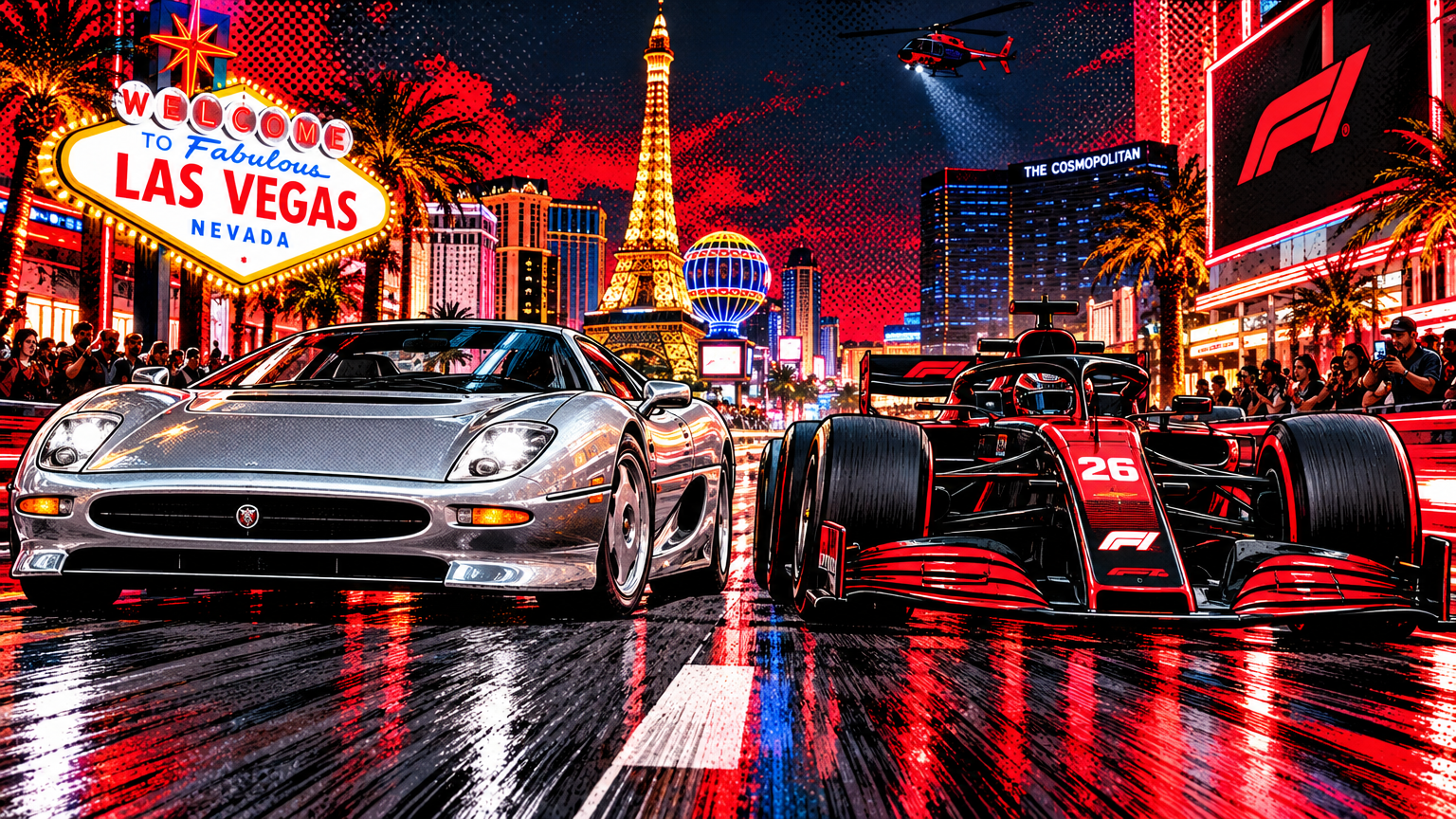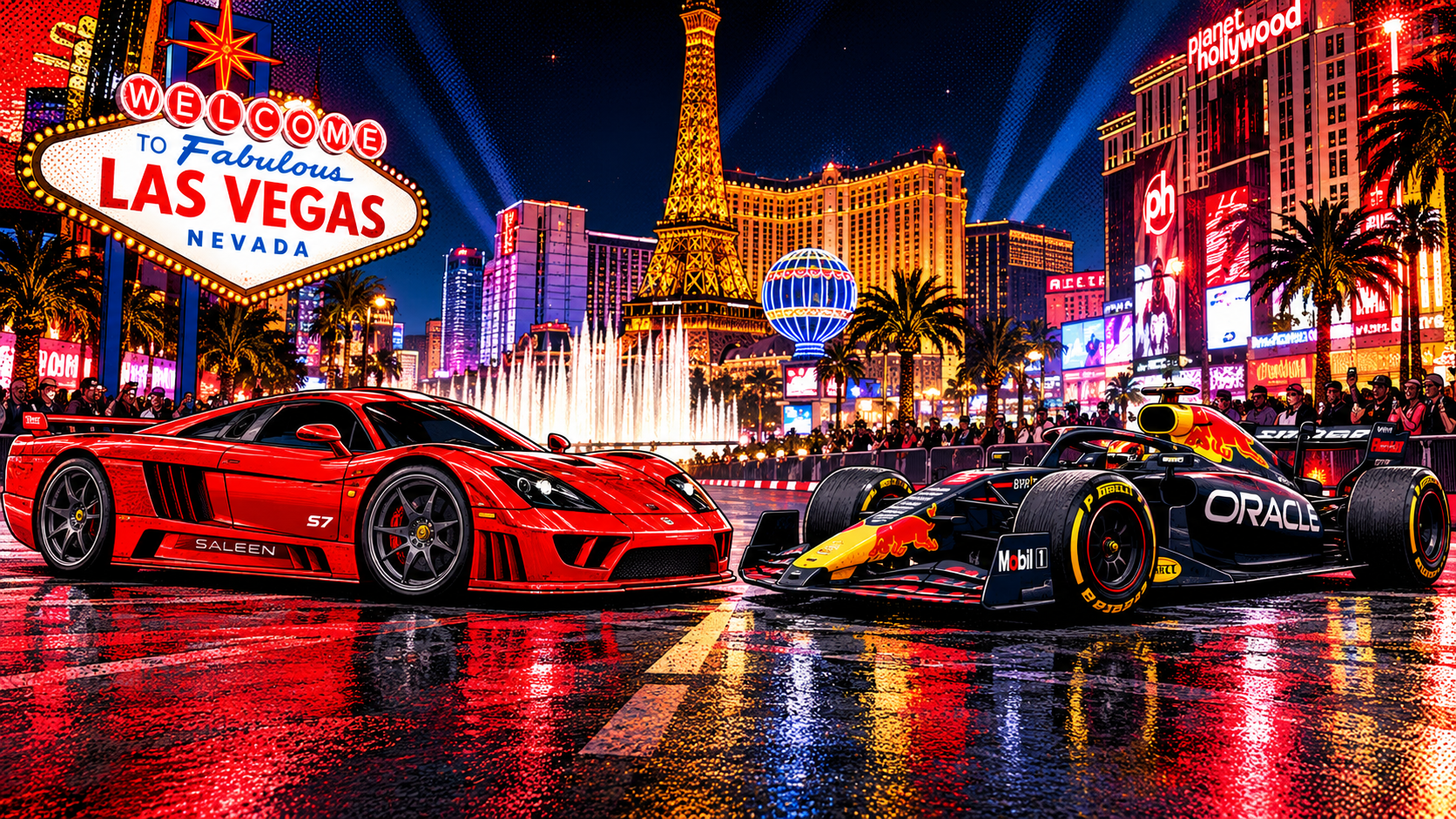
Most challengers in this series were born in Europe, built in small numbers, and priced like beachfront property.
This one was built in Irvine, California.
At the start of this century, America made muscle cars, sports cars, and pickup trucks with delusions of grandeur. What America did not make was a mid engine supercar that could look a Ferrari or a McLaren in the eye. Steve Saleen, a racing driver who had built his name making Mustangs faster, decided that was embarrassing, and decided to fix it himself.
The result was the Saleen S7, a carbon fiber, mid engine, V8 powered missile that Saleen calls America's first true supercar. It debuted at the Monterey Historic Races on August 19, 2000, it cost 375,000 dollars when a lot of supercars cost less, and its racing brother went on to win its class at the 24 Hours of Le Mans.
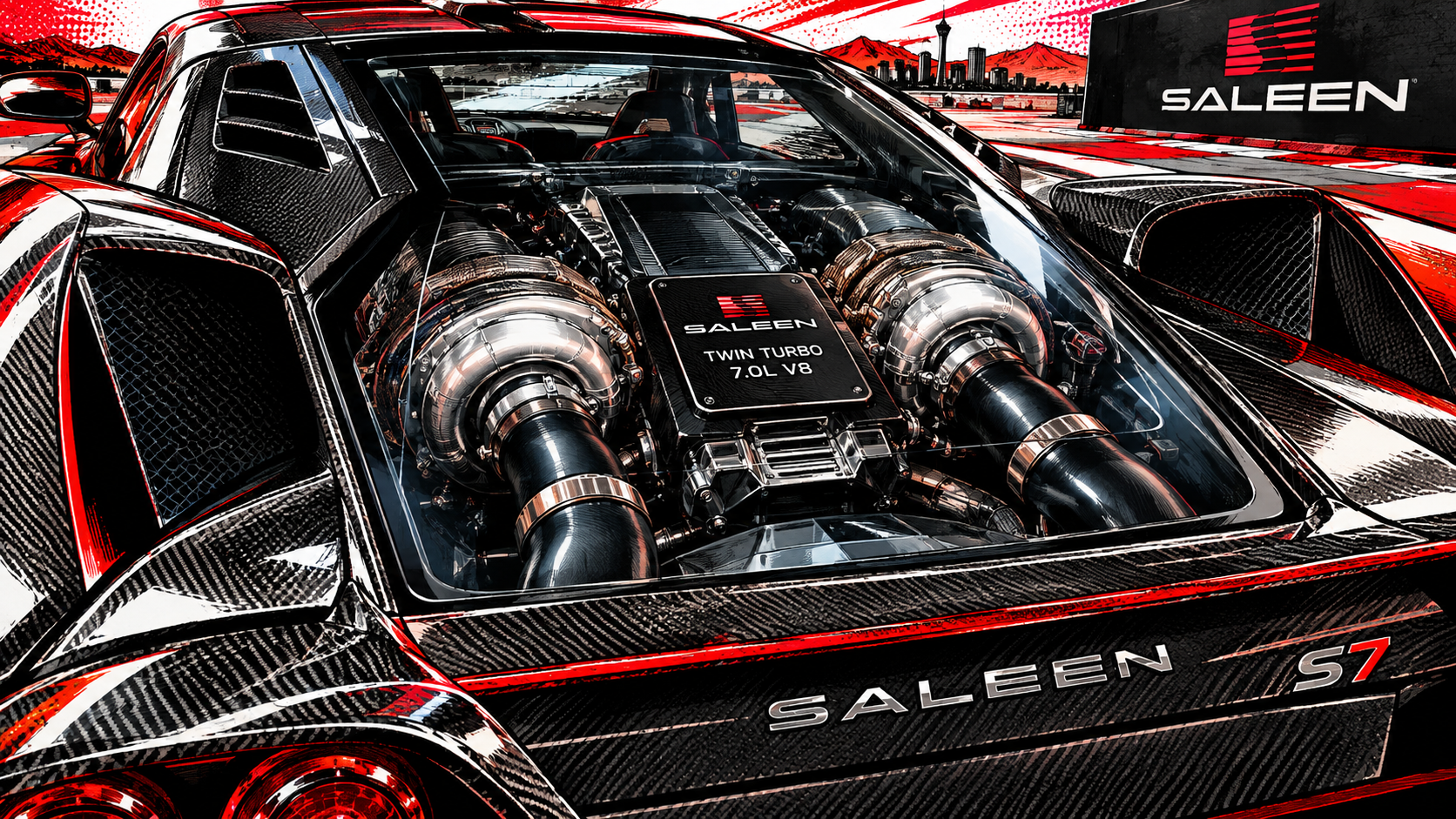
And then Saleen did the most American thing possible. It bolted on two turbochargers.
What happens if the Saleen S7 picks a fight with a Formula 1 car?
What happens is our first real top speed argument of the series. Because this challenger arrives carrying a claimed top speed higher than any speed a 2026 Formula 1 car has actually been measured doing, and we are going to have to talk very carefully about the difference between a claim and a receipt.
Bring a flag. This one is waving red, white, and blue, and it brought physics homework.
First, Which S7 Are We Talking About?
Precision matters here, because Saleen sold the S7 in two very different flavors, and then raced a third one that shares the name and not much else.
We are not talking only about the original car, mighty as it was. The first S7, sold from 2000, ran a Saleen designed 7.0 liter naturally aspirated V8, an all aluminum engine developed in house from Ford small block roots, making 550 horsepower at 6,400 rpm and 520 pound feet of torque at 4,000 rpm per Saleen. Saleen said it ran from zero to 60 mph in under four seconds and past 200 mph, with a claimed top speed around 220 mph. The price was 375,000 dollars.
Our challenger is the final evolution of the road car: the Saleen S7 Twin Turbo, introduced for 2005.
Saleen took that same 7.0 liter V8 and fitted two Garrett turbochargers at modest boost, roughly five and a half to six psi depending on the Saleen material you read. Output jumped to 750 horsepower at 6,300 rpm and 700 pound feet of torque at 4,800 rpm. No hybrid help. No electric motors. Just a big pushrod V8, two turbos, and a six speed manual gearbox sending everything to the rear wheels. In 2005, that was close to heresy. It still sounds pretty good now.
And because Saleen is Saleen, there was an optional Competition Package in 2006 offering roughly 1,000 horsepower. That package is not our car. We are scoring the standard 750 horsepower Twin Turbo, because blending the optional car into this one's numbers is exactly how bar arguments go wrong.
The structure underneath is race car thinking all the way down. A steel space frame chassis with aluminum honeycomb composite reinforcement, wrapped in autoclaved carbon fiber bodywork. The engine sits in the middle. The driver sits slightly toward the center of the car, because Saleen cared more about balance than symmetry, and the cabin came trimmed in Connolly leather, because even race bred American supercars have manners.
Weight for the Twin Turbo is commonly listed at about 2,950 pounds, roughly 1,338 kilograms. Light for a 750 horsepower car with a 7.0 liter engine. Heavy only when you park it next to the thing it is about to fight.
Then there is the aerodynamics story, and it is a good one. Saleen shaped the S7 with extensive wind tunnel work with British racing house Ray Mallock Ltd., or RML, with full underside air management and a split channel airflow design. Saleen's famous claim from the launch is that at 160 mph, the S7 makes downforce equal to its own weight, enough, in theory, to drive upside down across a ceiling. Nobody has tested the ceiling part. Insurance companies get nervous about that kind of science.
Now the performance numbers, with the labels left on, because this car needs them more than most.
Saleen's claims for the Twin Turbo: zero to 60 mph in 2.8 seconds, zero to 100 mph in 5.9 seconds, a standing quarter mile in 10.5 seconds at 145 mph, and a top speed of 248 mph, sometimes rounded in Saleen material to an estimated 250 mph.
Independent tests told a sweatier story. Road & Track tested a 2006 Twin Turbo at 3.3 seconds to 60 mph and a 10.6 second quarter mile at 139.8 mph. Car and Driver's famous zero to 200 to zero test of a lightly uprated Twin Turbo, making an estimated 775 horsepower for that test, recorded a quarter mile of 11.6 seconds at 138 mph and needed 38.2 seconds to reach 200 mph, fighting gearing and downforce the whole way. Rear wheel drive, a manual gearbox, and 700 pound feet of torque make heroic launch numbers on paper and tire smoke in real life.
Both stories can be true at once. The Twin Turbo is brutally fast. It is also traction limited, gearing limited, and very hard to launch cleanly. Keep both facts in your pocket. Round One is going to need them.
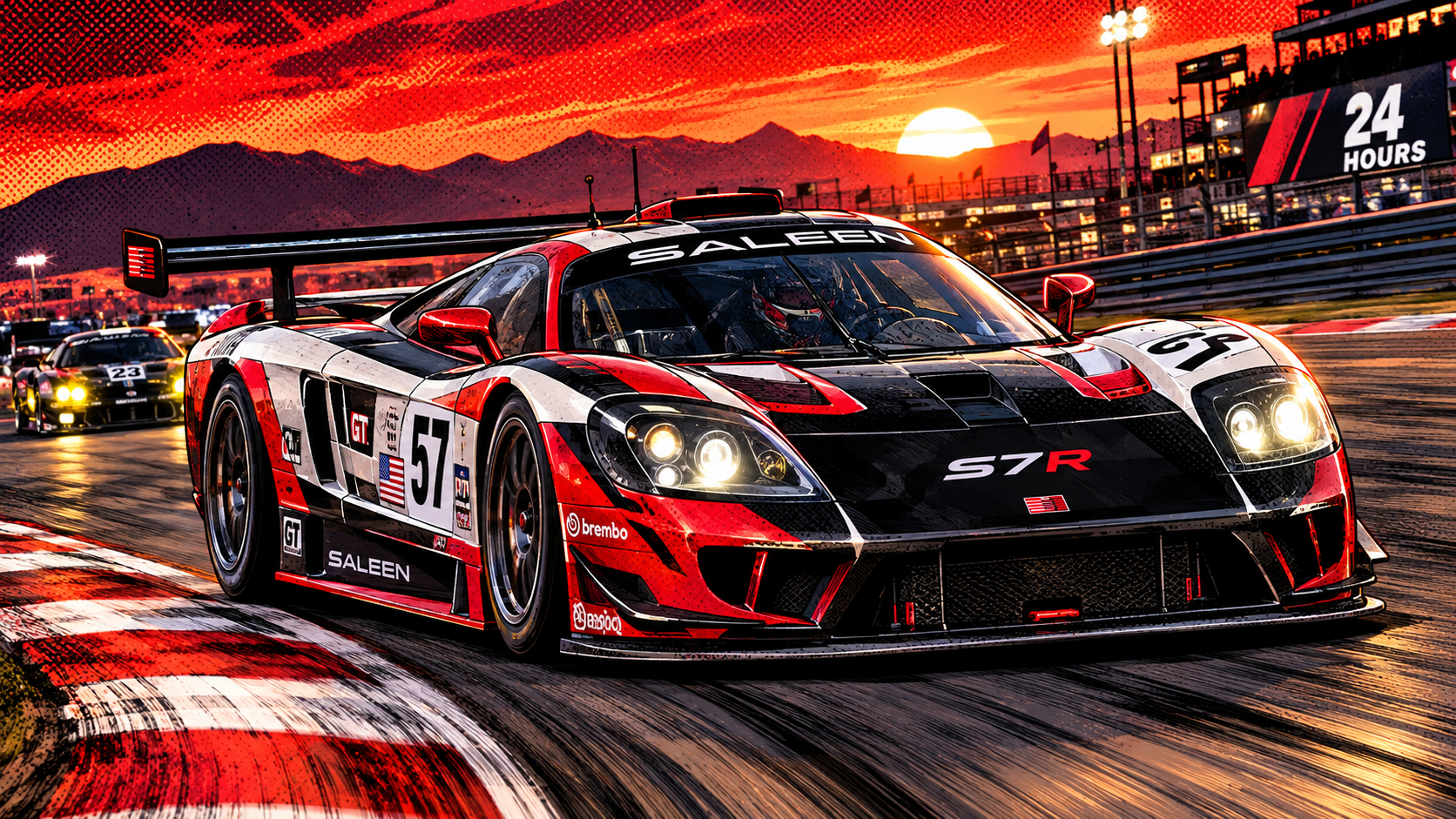
One more car, kept strictly separate. The Saleen S7R is the racing version, a GT car with a restricted 7.0 liter V8 making roughly 600 horsepower in race trim. Per Saleen, S7 racers contested hundreds of races, won 10 GT championships, and scored one class win at the 24 Hours of Le Mans, when Larbre Competition's S7R won the GT1 class in 2010, finishing 13th overall against factory Corvettes, Ford GTs, and an Aston Martin DBR9. The road car never raced at Le Mans. Its brother did, and won. Family reunions must be fun.
That is the challenger. America's first true supercar, in its strongest standard form, with a Le Mans winning sibling and the biggest top speed claim this series has seen.
Now it has to fight a car that treats top speed as a setup choice.
Meet the 2026 Formula 1 Car
Across the garage sits a 2026 Formula 1 car, and it comes from a different planet of priorities.
The 2026 Formula 1 car runs a 1.6 liter turbocharged V6 hybrid. The combustion side is limited to about 400 kW. The electric MGU-K can deliver up to 350 kW where maximum deployment is allowed. Formula 1 describes the total package as producing more than 1,000 horsepower, with the honest caveat that the electrical help is managed around the lap.
So the Formula 1 car leads on power, more than 1,000 horsepower against 750. But here is the number that decides most of this fight before it starts. The minimum regulatory weight for a 2026 Formula 1 car is 768 kilograms, about 1,693 pounds, including the driver.
The S7 Twin Turbo weighs about 2,950 pounds before anyone climbs in. The Formula 1 car weighs well over a thousand pounds less, driver included, while making at least 250 more horsepower. Power to weight is not a close contest. It is barely the same sport.
For 2026, Formula 1 also runs active front and rear aerodynamics, low drag on the straights and high downforce in the corners, on carbon construction and racing tires built for one job only.
The S7 is one of the most serious road cars America has ever built. Serious was never going to be the problem.
The problem is the other car is a Formula 1 car.


S7 vs. F1: The Numbers
| Category | Saleen S7 Twin Turbo | 2026 Formula 1 Car |
|---|---|---|
| Engine | 7.0 liter twin turbocharged V8, two Garrett turbochargers | 1.6 liter turbocharged V6 hybrid |
| Power | 750 hp at 6,300 rpm, Saleen figure | 400 kW combustion engine plus up to 350 kW MGU-K deployment; more than 1,000 hp total per Formula 1 |
| Torque | 700 lb-ft at 4,800 rpm, Saleen figure | No single standardized series figure |
| Weight | About 2,950 lb (about 1,338 kg), commonly listed curb weight | 768 kg minimum regulatory weight, driver included |
| 0 to 60 mph | 2.8 sec Saleen claim; 3.3 sec in Road & Track testing | No universal official 2026 figure |
| Quarter mile | 10.5 sec at 145 mph Saleen claim; 10.6 sec at 139.8 mph in Road & Track testing | Not a Formula 1 measure; no official figure |
| Top speed | 248 mph, Saleen claim, estimated and not independently verified | 2026 FIA speed trap data has already exceeded 219 mph in qualifying trim |
| Drivetrain | Rear wheel drive, six speed manual | Rear wheel drive |
| Signature tires | Wide road legal performance tires | Formula 1 racing slicks |
| Aerodynamics | Carbon fiber body, full underside air management; Saleen claimed downforce equal to the car's weight at 160 mph | Active front and rear aerodynamics |
| Street legal | Yes | No |
| Production | Hand built in Irvine, California; original S7 launched at 375,000 dollars | One per driver, per team, per season, roughly |
| Racing family | S7R won the GT1 class at the 2010 24 Hours of Le Mans, per Saleen | It is the racing family |
| Vegas valet factor | Extremely high. An American supercar with butterfly style doors and a V8 under glass does not do quiet arrivals | Cannot be valeted. Needs a pit crew and a laptop |
Round One: Acceleration
On paper, this looks like a street fight the Saleen could steal.
Seven hundred fifty horsepower. Seven hundred pound feet of torque. Under 3,000 pounds. Saleen claimed 2.8 seconds to 60 mph, and even the independent number, 3.3 seconds in Road & Track's test, is fast in any era and heroic with a clutch pedal involved.
Then you watch how the power arrives, and the story gets complicated.
The Twin Turbo sends all of that torque through two rear tires, with no all wheel drive, no hybrid fill in, and a human being working a six speed manual in the middle of it. Get the launch perfect and the car flies. Get it a fraction wrong and you get wheelspin, bog, or a very expensive cloud. Car and Driver's uprated test car, with more power than standard, was slower to the quarter mile than the standard car's claim, because putting twin turbo V8 torque down is a skill, not a setting.
The Formula 1 car has the opposite problem, if you can call it a problem. It makes more power, weighs well over a thousand pounds less, and puts its power down through racing slicks with aerodynamic load pressing them into the road. There is no universal official zero to 60 figure for a 2026 Formula 1 car, and we are not inventing one. But power to weight this one sided does not need a stopwatch to call. Roughly 750 horsepower moving 2,950 pounds, against more than 1,000 horsepower moving 1,693 pounds, driver included.
The Dodge Challenger SRT Demon 170 in the previous fight won this round because it owned a certified receipt on its home surface. The Saleen owns a claim, a good test, and a lot of tire smoke.
Close on the brochure. Not close in the metal.
Round One Winner: Formula 1
Round Two: Top Speed
Now we arrive at the round this whole fight was booked for.
Here is the Saleen's number, with its label on: 248 mph, claimed by Saleen for the S7 Twin Turbo, an estimated top speed that was never independently verified in a timed top speed run. Some Saleen material rounds it to an estimated 250 mph. It is a manufacturer's claim. We are treating it as exactly that, no more and no less.
And here is the Formula 1 car's evidence, measured, official, and written down by the FIA.
During qualifying for the 2026 Chinese Grand Prix, Pierre Gasly was recorded at 353.9 kilometers per hour, about 220 mph in the speed trap. Here on the Las Vegas Strip Circuit, earlier editions were faster still: in 2025, Yuki Tsunoda was recorded at 358.3 kilometers per hour, about 222.6 mph, and in 2024, Alex Albon hit 368.9 kilometers per hour, about 229.2 mph, the highest figure through the first three editions. Those years are labeled on purpose. They show the fastest a Formula 1 car has actually been measured going in this neighborhood.
Two hundred forty eight is bigger than all of them.
Now the fairness, in both directions, because this round deserves it.
In the Saleen's favor: a Formula 1 car's top speed is a setup choice, not a limit of courage. Teams pile on downforce for corners and pay for it in drag on straights. A Formula 1 car trimmed purely for top speed, on a long enough road, is a different conversation, and nobody has run that experiment for us to quote.
In Formula 1's favor: a claimed 248 mph is not a measured 248 mph. The S7 Twin Turbo was geared for huge speed, sixth gear was famously tall, and its own aerodynamics were built to make downforce, which fights top speed every mile per hour of the way. Car and Driver's test car took 38.2 seconds just to reach 200 mph. The last 48 mph of that claim live in a place no independent tester ever confirmed.
So here is the call, scoped exactly to what the evidence supports, the same way we scoped the Demon 170's launch win. On manufacturer claimed top speed, the standard, showroom S7 Twin Turbo owns a bigger number than any Formula 1 car in this series has been officially measured reaching. If a round must be scored on verified trap speeds only, Formula 1 takes it and it is not close. But this series scores the cars as their makers sold them, claims labeled as claims.
On that standard, America takes a round, and takes it at 248 mph.
Round Two Winner: Saleen S7 Twin Turbo, on manufacturer claimed top speed, with the claim labeled and unverified
Round Three: Now Add a Corner
This is the round where the Saleen's racing bloodline actually matters, so let us give it its due before the score lands.
The S7 was not a styling exercise that later learned to turn. It was engineered with RML, a real racing house. The chassis is a proper space frame with honeycomb reinforcement. The suspension is fully independent, the engine sits in the middle where racing engineers like it, and the body makes serious downforce. Saleen's claim of downforce equal to the car's own weight at 160 mph, if you take it at face value, is genuine race car territory for a road car built in 2005. Period testing put its lateral grip around or above one g, in the same conversation as the best supercars of its day. Its racing brother won at Le Mans. This car can corner, full stop.
And then the Formula 1 car enters the same corner.
The Formula 1 car weighs 768 kilograms with the driver in it. The S7 weighs about 1,338 kilograms before the driver. The Formula 1 car runs active aerodynamics that press racing slicks into the pavement with forces a fixed body road car cannot match, on tires that are not compromised by rain grooves, tread life, or the law. Its steering and chassis were built to change direction at speeds where the S7, brilliant as it is, is managing weight and heat and the limits of a road tire.
The Mercedes-AMG ONE brought an actual Formula 1 engine and a Nurburgring record to this round and still lost it. The Saleen brings the best cornering case an American road car of its era can make, and the gap is the gap.
Respect the bloodline. Score the physics.
Round Three Winner: Formula 1
Round Four: Braking
Braking is where a quarter century of racing development sends the bill.
The S7 stops with big vented brakes developed with Brembo, and for a road car of its time, they were serious hardware. In Car and Driver's zero to 200 to zero test, the uprated Twin Turbo test car needed 1,147 feet to stop from 200 mph, on a runway, with a driver the magazine described in terms usually reserved for test pilots. That is a real, measured number, and it shows both sides of this car: it can stop from huge speed, and doing it takes room, commitment, and no small amount of faith, in a car without the safety net of modern electronics doing the thinking.
Now do that stop seventeen times a lap, at the end of every straight, for fifty laps.
The Formula 1 car starts every braking event with well under half the Saleen's mass to slow down. Kinetic energy grows with weight, and the S7 brings about 1,338 kilograms of it, plus driver, against 768 kilograms all in. The Formula 1 car adds aerodynamic load that is highest exactly when the car is fastest and braking hardest, and carbon brakes built to repeat maximum effort at temperatures that would end a road car's evening in one lap.
The Saleen brakes like one of the great road cars of its era, because it is one.
The Formula 1 car brakes like braking is a weapon. Because in Formula 1, it is.
Round Four Winner: Formula 1
So, Does the S7 Win Anything?
It wins a round, a legacy, and an argument America had been losing for decades.
It wins the claim that started a thousand arguments.
Two hundred forty eight miles per hour. Claimed, estimated, unverified, and still, on paper, faster than any Formula 1 speed trap figure in this series. Every supercar fan of a certain age remembers exactly where they first read that number. Numbers like that build legends, and the S7's legend is still standing.
It wins the family trophy cabinet.
The road car never raced at Le Mans. The S7R did, for years, against factory teams with factory money, and in 2010 it won the GT1 class outright with Larbre Competition, a private team, on home soil in France. Per Saleen, the S7 racing program collected 10 GT championships along the way. No other challenger in this series can point at a Le Mans class win in the family and mean it quite like this.
It wins the street.
It is street legal, with leather, air conditioning, and a rear view camera, in a car that could theoretically drive across a ceiling at 160 mph. It drives to dinner. The Formula 1 car cannot legally drive to anything, and needs a crew and a laptop just to wake up.
It wins the manual gearbox, forever.
Seven hundred fifty horsepower, 700 pound feet of torque, three pedals, and a six speed manual. No paddle shift safety net, no launch program doing the hard part. The Twin Turbo asks its driver to be good, and rewards it like few modern cars ever will. In 2026, that is not a spec. That is a philosophy.
S7 wins: the top speed claim, the Le Mans family honor, the street, and the last great analog argument.
What Would Happen on the Las Vegas Strip Circuit?
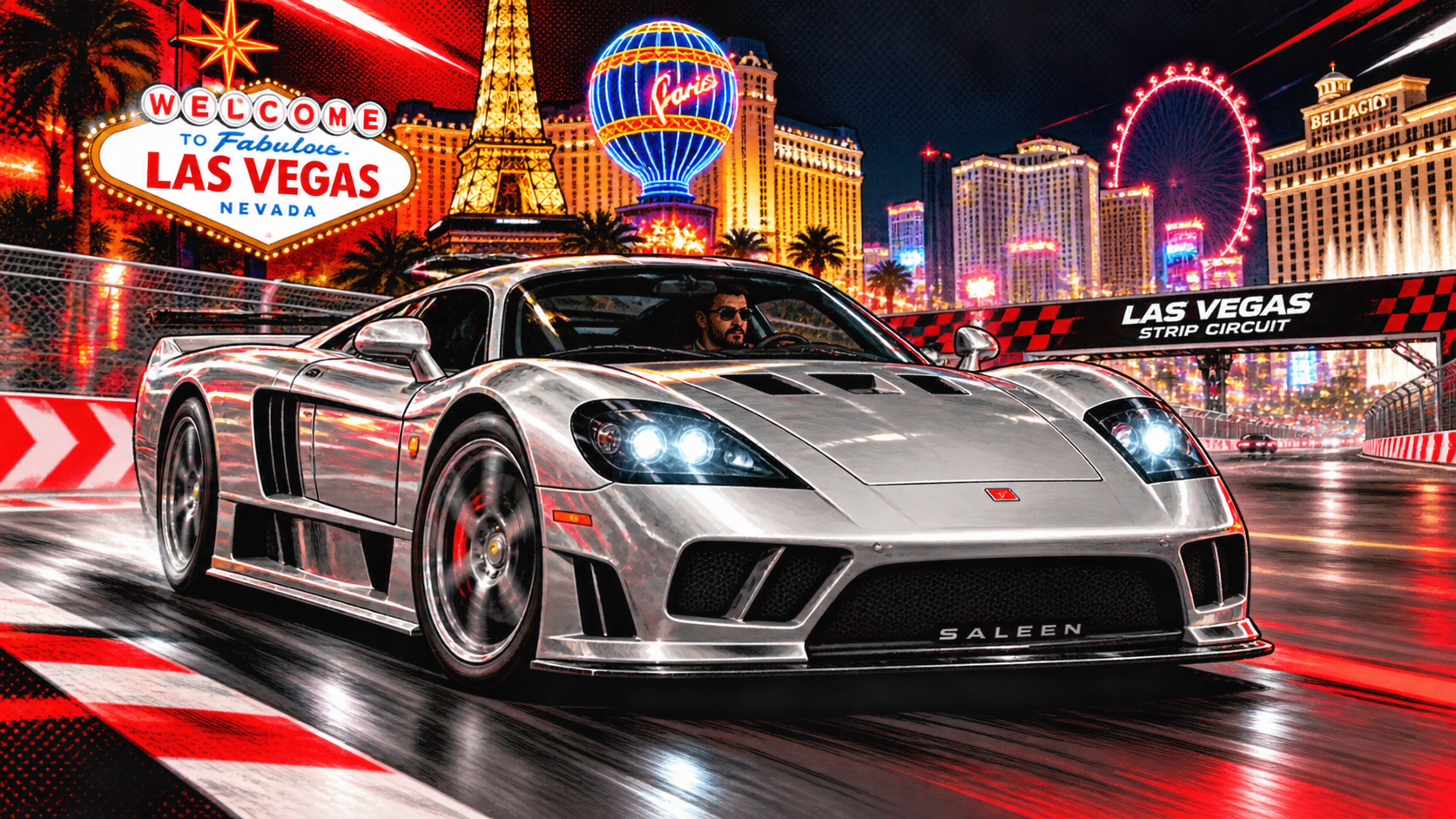
Now we bring the fight home, to the Las Vegas Strip Circuit, home of the Las Vegas Grand Prix.
The circuit runs 6.201 kilometers, about 3.85 miles, with 17 turns, and the Grand Prix lasts 50 laps. Running down the Strip there is roughly a two kilometer straight, under the neon, past the casinos.
That straight is why this matchup is fun. Two kilometers is real room. Room for the twin turbos to spool, for sixth gear to start earning its keep, for the S7 to chase the big end of its speedometer in a way no challenger since the AMG ONE could. An American supercar, flat out down the Las Vegas Strip, with the skyline lit up around it. The crowd would be on its feet, and honestly, so would we.
Then the braking zone arrives, and after it, sixteen more turns.
Over one lap, the Formula 1 car's weight advantage, active aero, racing tires, and carbon brakes would open a gap the S7's straight line heroics could never close. Over 50 laps, the honest picture is a Grand Prix car running a Grand Prix, while the S7 runs the greatest American exhibition lap this circuit could host. No invented lap times here. This is an informed comparison, not a recorded race, and nobody has timed an S7 Twin Turbo around this circuit for us to quote.
But here is the Vegas twist, and it fits this car perfectly.
Las Vegas is a city that respects a bold claim, loudly made, in front of everybody. The S7 claimed 248 mph in an era when America was not supposed to build supercars at all, and then its racing brother went to France and won at Le Mans to back up the attitude. It would lose this race. It would not lose this crowd.
The Final Call
Winner: Formula 1.
Three rounds to one, and the one is the biggest brochure number in the series so far.
Acceleration went to power to weight. Cornering and braking went to the car built only for cornering and braking. The Saleen was never going to win a Grand Prix in Las Vegas. It was built to prove America could build a supercar at all, and then it spent a decade proving it on race tracks.
And that proof still stands. This is the car that debuted in Monterey in 2000 at 375,000 dollars, when the idea of an American mid engine supercar sounded like a punchline. It answered with carbon fiber, a 7.0 liter V8, a claimed 248 mph in twin turbo form, and a racing version that won its class at Le Mans in 2010. Ferrari, Lamborghini, and McLaren all had to take it seriously, because the lap charts made them.
Formula 1 may win the fight. But the S7 still owns the claim, the trophy its brother brought home from France, and the moment America stopped modifying other people's sports cars and built its own supercar instead.
There are plenty more cars waiting to pick a fight with Formula 1.
Next up: Formula 1 vs. Mazda RX-7 FD. A rotary powered lightweight from Japan, with balance and bravery taking on brute force.