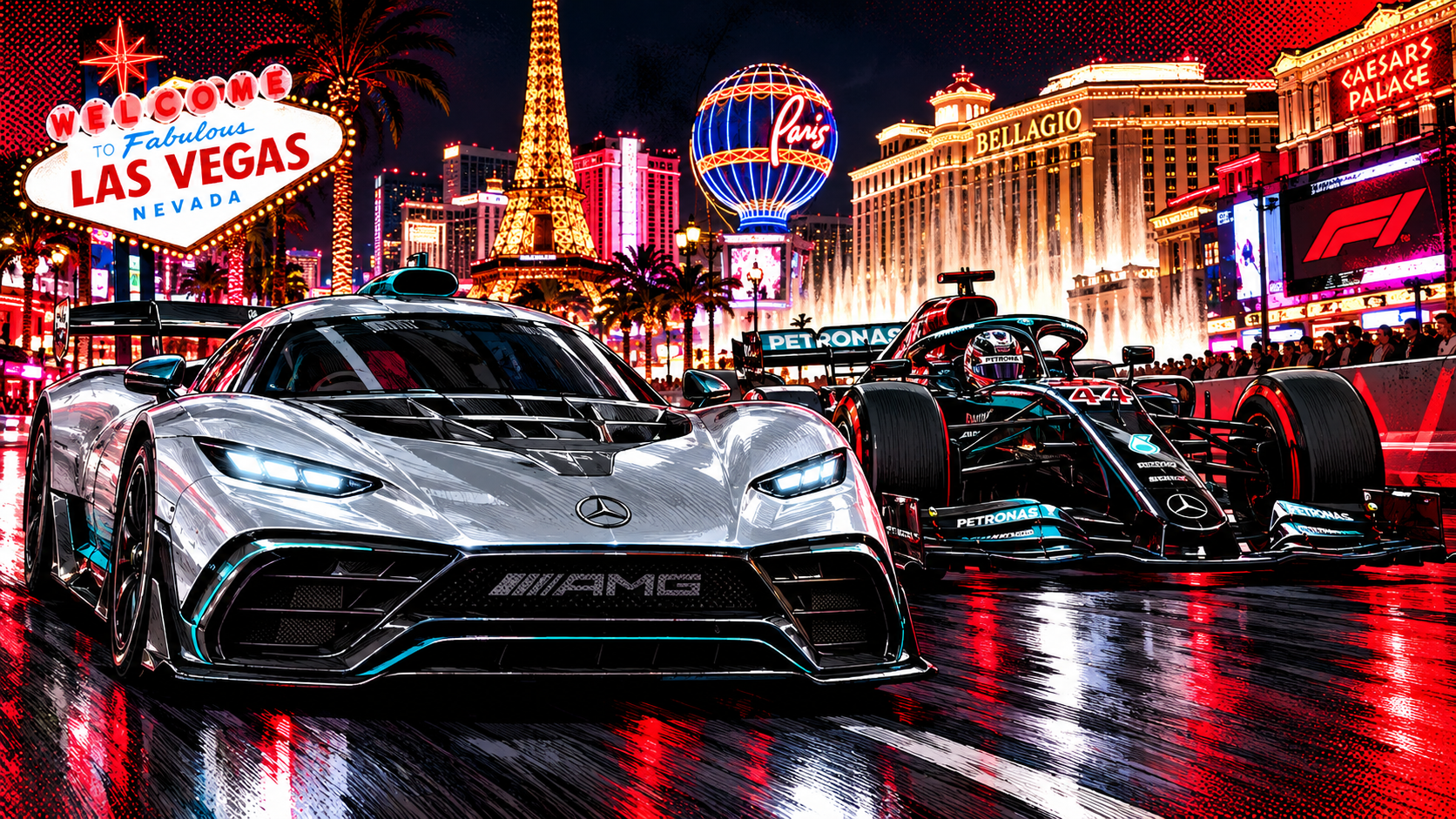
Every challenger in this series has the same problem.
They are road cars, picking a fight with a machine that was never meant to share a road with anything.
The Mercedes-AMG ONE has a different problem.
It brought receipts.
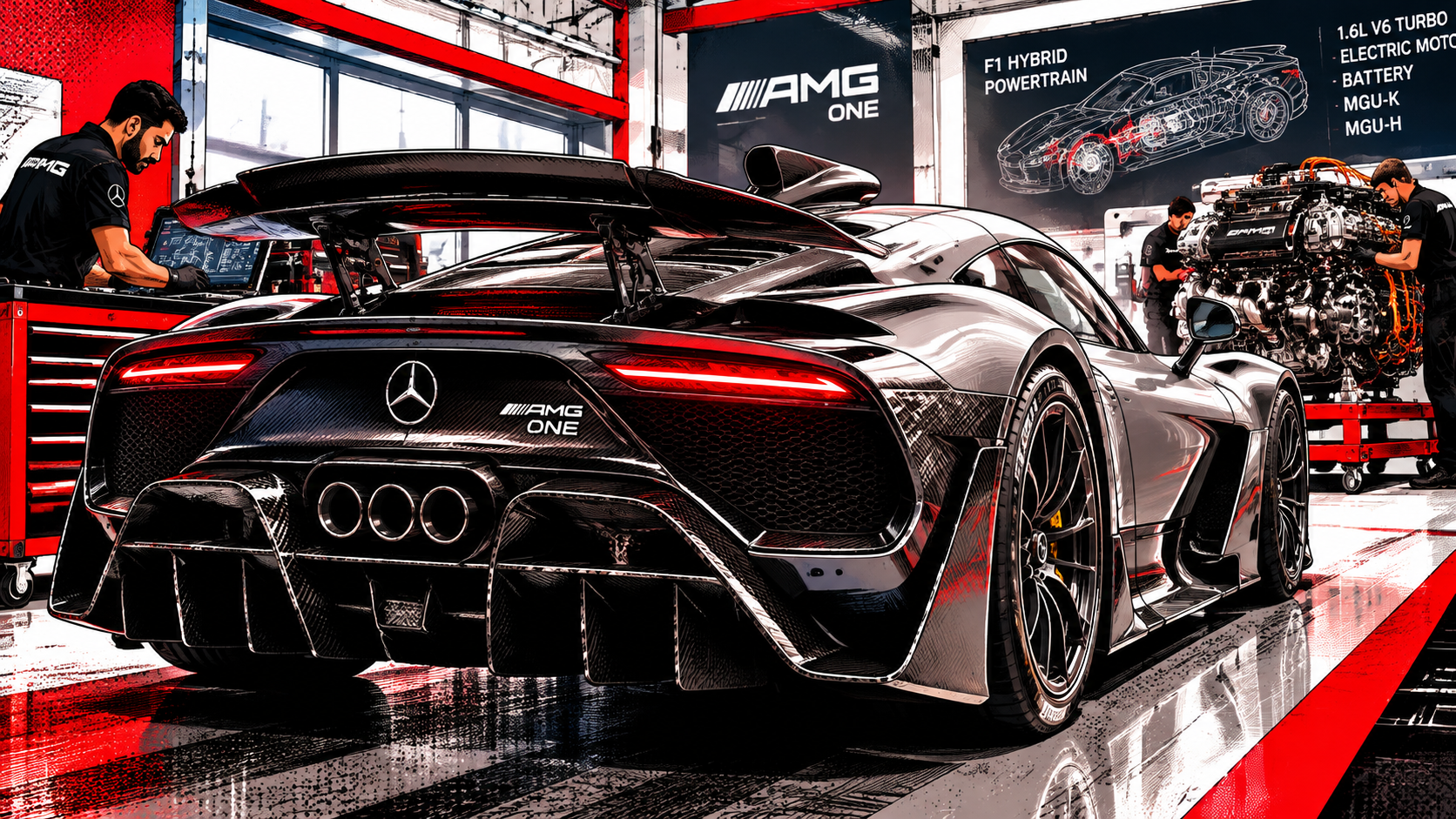
This is not a car inspired by Formula 1. This is not a car with a Formula 1 style steering wheel and a marketing department doing the heavy lifting. The ONE carries a version of the actual 1.6 liter turbocharged hybrid V6 Formula 1 power unit, built with the same people in Brixworth, England who build the engines for the Mercedes Formula 1 team.
Same basic recipe. Same displacement. Same split personality, half petrol engine, half electric recovery system, all anger.
Mercedes-AMG then did the hard part. It made that engine idle in traffic, pass emissions rules, start on a cold morning, and wear a license plate.
So today's question is not really David against Goliath.
It is Goliath's engine, in a heavier suit, against Goliath.
What happens if the Mercedes-AMG ONE picks a fight with a Formula 1 car?
The ONE is the strongest challenger this series has seen so far, and it is not close. It is also about to learn that having the champion's engine is not the same as being the champion.
First, Which ONE Are We Talking About?
There is only one ONE, and that helps.
We are talking about the production Mercedes-AMG ONE, revealed in final form on June 1, 2022, for the 55th anniversary of AMG. Mercedes-AMG built just 275 of them, every one was spoken for, and the reported price was around 2.75 million dollars. Nobody comparison shopped this car against a sensible hatchback.
The idea started as Project ONE, shown as a concept in 2017, and then spent years in development because putting a Formula 1 power unit in a road car turned out to be exactly as difficult as it sounds. The engine had to be tamed without being declawed, and that balancing act is the whole story of this car.
Start with the combustion engine, because everything else plugs into it.
It is a 1,599 cc, 1.6 liter turbocharged V6, mounted in the middle of the car, ahead of the rear axle. On its own, per Mercedes-AMG, it makes 574 horsepower, 422 kW, at 9,000 rpm, and it revs to 11,000 rpm. Read that again. Eleven thousand rpm, in a car with turn signals.
A normal road car engine uses metal valve springs. At those revs, metal gives up, so the ONE uses pneumatic valve springs, the same solution Formula 1 uses. The turbocharger is split, with the turbine and compressor at opposite ends connected by a shaft, another Formula 1 trick that keeps the hot side away from the intake air.
Then come the four electric motors, and this is where the ONE stops sounding like a car and starts sounding like a power station with seats.
One motor sits on the turbocharger shaft. Mercedes-AMG calls it the MGU-H, rates it at 90 kW, and says it can spin the compressor up to 100,000 rpm electrically, which kills turbo lag before it starts and harvests energy when the exhaust has more than enough to spare.
A second motor, the MGU-K, is linked to the crankshaft and adds 120 kW. It helps drive the rear wheels and recovers energy under braking, exactly like its Formula 1 cousin.
The other two motors live on the front axle, one per wheel, at 120 kW each. They drive the front wheels on electricity alone when asked, and they can vector torque side to side, which is engineer talk for shoving the car around a corner with math.
Add it all up and Mercedes-AMG quotes a system output of 782 kW, headlined as 1,063 horsepower. One honest note here, because Sam Soto does not joke with the facts: Mercedes-AMG does not publish one simple combined torque figure for this car, because the petrol engine and four motors deliver their push at different times and through different axles. Anyone quoting you a single tidy torque number for the ONE is tidying up reality.
Power reaches the road through a seven speed automated manual gearbox and AMG Performance 4MATIC+ fully variable all wheel drive, with a hybrid driven rear axle and an electrically driven front axle. The battery is an 8.4 kWh lithium ion pack running at 800 volts, with direct cooling for every cell, and Mercedes-AMG quoted a provisional electric only range of 18.1 kilometers, about 11 miles, on the WLTP cycle. Enough to leave your neighborhood quietly. Not enough to leave your problems behind.
The structure is pure racing car. A carbon fiber monocoque, a carbon fiber body, and the engine and gearbox carrying load as part of the structure. The suspension is five link aluminum at both ends with push rod spring struts laid across the car and adaptive damping. In its track settings, the car can lower itself by 37 millimeters at the front and 30 millimeters at the rear, and its active aerodynamics wake up with a mode Mercedes-AMG literally calls Strat 2, full power, as in Formula 1 qualifying.
The numbers that matter most, all of them Mercedes-AMG figures: zero to 100 kilometers per hour in 2.9 seconds, zero to 200 in 7.0 seconds, zero to 300 in 15.6 seconds, and a top speed limited to 352 kilometers per hour, about 219 mph.
It weighs 1,695 kilograms by the DIN measure, about 3,737 pounds, and it measures 4,756 millimeters long, 2,010 millimeters wide, and 1,261 millimeters tall, on a 2,720 millimeter wheelbase. Wide, low, and heavy in the way a bank vault is heavy. With intent.
The brakes are carbon fiber ceramic composites, 398 millimeter discs with six piston calipers up front and 380 millimeter discs with four piston calipers at the rear, plus all that electric regeneration helping out. The tires are Michelin Pilot Sport Cup 2 R rubber developed for this car, 285 section at the front and 335 at the rear. Even the tires needed a development program.
And then there is the receipt that ends most arguments in the pub.
On September 23, 2024, Mercedes-AMG driver Maro Engel lapped the 20.832 kilometer Nurburgring Nordschleife in the ONE in 6 minutes 29.090 seconds, a time Mercedes-AMG says was officially measured and notarized. That made the ONE the fastest production car around that track and the first road car to break 6 minutes 30 seconds there, beating its own record from October 2022 by more than five seconds.
That is the challenger. A Formula 1 engine, four electric motors, a lap record, and a license plate.
The license plate is about to become a problem, because license plates come with weight, and weight is where Formula 1 lives to embarrass people.
Meet the 2026 Formula 1 Car
Across the garage sits a 2026 Formula 1 car, and if the ONE's spec sheet sounded familiar, there is a reason.
The 2026 Formula 1 car also runs a 1.6 liter turbocharged V6 hybrid. The internal combustion side is limited to about 400 kW. The electric MGU-K can deliver up to 350 kW where maximum deployment is allowed. Formula 1 describes the total package as producing more than 1,000 horsepower, with the honest caveat that the electrical help is managed around the lap. Same family recipe as the ONE. Very different kitchen rules.
Here is the number that ruins the ONE's day. The minimum regulatory weight for a 2026 Formula 1 car is 768 kilograms, about 1,693 pounds, including the driver.
The ONE weighs 1,695 kilograms before anyone climbs in. The Formula 1 car's entire minimum weight, driver included, is almost exactly the ONE's weight figure with the digits in a ruder order. The F1 car weighs less than half as much car, while making similar headline power.
For 2026, Formula 1 also runs active front and rear aerodynamics, low drag on the straights and high downforce in the corners, on carbon construction and racing tires that exist for one purpose only.
The ONE is the closest a road car has ever come to this formula. Closest is still a neighborhood, not an address.
This seems unfair, because it is.


ONE vs. F1: The Numbers
| Category | Mercedes-AMG ONE | 2026 Formula 1 Car |
|---|---|---|
| Engine | 1.6 liter (1,599 cc) turbocharged V6 hybrid, Formula 1 derived | 1.6 liter turbocharged V6 hybrid |
| Power | 1,063 hp system output (782 kW), Mercedes-AMG figure; V6 alone 574 hp at 9,000 rpm | 400 kW combustion engine plus up to 350 kW MGU-K deployment; more than 1,000 hp total per Formula 1 |
| Torque | No single combined figure published by Mercedes-AMG | No single standardized series figure |
| Weight | 1,695 kg DIN kerb weight, Mercedes-AMG figure | 768 kg minimum regulatory weight, driver included |
| 0-100 km/h | 2.9 sec, Mercedes-AMG figure | No universal official 2026 figure |
| 0-200 km/h | 7.0 sec, Mercedes-AMG figure | No universal official 2026 figure |
| Top speed | 352 km/h (about 219 mph), electronically limited, Mercedes-AMG figure | 2026 FIA speed-trap data has already exceeded 219 mph |
| Drivetrain | All wheel drive, seven speed automated manual; hybrid rear axle, electric front axle | Rear wheel drive |
| Rev limit | 11,000 rpm | Regulated Formula 1 power unit, no single road style redline figure used here |
| Aerodynamics | Active aerodynamics, Strat 2 track mode | Active front and rear aerodynamics |
| Street legal | Yes | No |
| Production | 275 cars | One per driver, per team, per season, roughly |
| Signature lap | 6:29.090 at the Nurburgring Nordschleife, 2024, fastest production car there | Sets the times every other car gets compared against |
| Vegas valet factor | Extreme. The valet will need a briefing, a waiver, and a moment alone | Cannot be valeted. Needs a pit crew and a laptop |
Round One: Acceleration
This is the round where the ONE earns its entry fee.
Two point nine seconds to 100 kilometers per hour is not road car fast. It is drag strip gossip fast. And the launch is only the opening bid. Zero to 200 in 7.0 seconds. Zero to 300 in 15.6 seconds. Most cars are still telling their passengers to hold on at speeds the ONE reached several seconds ago.
The ONE also has tools no other challenger in this series has brought along. All wheel drive, with electric motors on the front axle that react faster than any mechanical system can. An electric turbo that fills in the gaps before the exhaust gets to work. An MGU-K that piles electric torque straight into the crankshaft. Off the line, this car does not build speed. It teleports in installments.
Now the honesty, same as every round in this series.
There is no single official zero to 100 figure that applies to every 2026 Formula 1 car, and we are not going to invent one. What we can line up is the math, and the math is rude.
The Formula 1 car makes similar total power to the ONE and weighs less than half as much. Its power to weight ratio is not a little better. It is in a different sport. It also launches on racing tires, with a clutch and launch systems tuned by people whose entire job is the first three seconds of a Grand Prix.
The ONE would win this round against almost any road car ever built, including several former champions of this series. Against the car its engine came from, the weight bill comes due immediately.
The ONE launches like a road car revolution. The F1 car launches like it was fired.
Round One Winner: Formula 1
Round Two: Top Speed
If acceleration was rude, top speed is where this fight gets genuinely interesting for about four seconds.
The ONE tops out at 352 kilometers per hour, about 219 mph, and that number is electronically limited, per Mercedes-AMG. The car did not run out of courage at 352. A computer politely tapped it on the shoulder. Among road cars, that is elite company, the kind of speed that used to require a closed runway and a legal waiver written by a pessimist.
Formula 1's evidence, as usual, is already written down by the FIA.
During qualifying for the 2026 Chinese Grand Prix, official speed trap data recorded Pierre Gasly at 353.9 kilometers per hour, about 220 mph. One kilometer per hour faster than the ONE's limiter, already, in 2026 trim, on a circuit, between corners.
And here on the Las Vegas Strip Circuit, the traps from earlier editions have been ruder still. In 2025, Yuki Tsunoda was recorded at 358.3 kilometers per hour, about 222.6 mph. In 2024, Alex Albon hit 368.9 kilometers per hour, about 229.2 mph, the highest figure through the first three editions of the race. Those were earlier spec cars, and we are labeling the years on purpose. They show the neighborhood the F1 car lives in, not a promise for tonight.
The real gap is not the headline number anyway. It is how the speed arrives.
The ONE needs room to stretch to 352. The Formula 1 car hits trap speeds in the same postcode on a street circuit straight, then brakes, turns, and does it again a lap later, with its active aero flipping between low drag and high downforce like it is changing its mind at the speed of thought.
Still. Let the record show the ONE is the first challenger in this series that made us check the F1 trap numbers twice.
Round Two Winner: Formula 1
Round Three: Now Add a Corner
This is the ONE's best round, and it still starts with a confession.
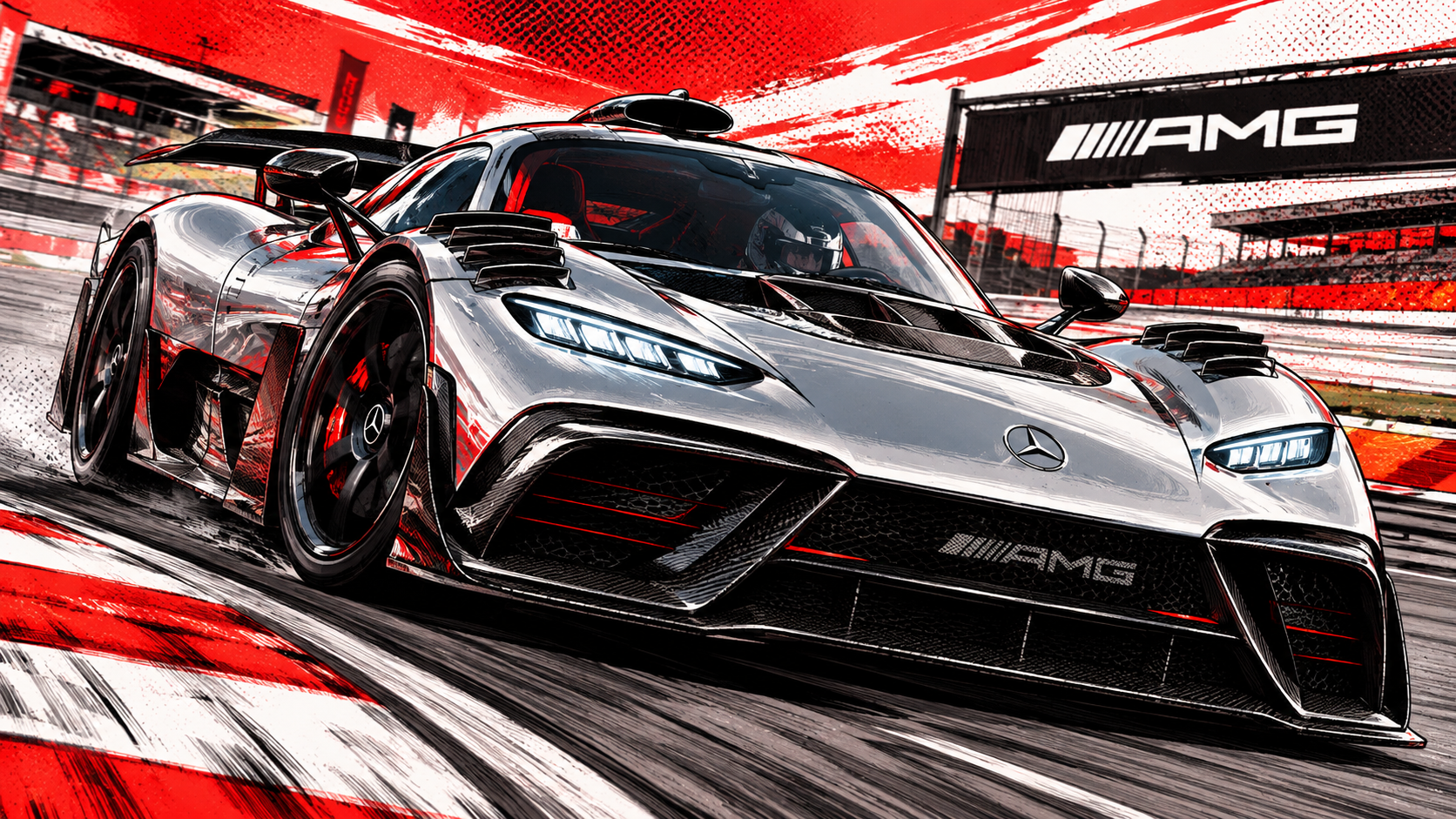
The ONE is a genuine cornering weapon. Carbon structure. Push rod suspension. Active aerodynamics that generate downforce from as low as 50 kilometers per hour, per Mercedes-AMG, and keep building from there. Front axle torque vectoring that can push and pull individual wheels. A track mode that drops the car onto its haunches and a Strat 2 setting that runs full power the way a Formula 1 car does in qualifying.
And it has the receipt. Six minutes, twenty nine seconds around the Nordschleife, the hardest, longest, meanest test of a road car on Earth. No production car has gone faster there. The ONE did not just survive corners. It set the road car standard for them.
Here is the problem, and you already know his name.
The Formula 1 car weighs 768 kilograms with the driver in it. The ONE weighs 1,695 before breakfast. Cornering is a physics exam about mass, tire grip, and downforce, and the F1 car aces all three at once. Its active wings press racing slicks into the road with a force the ONE, on road legal Michelin Cup 2 R tires, simply cannot match. Its brakes, its steering, its entire existence is built around changing direction at speeds that would rearrange a road car's priorities and possibly its engine mounts.
The ONE corners like the best road car in the world, because on the evidence of the Nurburgring, it is.
The Formula 1 car corners like a Formula 1 car. There is no trophy for second place in a two car fight, but there is honor, and the ONE earns more of it in this round than any challenger before it.
Round Three Winner: Formula 1
Round Four: Braking
Braking is where road cars usually get humiliated quietly. The ONE, to its credit, gets humiliated loudly and with excellent hardware.
Carbon fiber ceramic discs the size of serving platters. Six piston calipers up front. Four piston calipers at the back. Plus regeneration from the MGU-K and the front motors, harvesting energy every time the driver lifts or brakes, which means the ONE slows down with friction, electricity, and active aero all pulling in the same direction.
On the road, or on a track day, that setup is mighty. Repeated stops from serious speed are exactly what this system was built and cooled for.
The Formula 1 car, though, starts every braking event with less than half the ONE's mass to stop. Kinetic energy grows with weight, and the F1 car simply brings less of it to the fight. It also brings racing tires with far more grip, aerodynamic load pressing those tires down hardest exactly when the car is traveling fastest, and carbon brakes built to repeat maximum violence, corner after corner, for a full Grand Prix distance.
The ONE brakes like a hypercar with a Formula 1 education.
The F1 car brakes like the education itself.
Round Four Winner: Formula 1
So, Does the ONE Win Anything?
It wins plenty, starting with the argument every other challenger in this series wishes it could make.
It wins authenticity.
Every car company on Earth says its road car was inspired by racing. The ONE skipped inspired. Its power unit was developed with Mercedes-AMG High Performance Powertrains in Brixworth, the same operation behind Mercedes Formula 1 engines, using the same 1.6 liter turbo hybrid architecture, the same MGU-K and MGU-H ideas, and the same pneumatic valve spring solution. The BMW M1 raced on Formula 1 weekends. The ONE carries Formula 1 in its engine bay, every single day, in traffic.
It wins the road car record book.
Fastest production car around the Nurburgring Nordschleife, 6:29.090, first road car under six and a half minutes there. The Lotus Exige brought lightness. The Lamborghini Countach brought poster fame. The ONE brings a notarized lap time that the entire industry now has to chase.
It wins the daily double.
It can drive on electricity alone for about 18 kilometers, silently, like a very expensive golf cart with a secret. It has air conditioning, two displays, and seats you can actually sit in for longer than a qualifying session. The Formula 1 car has a seat shaped like one specific human and a steering wheel with more computing power than the Apollo program. For the school run, there is a clear winner, and it is not the one with the pit crew.
It wins rarity and commitment.
Two hundred seventy five cars. Years of development pain that would have killed a normal program three times over. Mercedes-AMG kept going because the promise was the point: a real Formula 1 power unit, in a real road car, no asterisks. Plenty of companies would have built a tribute. AMG built the thing itself.
ONE wins: the authenticity, the road car record, the electric school run, and the sheer stubbornness of the idea.
What Would Happen on the Las Vegas Strip Circuit?
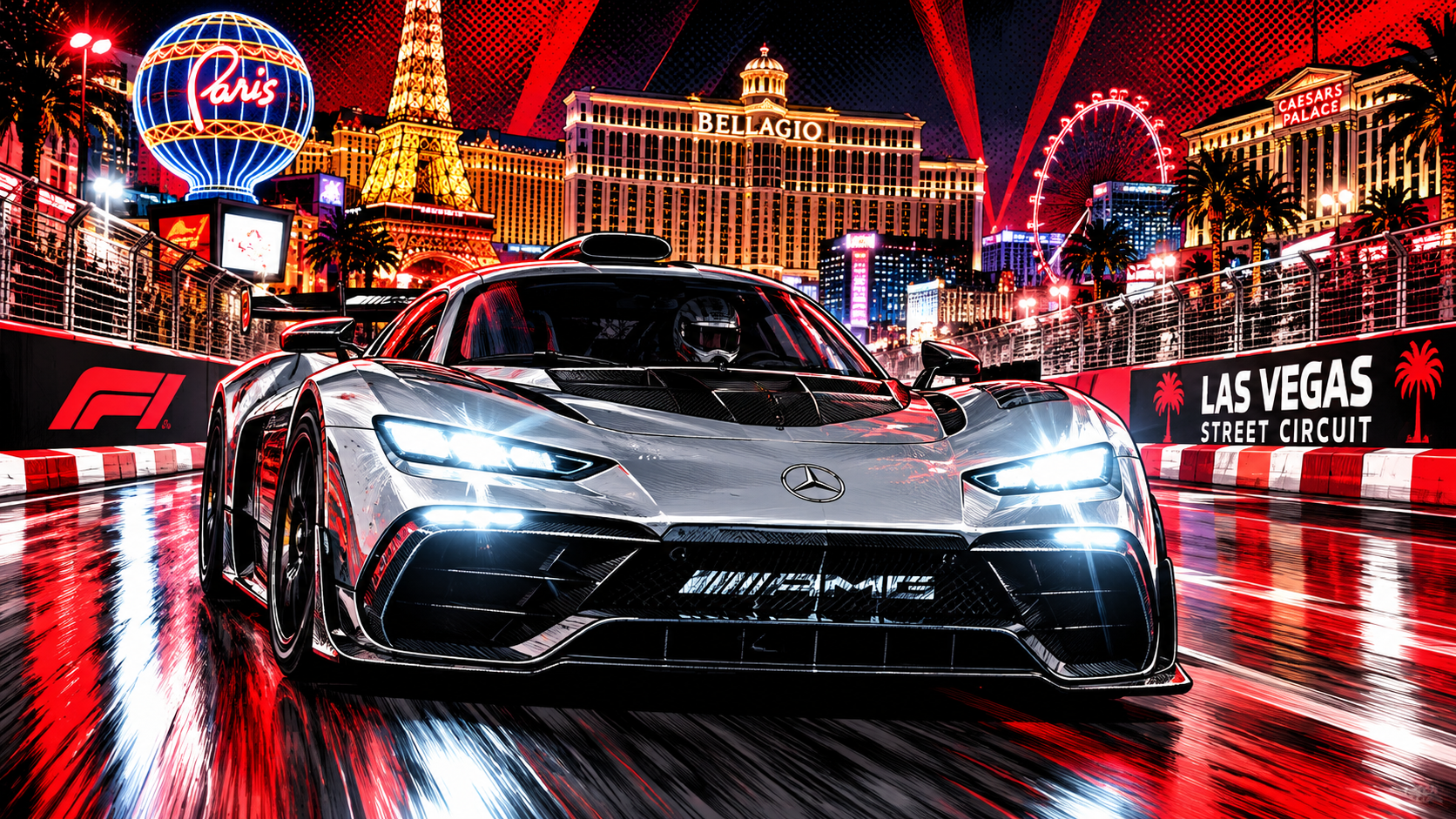
Now we bring the fight home, to the Las Vegas Strip Circuit, home of the Las Vegas Grand Prix.
The circuit runs 6.201 kilometers, about 3.85 miles, with 17 turns, and the Grand Prix lasts 50 laps. Running down the Strip there is roughly a two kilometer straight, under the neon, past the casinos.
That straight is the ONE's happiest place in this entire fight.
Three hundred fifty two kilometers per hour on the limiter is real speed, F1 trap neighborhood speed, and down that long straight the ONE would look, for a few glorious seconds, like it belongs in this race. The sound alone would be worth the ticket. An 11,000 rpm V6 with a Formula 1 accent, bouncing off the casino facades at night in Las Vegas. Nobody in the grandstands would be checking their phone.
Then comes the braking zone, and the other sixteen corners, and physics collects its tax.
At every corner the F1 car brakes later, turns harder, and leaves earlier, because it carries less than half the weight on far grippier tires under far more downforce. Over one lap the gap would be large. Over 50 laps, the honest picture is the F1 car running its own race while the ONE runs the most spectacular support act this circuit has ever seen. No invented lap times here. This is an informed comparison, not a recorded race, and nobody has timed a ONE around this circuit for us to quote.
But here is the Vegas twist, and it matters in this town.
The ONE is the only challenger so far that could drive itself to the circuit on public roads, legally, pull in off the Strip, and line up. It arrives under its own power, with its own license plate, carrying the same kind of heart as the main event. In a city built on the house always winning, the ONE is the guest who showed up knowing exactly how the game works, and played it brilliantly, and lost to the house anyway.
Respectfully. At 219 mph.
The Final Call
Winner: Formula 1.
Four rounds, four wins, but read the fine print, because this was the closest fight in this series so far.
Acceleration went to the car with half the weight. Top speed went to the car that has already been trapped faster than the ONE's limiter, in 2026 trim, during qualifying in China. Cornering and braking went to the car built only for cornering and braking. The ONE never had the physics. What it had was the engine, the record book, and the nerve.
And that turns out to be the whole point of the car.
The ONE was never really built to beat a Formula 1 car. It was built to answer a question nobody else had the patience to answer honestly. What happens if you actually do it? What happens if you take the real power unit, with its 11,000 rpm redline and its four motor hybrid system and its pneumatic valves, and you make it survive traffic, emissions tests, cold starts, and speed bumps?
What happens is the fastest production car ever to lap the Nurburgring, a 352 kilometer per hour road car that can also whisper down your street on electricity, and a machine that made Formula 1 check its own speed trap numbers twice.
Formula 1 may win the fight. But the Mercedes-AMG ONE still owns the one line no other road car can say with a straight face: my engine is not like a Formula 1 engine, it is one, and it got me here under my own power.
There are plenty more cars waiting to pick a fight with Formula 1.
Next up: Formula 1 vs. Dodge Challenger SRT Demon 170. All American muscle, a drag strip legend, and a very different idea about how to win a straight line.