No human being ever saw the Las Vegas Valley at its wettest. By the time people reached this desert, the great spring wetlands were already shrinking, and the biggest animals that ever drank from them were already gone from the record. Everything known about the valley before humans comes from evidence, not memory: layered mud in a wash on the city's north edge, bones by the tens of thousands, pollen grains, snail shells, and the faint chemistry of ancient charcoal.
That evidence tells a story with honest limits. Parts of it are nailed down tight. Parts are still argued over.
And one famous part of it, the giant lake that older accounts placed in this valley, turns out never to have existed at all. What the ground actually shows is stranger and better: a desert valley that spent hundreds of thousands of years swinging between green and dry, and kept a written record of every swing in its sediments. Las Vegas still holds that diary, buried under the Upper Las Vegas Wash at a place called Tule Springs.
A landscape in motion
Pleistocene climate and water
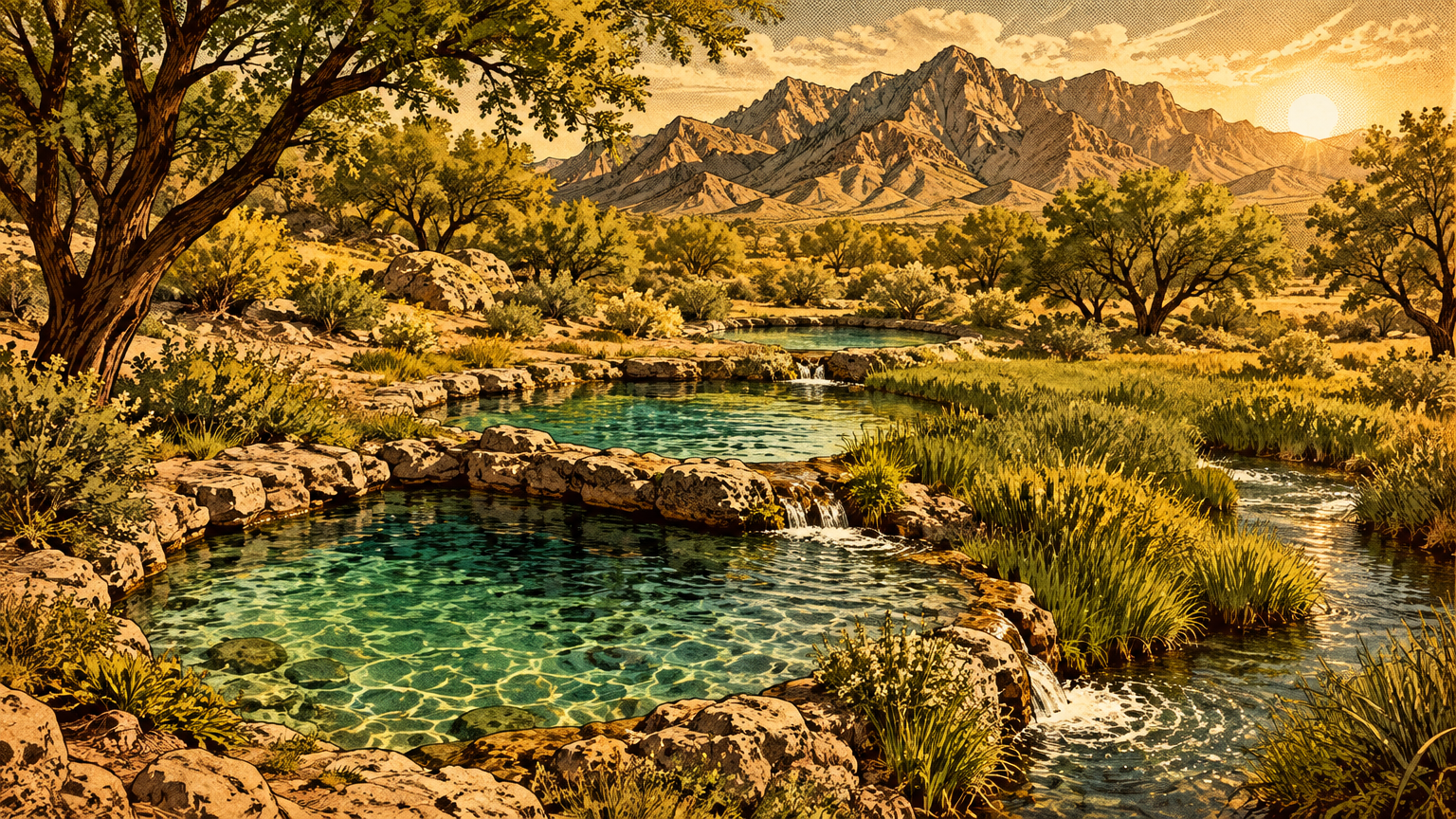
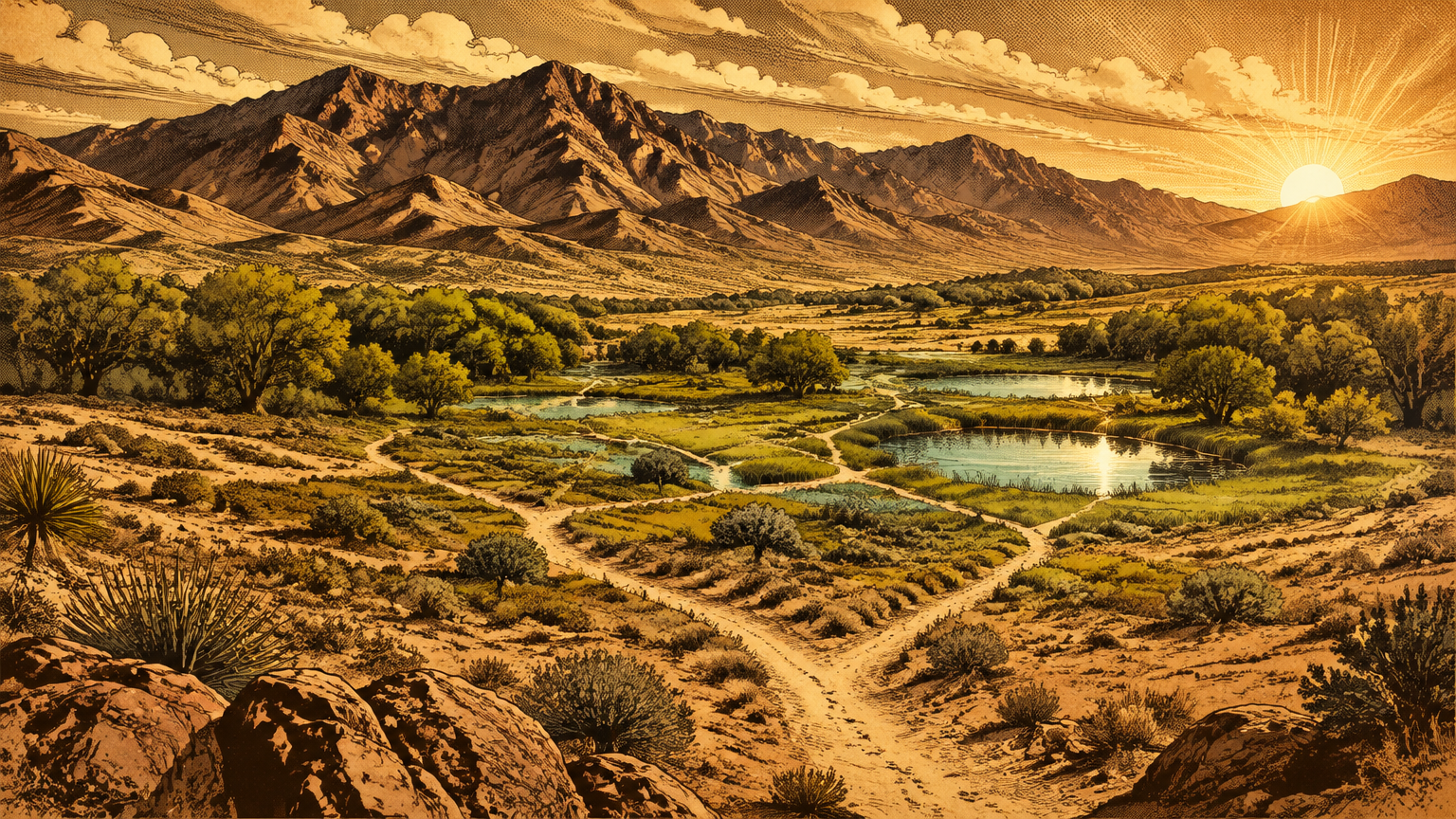
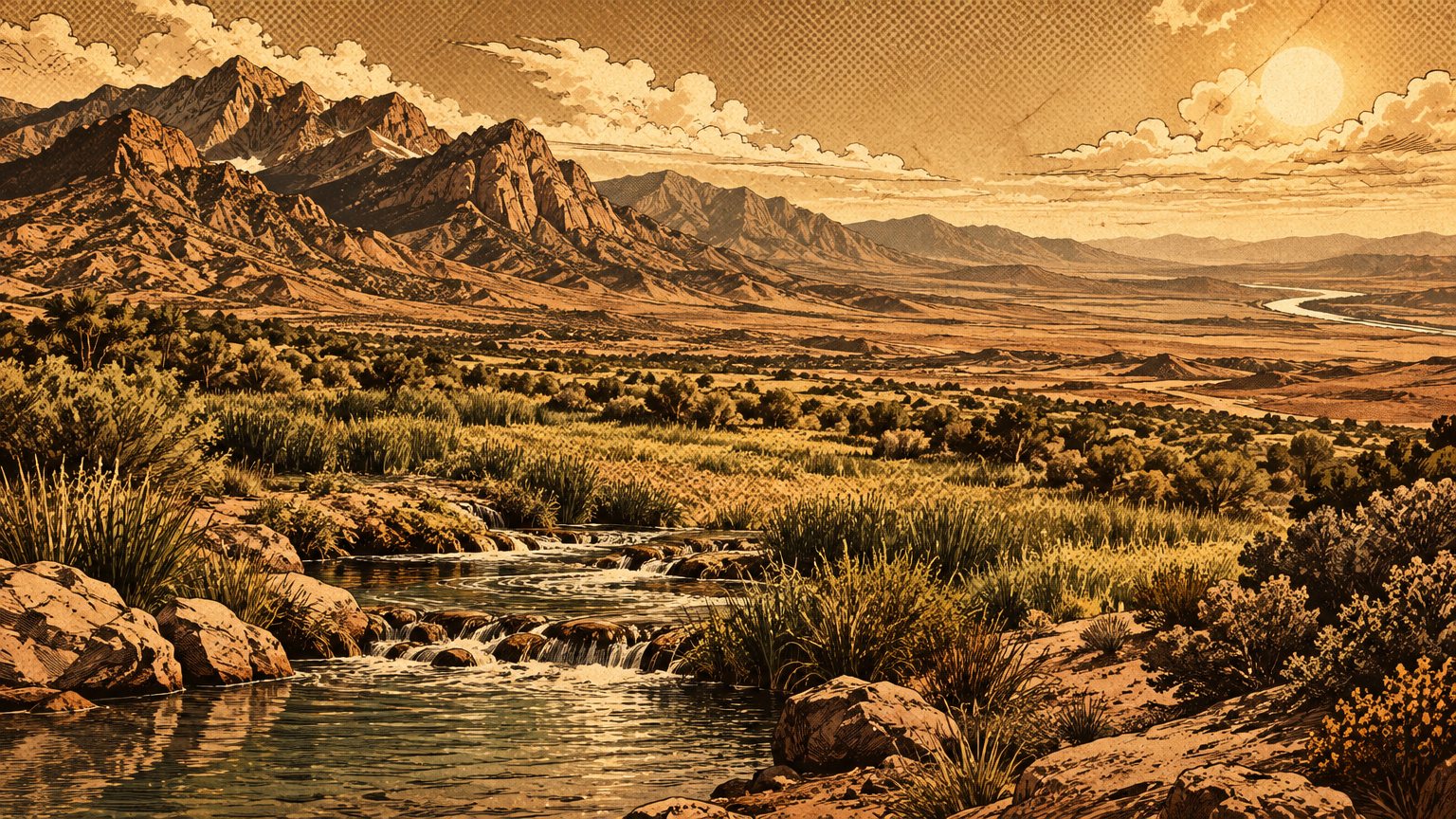
The Pleistocene is the epoch most people call the Ice Age. The great ice sheets sat far to the north, but their influence reached this valley as water. During the Pleistocene, the climate here was wetter than today, and the water table stood so high that groundwater flowed up to the surface as springs, according to U.S. Geological Survey geologists Kathleen Springer and Jeffrey Pigati, whose work anchors much of what follows.
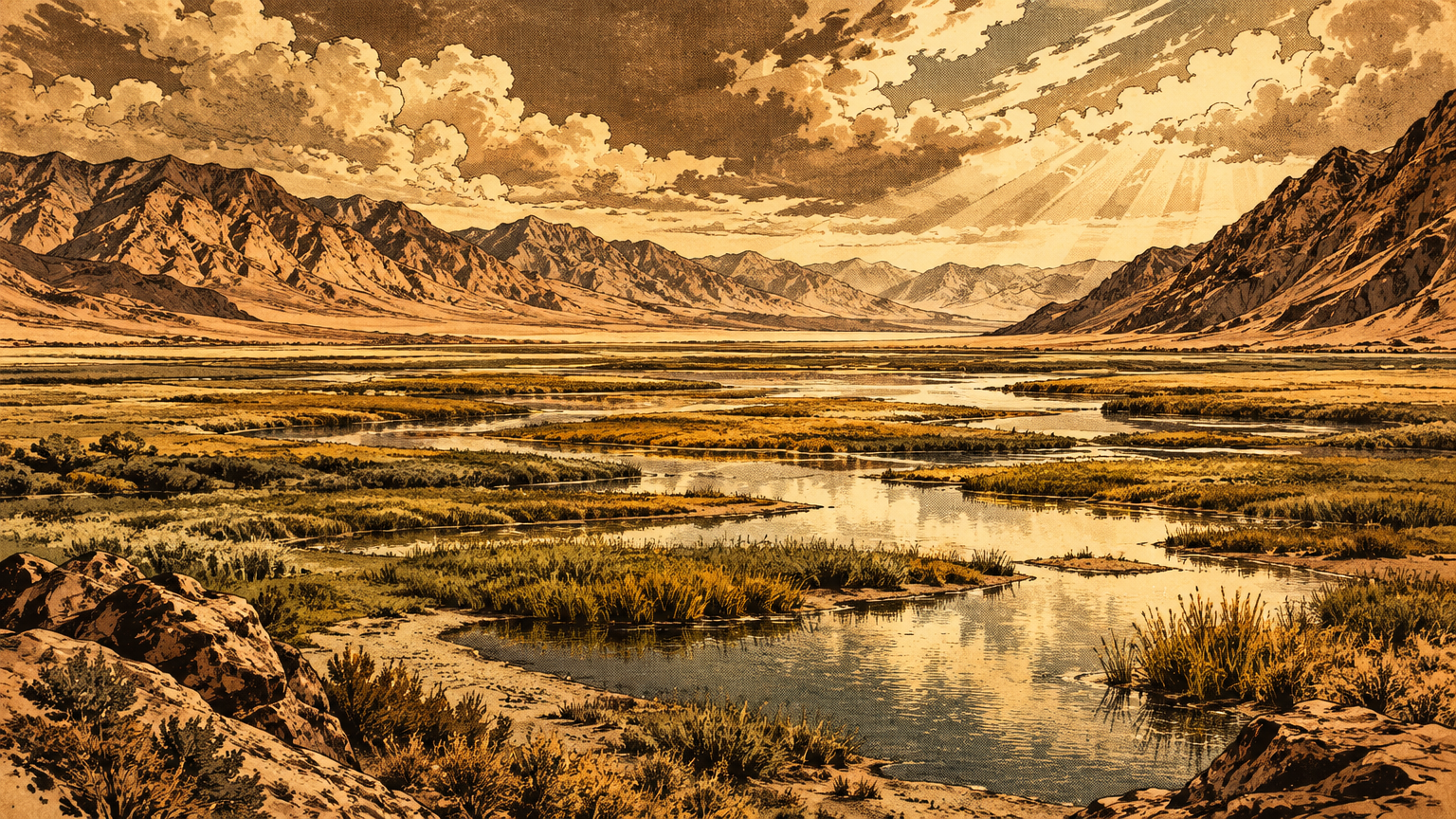
The Springs Preserve, which tells the valley's long story on the site of its most famous springs, describes that world plainly: the Las Vegas Valley was wet and green, with marshlands extending across the valley floor.
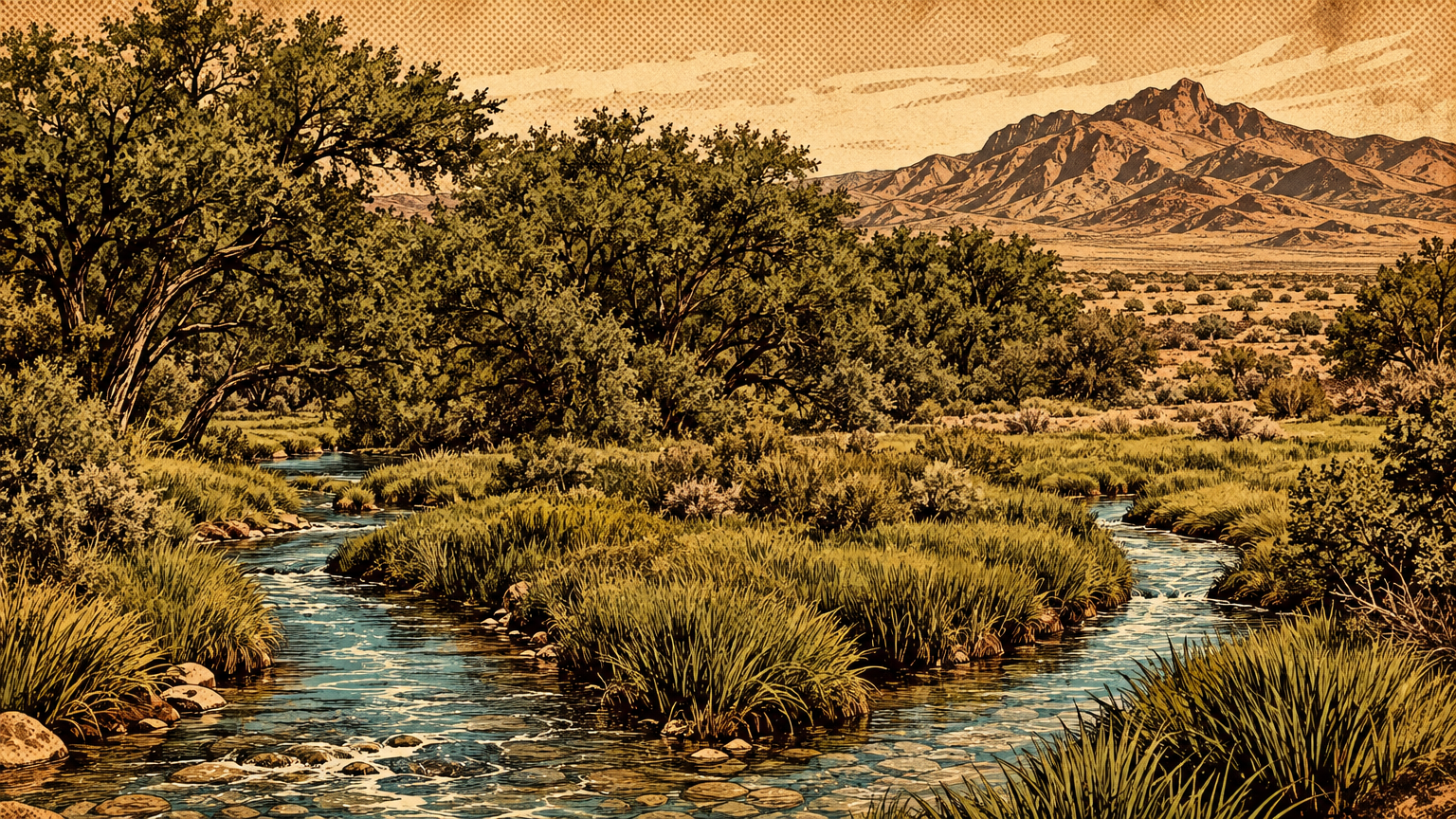
Those wetlands were not one single swamp. Reading the deposits closely, scientists can identify distinct environments: marshes, wet meadows, spring pools and ponds, and spring fed streams.
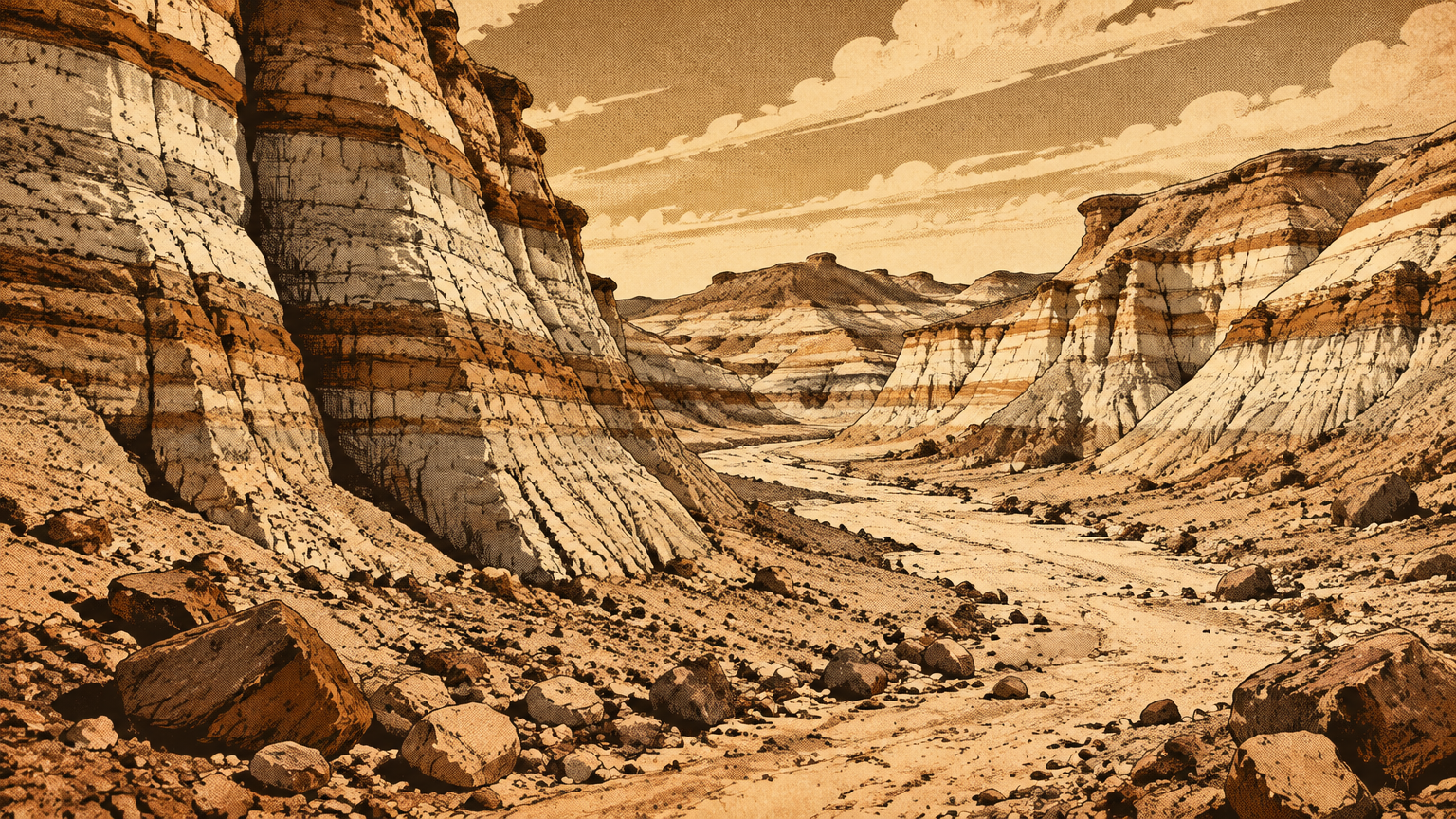
The water left behind a body of silty, light colored sediment called the Las Vegas Formation. At its strongest, this spring ecosystem existed periodically for thousands of years and at times occupied nearly the entire valley.
It was never steady. Wet phases alternated with long dry spells severe enough that the springs shut off completely. The formation records both, which is what makes it valuable.
This is not a snapshot of one wet moment. It is a long film of a landscape in motion.
Fossil evidence around the valley
The animals are the famous part. The fossil assemblage of the wash, named the Tule Springs local fauna, spans roughly 100,000 to 12,500 years ago and ranks among the most significant late Pleistocene vertebrate faunas in the American Southwest.
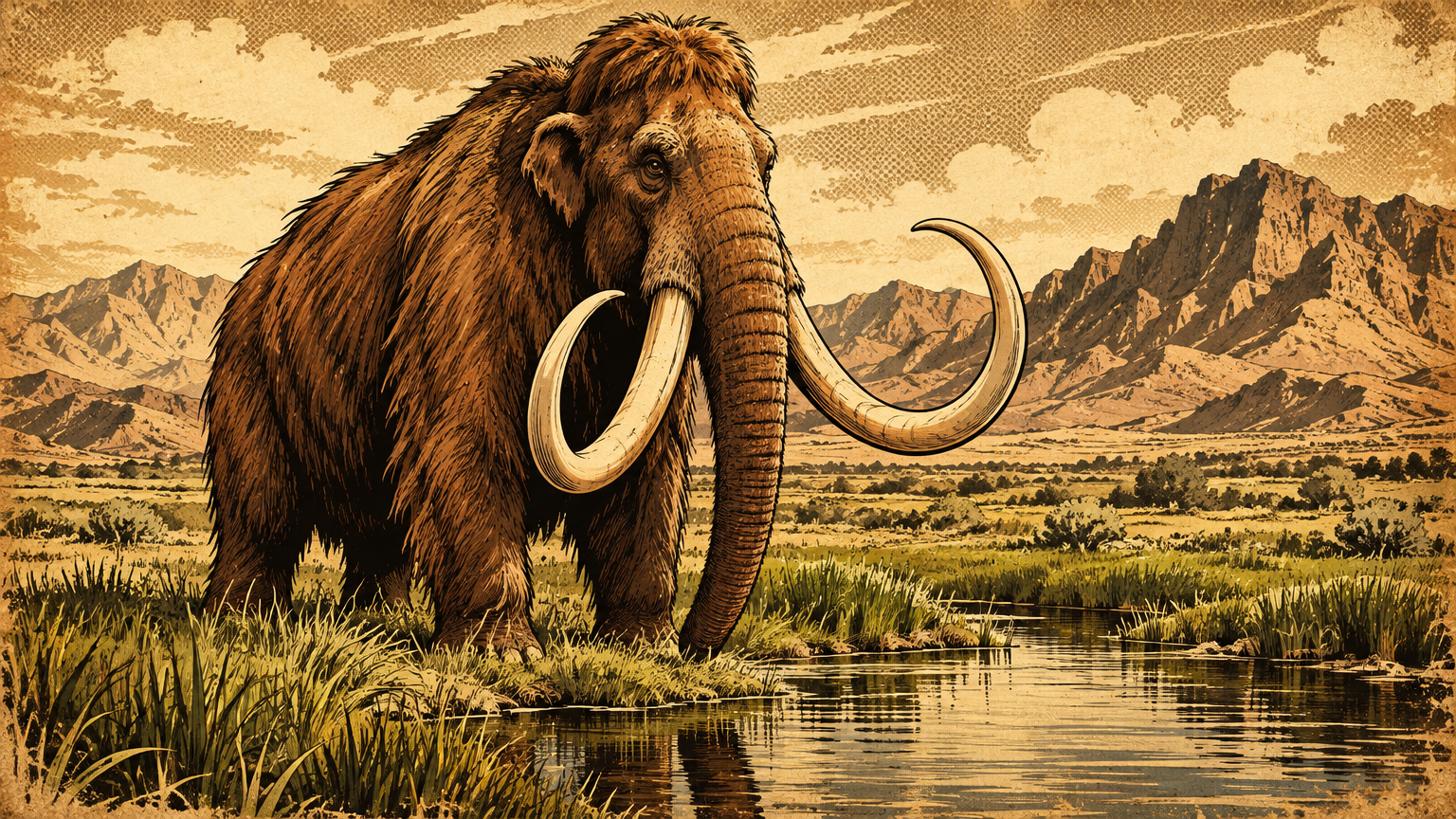
Columbian mammoths dominate it. Their remains turn up throughout the monument and outnumber everything else. Yesterday's camel, a large camel widespread across western North America in that era, comes second.
Two kinds of bison lived here, including the long horned Bison latifrons and the smaller Bison antiquus. So did three kinds of horses, from a large stout legged species to a small stilt legged one.
Two ground sloths, Jefferson's ground sloth and the smaller Shasta ground sloth, worked the vegetation. The predators were real but rare in the record: American lion, dire wolf, and saber toothed cat.
Just as important are the small witnesses. Frogs, lizards, snakes, birds, and rodents are all preserved, along with aquatic and land snails, tiny clams, and ostracodes, microscopic shelled creatures that live in water.
A mammoth tells you something big drank here. A clam shell tells you about the water itself, how permanent it was and roughly what it was like.
At one spot nicknamed the Superquarry, scientists pulled more than 500 vertebrate fossils from a single locality, including a spectacular mammoth skull with jaws and tusks. Charcoal from the stream channel deposits there has been dated to 14,590 years ago.
One caution belongs here. A fossil bed is not a census.
It records the animals that died in or near the water and happened to be buried right, filtered by luck and chemistry. Scientists treat the fauna as a rich sample of the valley's animal life, not a complete head count, and so does this article.
The desert takes shape
Changing lakes, washes and vegetation
Here is the correction at the heart of this story. For years, the pale sediments of the Las Vegas Formation were read as the remains of a large Pleistocene lake.
They are not. Geologists now know they are the deposits of a vast spring ecosystem, groundwater rising and spreading across the valley floor, not a deep lake filling a basin.
The layered record in the upper valley backs that up. Its wettest mapped phase, a unit dated between 30,000 and 15,000 years ago, lines up in time with the pluvial maximum, the wettest stretch recorded in lake deposits elsewhere in the Great Basin. Other basins did hold deep lakes then.
This one did not. Even at its wettest, standing water in the upper Las Vegas Valley was never deep or extensive enough to leave lake shorelines behind. The valley's water came up from below, not down from a filled basin.
Then the swing reversed. Between about 14,000 and 7,200 years ago, standing surface water in the upper valley gradually decreased. After 7,200 years ago, the change hardened: wind action increased, biological activity dropped, erosion chewed at the older deposits, and the water table fell at least 25 meters, about 80 feet, from its moist phase levels.
The plants tell the same story. Packrat middens, ancient nests that preserve whatever the rats collected nearby, and pollen in the sediments show the valley's vegetation shifting from sagebrush dominated steppe to the lower Mojave desert scrub of creosote bush country that defines the valley today. The Springs Preserve puts the turning point simply: after the last glacial age ended in the valley some 12,000 years ago, the area slowly became a desert.
The big animals leave the local record at about the same time, with the youngest fossils of the Tule Springs fauna dated to roughly 12,500 years ago. Why the mammoths, camels, horses, and sloths vanished, here and across the continent, is still honestly debated: a rapidly warming and drying climate, hunting by the first peoples, or some combination.
The Tule Springs record documents the disappearance and the drying that surrounded it. By itself, it does not assign the cause, and this article will not pretend otherwise.
What geology can date confidently
How sure can anyone be about events 100,000 years old? Surer than you might expect, within stated limits. Recent Geological Survey work expanded the Las Vegas Formation into 17 distinct geologic units that together span more than 500,000 years.
Fossils are known from 13 of them. The stacked order of the layers is not in doubt: younger sits on older, and the breaks in the stack, where soils formed or erosion cut in, mark the megadroughts when the springs dried completely.
Two clocks do most of the dating. Radiocarbon dating reads how long ago once living material, like the charcoal in a stream channel, stopped exchanging carbon with the living world.
Luminescence dating reads when buried sediment grains were last exposed to light before they were buried. Each method covers a different reach of time, and each carries a margin of error that scientists state alongside the date.
The pattern that emerges is bigger than one valley. The wetting and drying cycles in these spring deposits line up with abrupt warming events recorded in the Greenland ice core record, on the far side of the planet. These desert springs responded quickly to climate swings, in step with the Northern Hemisphere as a whole.
So the sequence is solid: which layers came first, which animals lived while the water ran, when the drying set in. What geology cannot hand back is a single day.
No specific storm, no specific herd at a specific pool, no scene. Any picture of one is an invention, and you will not find one presented as fact here.


Evidence under the city
Museum specimens and field science
The science started early. In 1903, Josiah Spurr of the U.S. Geological Survey reported teeth and bones in the sediments of the upper Las Vegas Wash, between Corn Creek Springs and Tule Springs. In 1933, quarry workers unearthed a pile of mammoth bones in the same ground, and Tule Springs began its second life as one of the most dug over fossil sites in the Southwest.
The early digs chased a thrilling idea: that the bones lay alongside evidence of the first people in North America. The question peaked with the Tule Springs Expedition of 1962 and 1963, remembered as the Big Dig. It was a huge multidisciplinary effort.
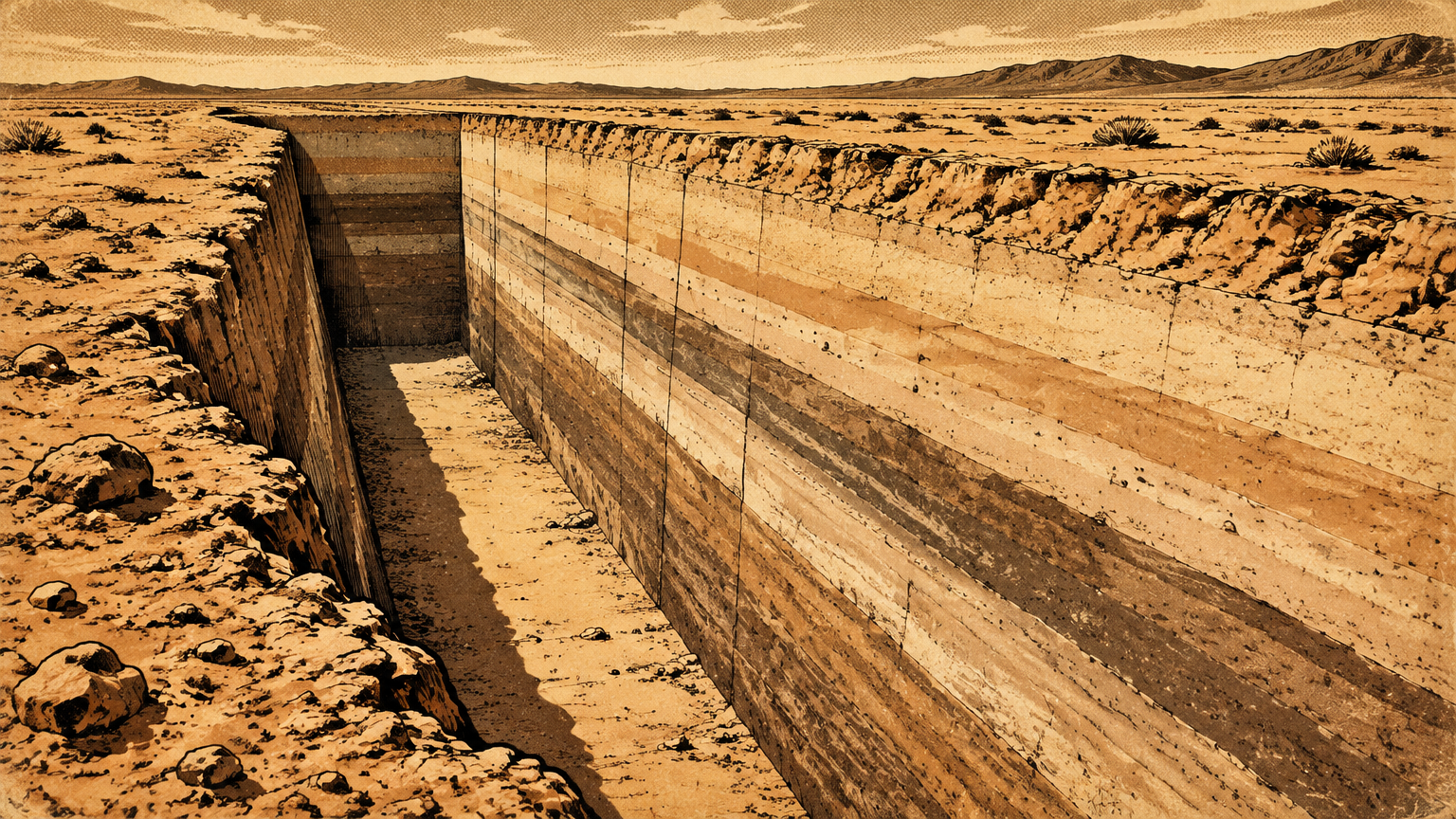
Heavy construction equipment carved enormous trenches into the sediments so scientists could study the exposed walls layer by layer. Geologist C. Vance Haynes Jr. directed the geology, subdivided the sediments into the units of the Las Vegas Formation, and dated them with the brand new radiocarbon technique, used on a scale it had never been used before.
The Big Dig's answer was clear, and it disappointed the hopeful. Human made artifacts turned up only in the youngest levels of the formation, the layers that contain no Pleistocene animal remains.
At Tule Springs, people and mammoths had not overlapped after all. Scientific interest faded for decades.
The revival came in the 2000s, when Springer, Eric Scott, and their San Bernardino County Museum team surveyed the wash systematically. They found nearly 600 new fossil localities and collected and curated more than 40,000 vertebrate fossils, building the modern picture of the Tule Springs local fauna.
The collection also came home. About 10,000 specimens excavated from the Upper Las Vegas Wash in 2002 for the Bureau of Land Management had been curated in California.
In June 2015 they were legally transferred to the National Park Service and moved to the Nevada State Museum in Las Vegas, at the Springs Preserve, which curates the collection and has exhibited monument fossils, mammoth teeth and camel bones among them. Research at the site continues today, shared among the Geological Survey, the Park Service, and universities.
Why the old landscape matters today
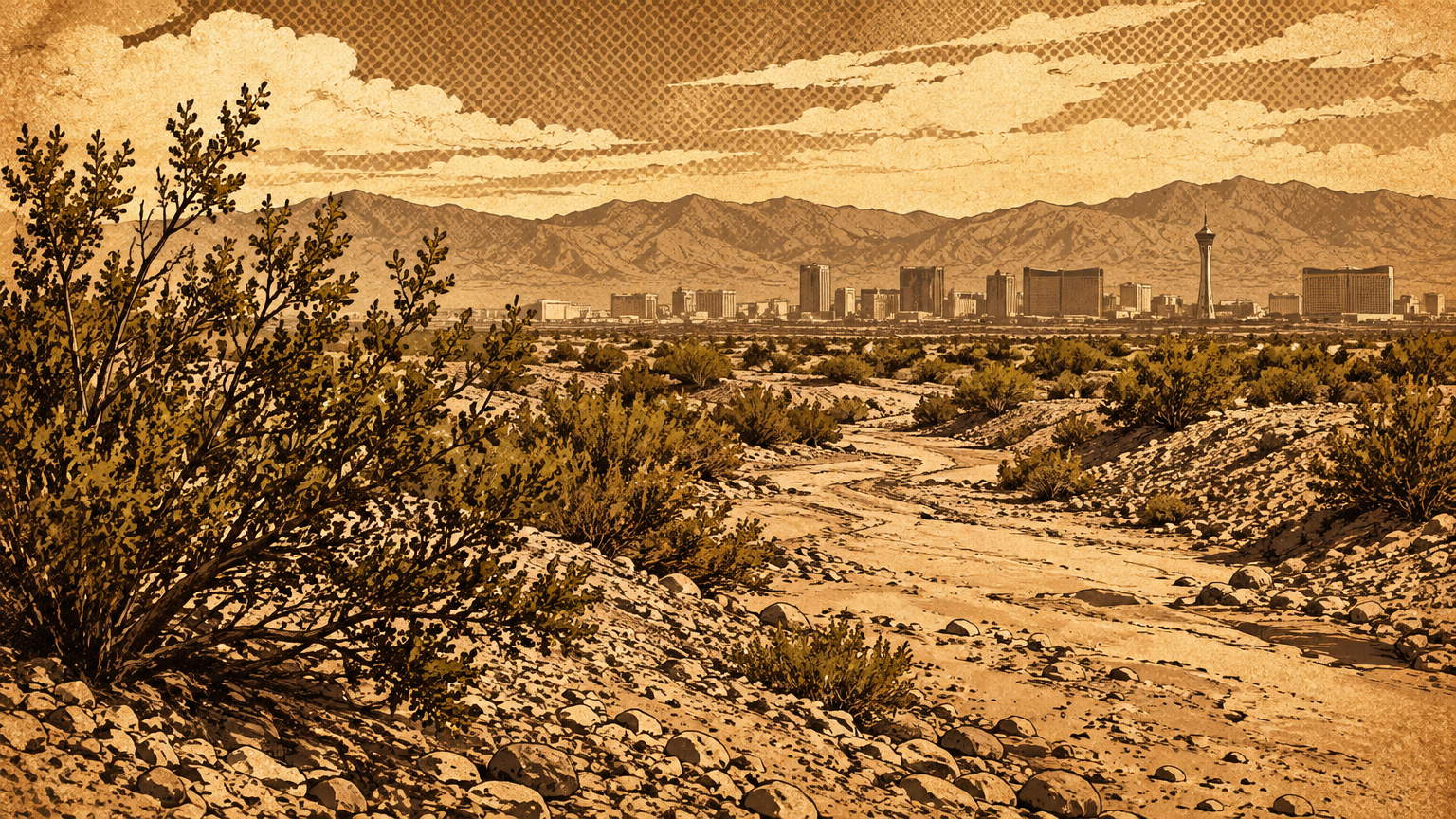
On December 19, 2014, Congress established Tule Springs Fossil Beds National Monument as the 405th unit of the National Park Service, protecting 22,650 acres of the Las Vegas Formation in the Upper Las Vegas Wash, at the city's northern edge. It did not happen by accident. Starting in 2006, North Las Vegas residents who learned what lay under the last open stretch of the wash organized as the Protectors of Tule Springs and pushed until the protection became law.
Next door, Nevada added its own piece: Ice Age Fossils State Park, 315 acres around the historic dig grounds, opened to the public on January 20, 2024, with trails leading past the old Big Dig ground.
Why protect a dry wash full of old mud? Because it is the valley's memory. The same groundwater system that built those wetlands later fed the Las Vegas Springs, where this series' human story takes place.
The same wash still carries the north valley's runoff. And the sediments are a working scientific instrument: a half million year record of how desert water answers a swinging climate, kept by the one city that may need that lesson most.
Before the neon, before the meadows had a Spanish name, before any person stood here at all, this valley was water and grass and very large animals, recorded in mud and bone by nobody. The record is still there, under the edge of the city, waiting for the next careful reader.
Next in Vegas, Back Then: The Ice Age Animals That Once Roamed Southern Nevada.