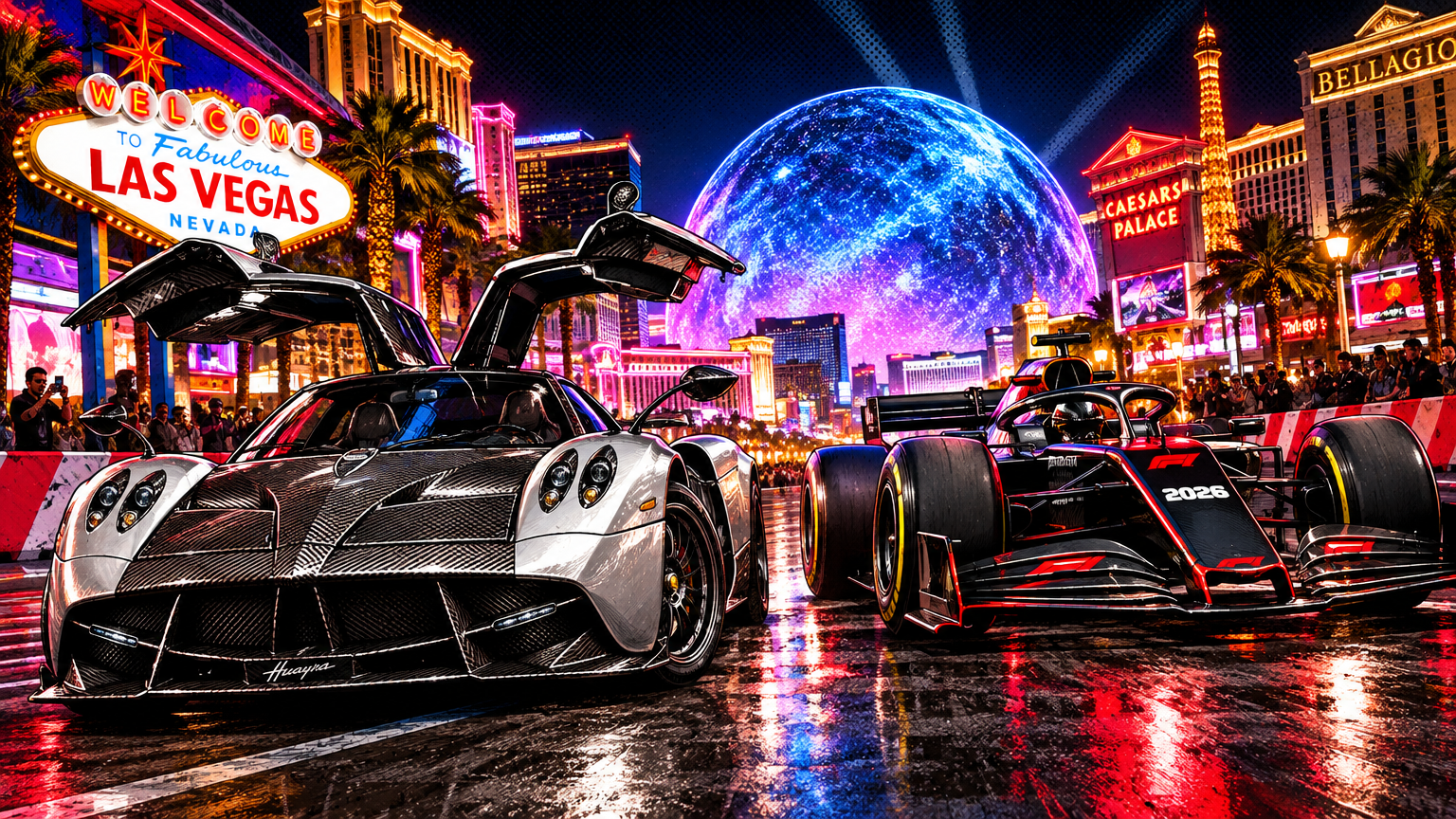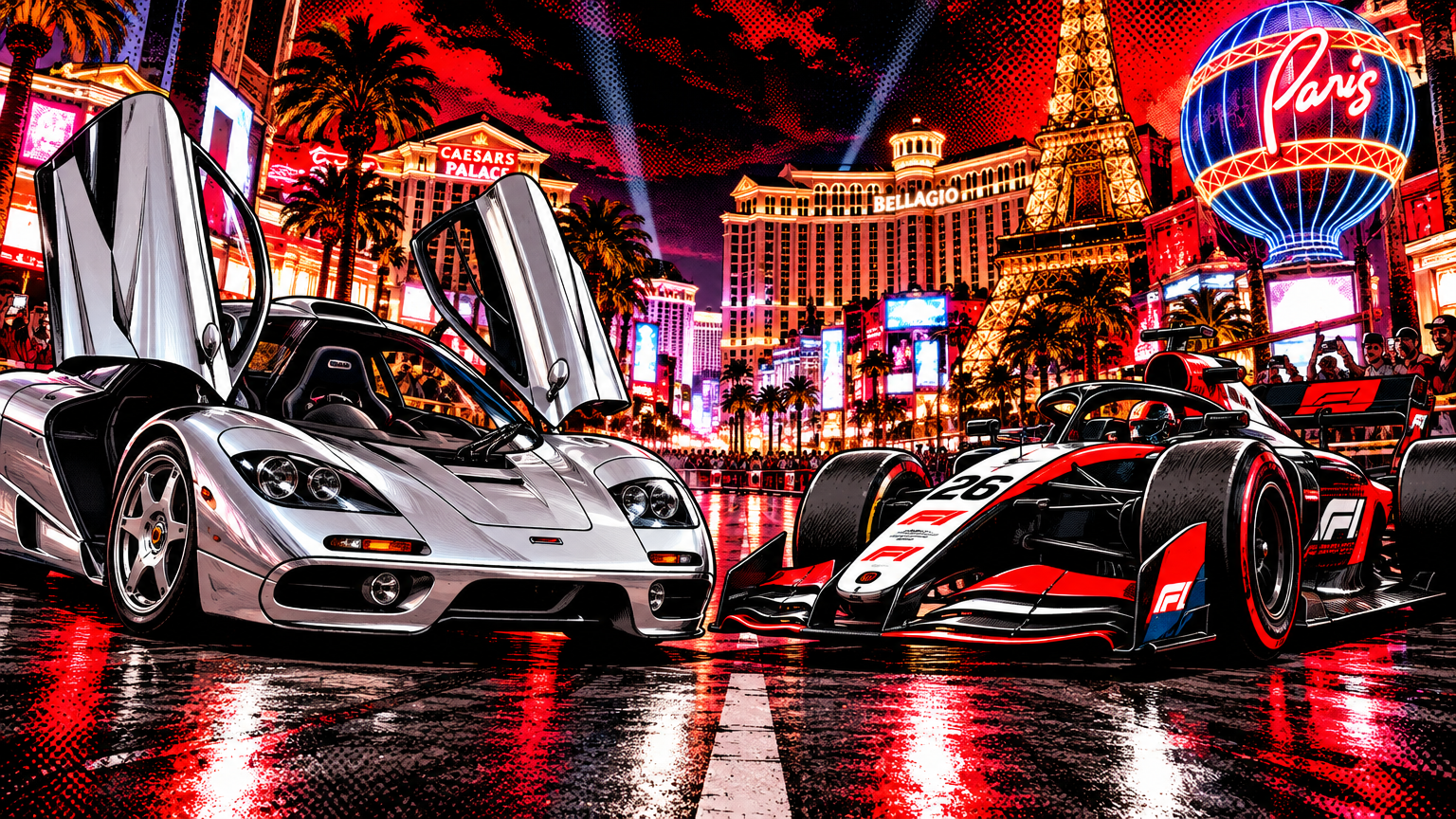
Most challengers in this series need an introduction.
This one needs a warning label for the other car.
The McLaren F1 is the road car a Formula 1 team built when nobody was telling it to be sensible. The driver sits in the middle. The engine bay is lined with gold. There is no turbocharger, no hybrid system, no anti lock brakes, and no apology. Designer Gordon Murray set out to build the best driver car in the world, full stop, and a lot of serious people still say he did it on the first try.
Here is the part that should make a modern Formula 1 car sit up straight. This three decade old road car, running on nothing but air and fuel and a naturally aspirated V12, went faster in a straight line than any Formula 1 car in this series has ever been trapped on a circuit. Not claimed faster. Measured faster, timed both ways, with a witness list.
What happens if the McLaren F1 picks a fight with a Formula 1 car?
What happens is a family argument. McLaren named this car F1 because it was built with Formula 1 thinking by Formula 1 people. Now the road car gets to find out how far the real thing has moved on, and where, quietly, it has not moved on at all.
Bring a long straight. This challenger brought the longest shadow in the business.
First, Which McLaren F1 Are We Talking About?
Precision matters here, because McLaren built racing versions, a winged LM version, and a longtail GT, and the internet loves to blend them all into one imaginary super McLaren that never existed as a single car.
Our challenger is the original: the standard McLaren F1 road car, built in Woking, England from 1992 to 1998. It was designed under technical director Gordon Murray, styled by Peter Stevens, and unveiled in prototype form at the Monaco Grand Prix in May 1992. McLaren built 106 F1s in total. Only 64 of them were standard road cars like our challenger. The rest were prototypes, five LM cars, three GT longtail cars, and 28 GTR racers. When someone quotes you an LM or GTR number for a road car, they are quoting you the wrong car.
The engine is a story all by itself. Murray wanted a large, naturally aspirated engine with instant response, and BMW Motorsport, under engine designer Paul Rosche, built him one that exists in nothing else. The facts, in one clean list:
- Engine: BMW S70/2, 6,064 cc naturally aspirated 60 degree V12, four valves per cylinder
- Power: 627 PS, which is 461 kW and 618 horsepower, at 7,400 rpm
- Torque: 650 Nm, about 479 pound feet, at 5,600 rpm
- Redline: 7,500 rpm in the standard road car
- Gearbox: Six speed manual, rear wheel drive, no automatic offered, ever
- Seats: Three, with the driver sitting in the center and one passenger set slightly back on each side
- Chassis: Full carbon fiber monocoque, the first on a production road car
- Driver aids: None worth the name. No anti lock brakes, no traction control, no power assistance chasing feel out of the controls. Murray left them out on purpose, to save weight and keep the driver connected
- Launch price: Listed at 540,000 pounds at launch, roughly a million dollars in United States terms at the time
Weight is where this car humiliates almost everything else in this series, including the car it just followed. McLaren lists dry weight at about 1,140 kg, roughly 2,513 pounds, with kerb weight with fluids at about 1,260 kg. Read those two numbers the right way and you have learned something most spec sheets hope you will skip. Dry weight is the car with no fluids. Kerb weight is the car ready to drive. Either way, the McLaren F1 is about 750 kg lighter than the Bugatti Veyron from the last fight, while still carrying a V12, air conditioning, a sound system, and fitted luggage. Light was not a happy accident here. Light was the whole plan.
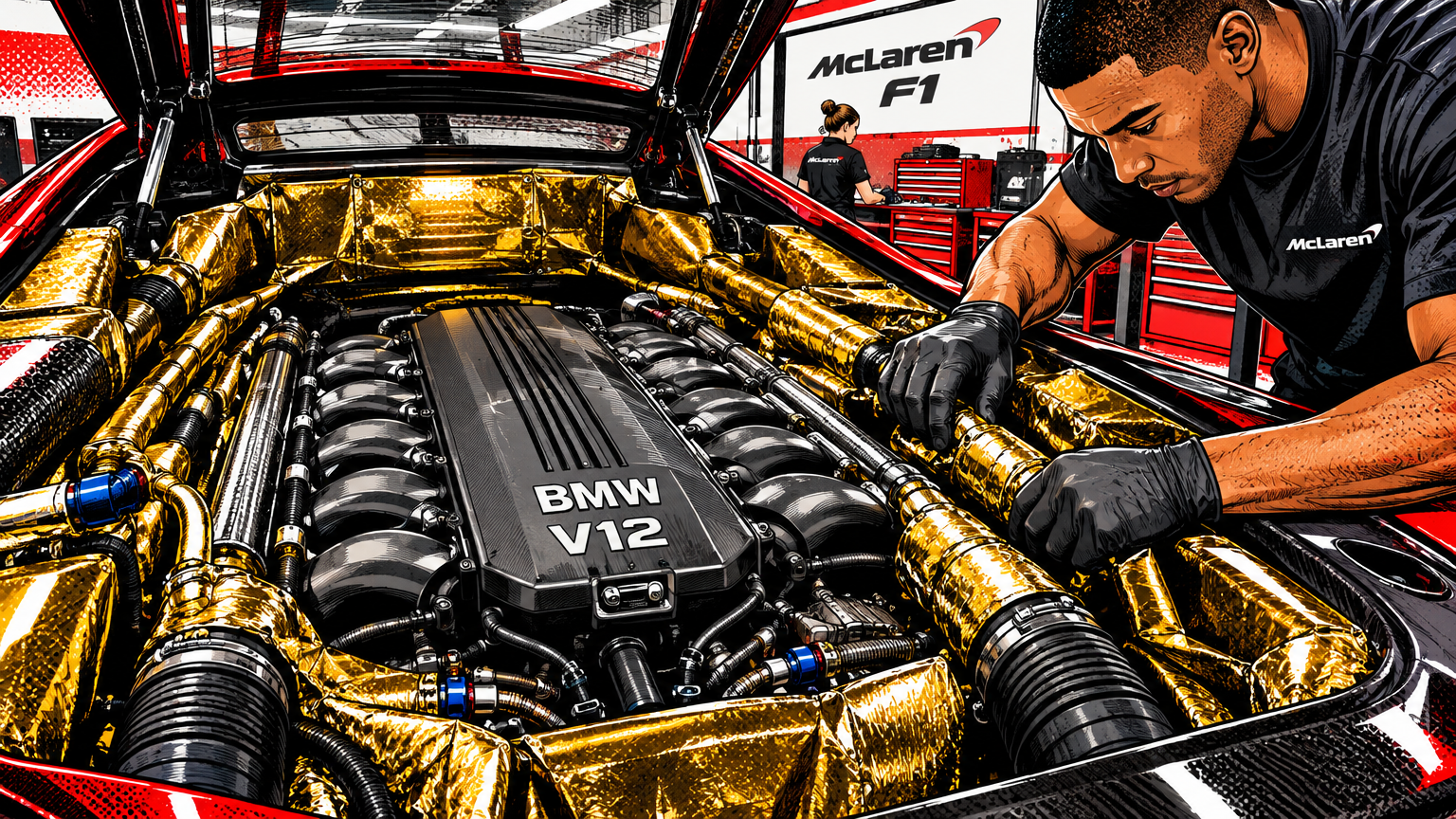
Then there is the gold. Yes, it is real gold foil lining the engine bay, about 16 grams per car. No, it is not jewelry. Gold was simply the lightest effective heat reflector the team could find, and it keeps V12 heat away from the carbon structure and the fuel tanks. That one detail tells you everything about this project. When the lightest answer happened to be gold, McLaren used gold and moved on.
Now the performance figures, labeled the way this series always labels them. These are McLaren figures for the scored car: zero to 60 mph in 3.2 seconds, zero to 100 mph in 6.3 seconds, and a quarter mile in about 11.1 seconds. Top speed gets its own honest footnote, and it is the most useful footnote in this whole series.
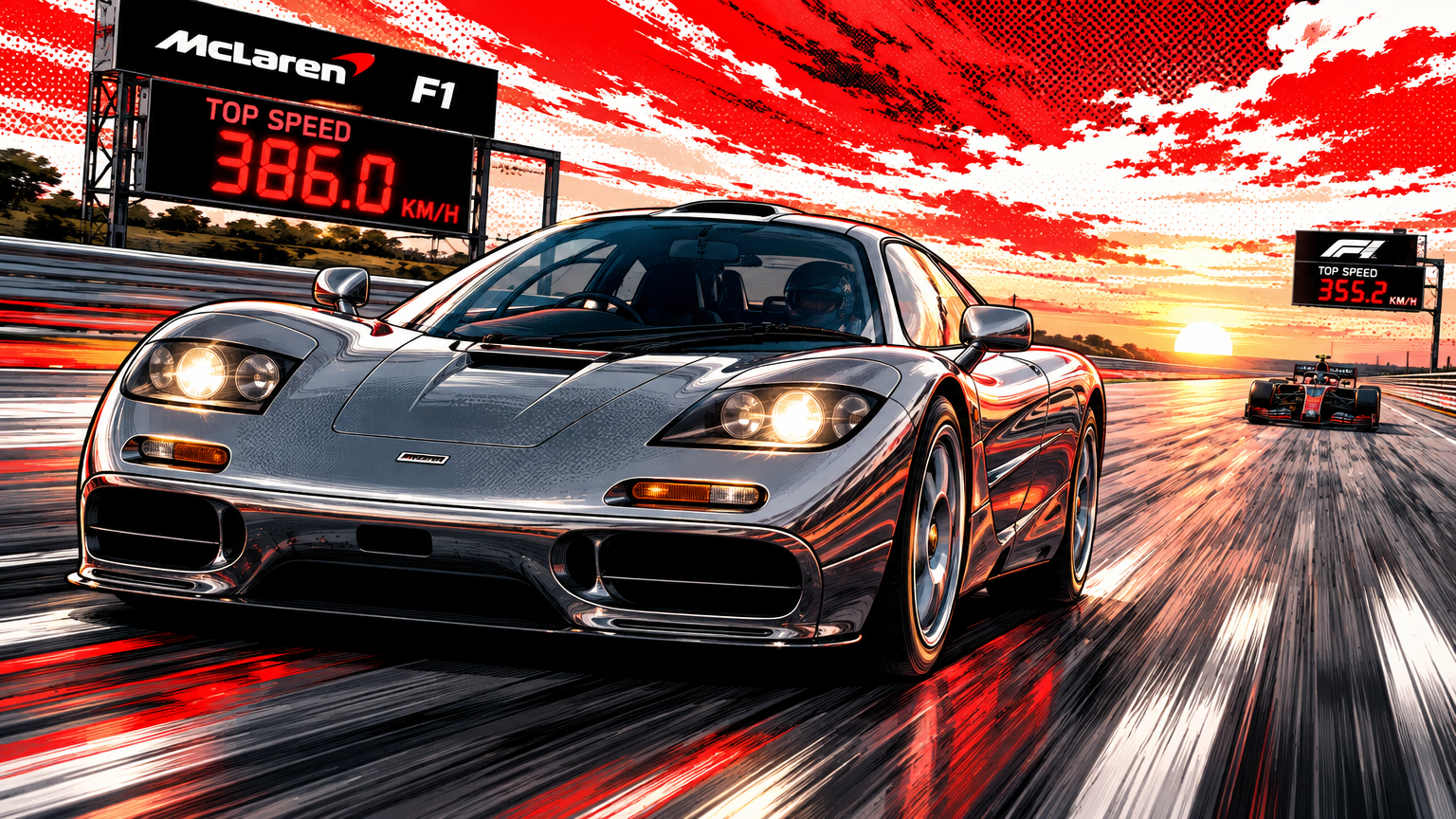
With its standard 7,500 rpm rev limiter in place, the road car is rated at 372 km/h, about 231 mph. On March 31, 1998, at the Ehra-Lessien proving ground in Germany, Le Mans winner Andy Wallace drove the five year old XP5 prototype, a test car with tens of thousands of hard miles already on it, to a two way average of 240.1 mph, which is 386.4 km/h, with a peak of about 391 km/h on the day. To do it, the team raised the rev limiter to 8,300 rpm. The engine, gearbox, and body were otherwise the road car recipe. That is a verified record run in a prototype at a raised limiter, not the showroom setting, and this article will never pretend otherwise. It also made the McLaren F1 the fastest production car in the world at the time, a title it kept until the Veyron arrived in 2005, and it remains, to this day, the fastest naturally aspirated production car ever built.
One more piece of history, kept strictly separate. The racing version, the F1 GTR, was created only after customers pushed McLaren to go racing, in a car Murray had never intended as a racer. At the 24 Hours of Le Mans in 1995, on McLaren first attempt at the race, the GTR won overall, beating purpose built prototypes, with GTRs finishing first, third, fourth, and fifth. The winning car was driven by Yannick Dalmas, Masanori Sekiya, and JJ Lehto. Our scored car is the road car, not the GTR. But a road car whose close cousin won Le Mans outright on its debut is not bringing a knife to this fight. It is bringing a trophy cabinet.
Meet the 2026 Formula 1 Car
Across the garage sits a 2026 Formula 1 car, and this time the name on the challenger nose is the name of the sport itself.
The shared facts for this series, reused in every fight: the 2026 car runs a 1.6 liter turbocharged V6 hybrid. The combustion engine is limited to about 400 kW, the MGU-K electric motor contributes up to 350 kW, and Formula 1 describes the total package as more than 1,000 horsepower. Minimum regulatory weight is 768 kg, about 1,693 pounds, including the driver. It is rear wheel drive, built from carbon, wears racing tires, and carries active front and rear aerodynamics that change the car shape for straights and corners.
Put the two engines side by side and you get the cleanest contrast in the series so far. The McLaren makes 618 horsepower from 6.1 liters with no boost and no electric help, and it answers the throttle the instant your foot moves. The Formula 1 car makes more than 1,000 horsepower from a 1.6 liter V6 with a turbocharger and a serious hybrid system, in a car that weighs hundreds of kilograms less. One is the high point of the old way. The other is the sharp end of the new way. Both, for the record, were built by people who hate losing.
For top speed evidence on the Formula 1 side, this series uses measured speed traps, labeled by year, never an invented universal top speed. In 2026 qualifying trim, Pierre Gasly was trapped at 353.9 km/h, about 220 mph, at the Chinese Grand Prix, per FIA data. In Las Vegas, Yuki Tsunoda reached 358.3 km/h in 2025, and Alex Albon reached 368.9 km/h, about 229.2 mph, in 2024, the highest trap figure through the first three editions of the race. Hold those three numbers. Round Two is about to get interesting.


McLaren F1 vs. F1: The Numbers
| Category | McLaren F1 (road car, 1992 to 1998) | 2026 Formula 1 Car |
|---|---|---|
| Engine | 6,064 cc naturally aspirated BMW V12 | 1.6 liter turbocharged V6 hybrid |
| Power | 627 PS (618 hp) at 7,400 rpm | More than 1,000 hp (Formula 1 figure for the package) |
| Torque | 650 Nm (about 479 lb-ft) at 5,600 rpm | No single comparable published figure used in this series |
| Gearbox | 6 speed manual | Semi automatic racing gearbox |
| Drive | Rear wheel drive | Rear wheel drive |
| Weight | About 1,140 kg dry (about 1,260 kg kerb with fluids) | 768 kg minimum, including driver |
| Zero to 60 mph | 3.2 seconds (McLaren figure) | No universal official figure; see Round One |
| Top speed | 372 km/h (231 mph) on the standard limiter; 386.4 km/h (240.1 mph) two way record average, XP5 prototype, limiter raised, March 31, 1998 | 353.9 km/h trapped in 2026 qualifying (Gasly, China); 368.9 km/h best Las Vegas trap in this series (Albon, 2024) |
| Seats | 3, driver in the center | 1, driver in the center |
| Built | 64 standard road cars (106 F1s in total) | Built for one racing season at a time |
| Vegas valet factor | Perfect score. The driver steps out of the middle, both passengers get a door, and the valet gets a story for life | Zero. It needs a crew, a laptop, and a starter procedure before it moves an inch |
Three lessons hide in that table, and they will make you better at reading every supercar claim you ever see again:
- Ask whether the limiter was on. The same McLaren is a 231 mph car as sold and a 240.1 mph car in record trim. Both numbers are real. They are not the same number, and honest writing keeps them apart.
- Ask whether the speed is one way or a two way average. A two way average cancels out wind and slope help. The McLaren record is a two way average. A single downhill hero run is a different animal.
- Ask whether it was a production car or a prototype in production recipe. XP5 was a five year old test prototype running the road car engine, gearbox, and body, with a raised limiter. That is about as honest as record runs get, and it still deserves its label.
Use those three questions on any top speed headline, from any brand, and you will spot soft claims in about ten seconds. That is the most useful thing this article can hand you, and it is free.
Round One: Acceleration
Winner: Formula 1.
Start with respect. A zero to 60 mph time of 3.2 seconds, with a manual gearbox, no launch control, no traction control, and no all wheel drive, in a car launched in 1992, is still a serious number today. Plenty of modern performance cars with computers doing the thinking cannot beat a car that makes the driver do the work. The McLaren gets there on power to weight and throttle response. At about 550 PS per tonne on dry weight, it has the muscle, and a naturally aspirated V12 answers so fast that the car feels wired to your right foot.
The Formula 1 car plays a different sport. More than 1,000 horsepower, 768 kg including the driver, racing tires warmed and ready, a gearbox built to shift in a blink, and aerodynamics that press the car into the road harder the faster it goes. That is roughly 1,300 horsepower per tonne, well over double the McLaren figure. This series never invents a universal Formula 1 zero to 60 time, because none exists as an official figure. It does not need one. On power to weight, tire, and gearing, the launch and the run through the gears both go to the racing car, and it would not be close after the first few car lengths.
The honest footnote belongs to the McLaren. The Bugatti Veyron in the last fight needed all wheel drive, a dual clutch gearbox, and 1,001 PS to post a 2.5 second zero to 100 km/h time. The McLaren driver is changing gears by hand, with a clutch pedal, in a car with no electronic safety net, and still runs a time that embarrasses supercars built thirty years later. Formula 1 wins the round. The McLaren wins the argument about who worked harder for it.
Round Two: Top Speed
Winner: McLaren F1.
Yes, really. For the second fight in a row, the challenger takes this round, and this time the story is even better, because this car did it without a single turbocharger.
Line up the verified numbers, with their labels on. The best Formula 1 speed trap in this series is Alex Albon at 368.9 km/h in Las Vegas in 2024. The 2026 car best trap so far is Pierre Gasly at 353.9 km/h in China. The McLaren F1, on its standard showroom limiter, is rated at 372 km/h. That already clears every Formula 1 trap figure on the board. Then there is the record spec car: 386.4 km/h as a two way average, 240.1 mph, a mark no naturally aspirated production car has beaten since March 31, 1998.
Now the fairness note, because this series always prints it. Formula 1 cars are not top speed attempts. They run with wings set to hold them down in corners, gearing chosen for a circuit, and drag that would make a top speed engineer cry. On a long enough straight, with low drag trim and gearing chosen only for speed, a Formula 1 car could go faster than its trap figures suggest. But we score what is measured, not what is imagined, and what is measured says the road car from 1992 holds the bigger number. The Veyron took this round in the last fight with four turbochargers and 1,001 PS. The McLaren takes it today with air, fuel, and nerve.
There is a lovely piece of symmetry here, and Las Vegas fans should savor it. The car that finally beat the McLaren outright top speed record in 2005 was the Veyron, the challenger from our last fight. The king was dethroned by the car we just covered, and now the king walks in, nods politely at its successor record, and takes the same round off Formula 1 anyway. The naturally aspirated crown was never taken. It still sits exactly where Andy Wallace left it.
Round Three: Now Add a Corner
Winner: Formula 1.
This is the round where the McLaren road car philosophy, brilliant as it is, meets the one thing it was never built to be.
Give the road car its due first. A carbon monocoque that was years ahead of its time, a central driving position with the best view out of any road car ever made, low weight that helps everything a car does in a turn, and steering with no power assistance diluting what the front tires are saying. Drivers who know both eras call the F1 one of the sweetest handling road cars in history, and the Le Mans winning GTR proves what the basic shape and structure could do when McLaren finally let it race. On a flowing road, at road speeds, this is the car driving people dream about.
A Formula 1 car corners on a different set of physics. It weighs 768 kg including its driver. It wears slick racing tires. And its active aerodynamics generate downforce, pushing the car into the track with a force a car with no big rear wing and a clean, low drag road car shape simply cannot match. Downforce is the cheat code here. It lets the racing car brake later, turn harder, and get back on the power sooner, lap after lap, at speeds that would have a road car, even this road car, sliding and cooking its tires.
Think of it in Vegas terms. The McLaren is the best seat in the house, front row center, which is fitting for a car where the driver literally sits front row center. The Formula 1 car owns the building. Round Three goes to Formula 1, by the biggest margin of the day, and the McLaren would be the first to tell you that was never the contest it entered.
Round Four: Braking
Winner: Formula 1.
The McLaren braking story is pure Gordon Murray. The car uses Brembo ventilated and cross drilled disc brakes with stiff one piece calipers, and Murray deliberately left anti lock brakes off the car. His reasoning was honest and very Murray: anti lock hardware added weight and took feel away from the pedal. Period tests recorded the standard car stopping from 60 mph in about 127 feet, roughly 39 meters, in about 2.8 seconds. For a car with no anti lock system, on period tires, that is a strong result, and it rewards a skilled driver who can feel the limit.
It also shows its age the moment the racing car enters the chat. A Formula 1 car brakes with carbon brakes, massive downforce pressing the tires into the road, slick rubber, and a total weight hundreds of kilograms lower. Downforce is a braking superpower nobody talks about enough. At high speed the air itself is helping to stop the car, which is why Formula 1 drivers can brake at markers that look impossible on television. Add the hybrid system recovering energy under braking on the 2026 car, and this round is not a debate.
The usable insight for your own driving is hiding right here. Braking distance is mostly tires, weight, and how much load the road can take, in that order of honesty. The McLaren stops well because it is light and well engineered. The Formula 1 car stops in another universe because it is lighter still and the air is doing half the work. When a modern road car brags about huge brake discs, ask about its weight and its tires first. That is where the stopping actually lives.
So, Does the McLaren F1 Win Anything?
It wins plenty, starting with the round that made it immortal.
It wins top speed, verified.
Two hundred forty point one mph as a two way average, naturally aspirated, in 1998, in a five year old test car. No production car without forced induction has ever gone faster. Every turbocharged and hybrid hypercar since has been chasing a number set by a car with a manual gearbox and a CD player.
It wins the driver seat argument, forever.
- Only production car with a true central driving position and room for two passengers
- Best visibility of any supercar, because the driver sits where a racing driver sits
- No offset pedals, no angled steering wheel, none of the compromises Murray set out to kill
- A Formula 1 seating position you can legally drive to dinner in Las Vegas
It wins the purity argument.
No turbos. No hybrid. No anti lock brakes. No traction control. No paddle shifters. A V12 that revs to 7,500 rpm, a clutch pedal, and a driver who is fully in charge and fully responsible. Modern cars are faster in more places, safer, and easier. A growing number of collectors paying eight figure prices for F1s are voting, with real money, that easier was never the point.
It wins the bloodline argument.
The Mercedes-AMG ONE earlier in this series put a Formula 1 engine in a road car. The McLaren F1 did something rarer. It took Formula 1 thinking, a Formula 1 designer, and Formula 1 construction, and built the definitive road car, whose racing cousin then won Le Mans overall at the first attempt. The Veyron won the era argument in the last fight. The McLaren wins the argument about what a road car should be when a racing team builds one with no compromises and means it.
McLaren F1 wins: the top speed round, the naturally aspirated record, the central seat, and the title of the greatest analog supercar ever built.
What Would Happen on the Las Vegas Strip Circuit?
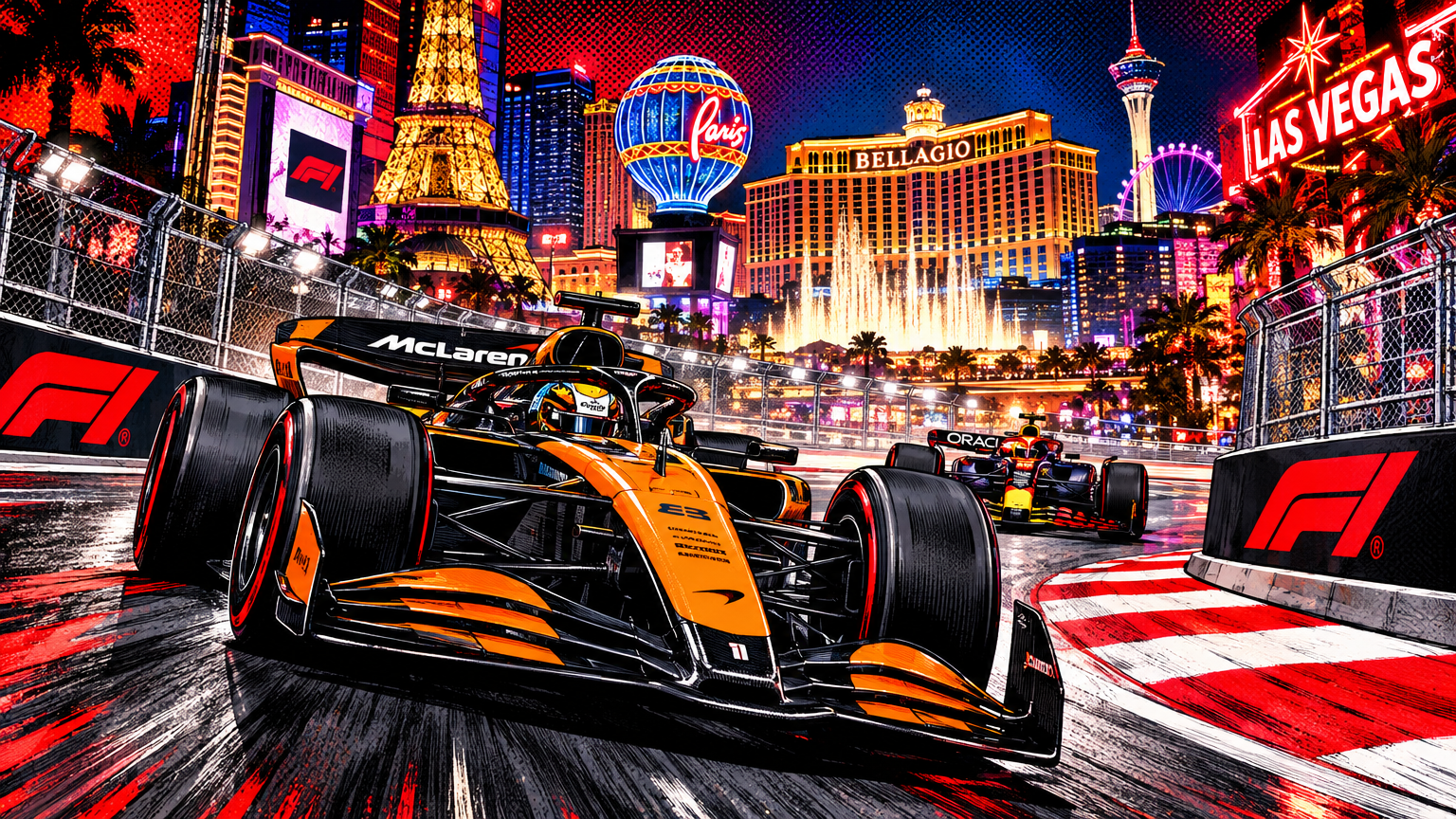
Now we bring the fight home, to the Las Vegas Strip Circuit, home of the Las Vegas Grand Prix.
The circuit runs 6.201 kilometers, about 3.85 miles, with 17 turns, and the Grand Prix lasts 50 laps. Running down the Strip there is roughly a two kilometer straight, under the neon, past the casinos.
That straight would belong to the McLaren in a way no other part of the lap could. Two kilometers is room for the V12 to climb through its gears, past the speeds the 2026 cars were trapped at in qualifying trim this year, with the driver sitting dead center like a Grand Prix driver from a purer age. For a few seconds a lap, the oldest fashioned car in this series would be the fastest thing on the Las Vegas Strip Circuit in a straight line. The sound alone, a naturally aspirated V12 at full song bouncing off the casino towers, would be worth the ticket.
Then the lap turns, and keeps turning. Seventeen corners, heavy braking zones, and 50 laps of racing tires versus road tires, downforce versus shape, and 768 kg versus a road car carrying passengers and luggage. Over one lap the Formula 1 car would build a gap measured in many seconds. Over a full Grand Prix distance it would be a racing car doing its job and a legend doing the most beautiful demonstration run Las Vegas has ever hosted. No invented lap times here. This is an informed comparison, not a recorded race, and nobody has timed a McLaren F1 around this circuit for us to quote.
And here is the Vegas twist. Las Vegas loves an original. A gold lined, center seat, three seat V12 with a Le Mans winning family and a world record that has stood for more than 25 years is not just a car on this Strip. It is a headliner. It would lose the race and win the night, every night, and half the crowd would leave arguing it is still the greatest car in the building. Some of them would be right.
The Final Call
Winner: Formula 1.
Three rounds to one, and for the second fight in a row, the one round the challenger takes is top speed, the round with the hardest receipts in the business.
Acceleration went to a power to weight advantage of well over two to one. Cornering and braking went to the car that weighs 768 kg including its driver and uses the air itself as a brake and a glue. Top speed went to the McLaren, verified both ways, on the standard limiter and in record trim, by a clear margin over every Formula 1 trap figure in this series. The McLaren F1 was never going to win a Grand Prix in Las Vegas. It was built to be the finest driver car on Earth, and on the evidence of the last three decades, plus the prices collectors now pay and the record nobody has taken, it made its case and closed it.
And what a case it is. Sixty four road cars. One central seat. Sixteen grams of gold. One BMW V12 that exists in nothing else. A Le Mans overall win for its racing cousin at the first attempt. A top speed record for naturally aspirated cars that has now stood since 1998, longer than some Formula 1 drivers have been alive.
Formula 1 may win the fight. But the McLaren F1 still owns the naturally aspirated crown, the center seat, and the argument that the best road car ever built needed no turbos, no hybrid, and no help.
There are plenty more cars waiting to pick a fight with Formula 1.
Next up: Formula 1 vs. Cadillac CTS-V. American luxury learns to fight, with a supercharged V8, four doors, and something to prove.