Every challenger in this series so far has been a two seater.
This one has four doors, five seats, a trunk, and heated leather. It also has the engine out of a Corvette Z06 and a top speed of 200 mph.
The Cadillac CTS-V is what happens when a luxury brand gets tired of being polite. Cadillac spent decades as the comfortable choice, the quiet ride, the car your grandfather trusted. Then it built a sedan with a supercharged V8, track brakes, magnetic suspension, and a launch control system, and pointed it straight at BMW M and Mercedes-AMG with a straight face.
Here is the part that should make you smile. This is not a concept car or a one off toy. Cadillac sold this thing to anyone who walked into a dealership, with a warranty, a back seat for the kids, and room for groceries behind them. It just happened to be the most powerful car in the brand 112 year history when it launched.
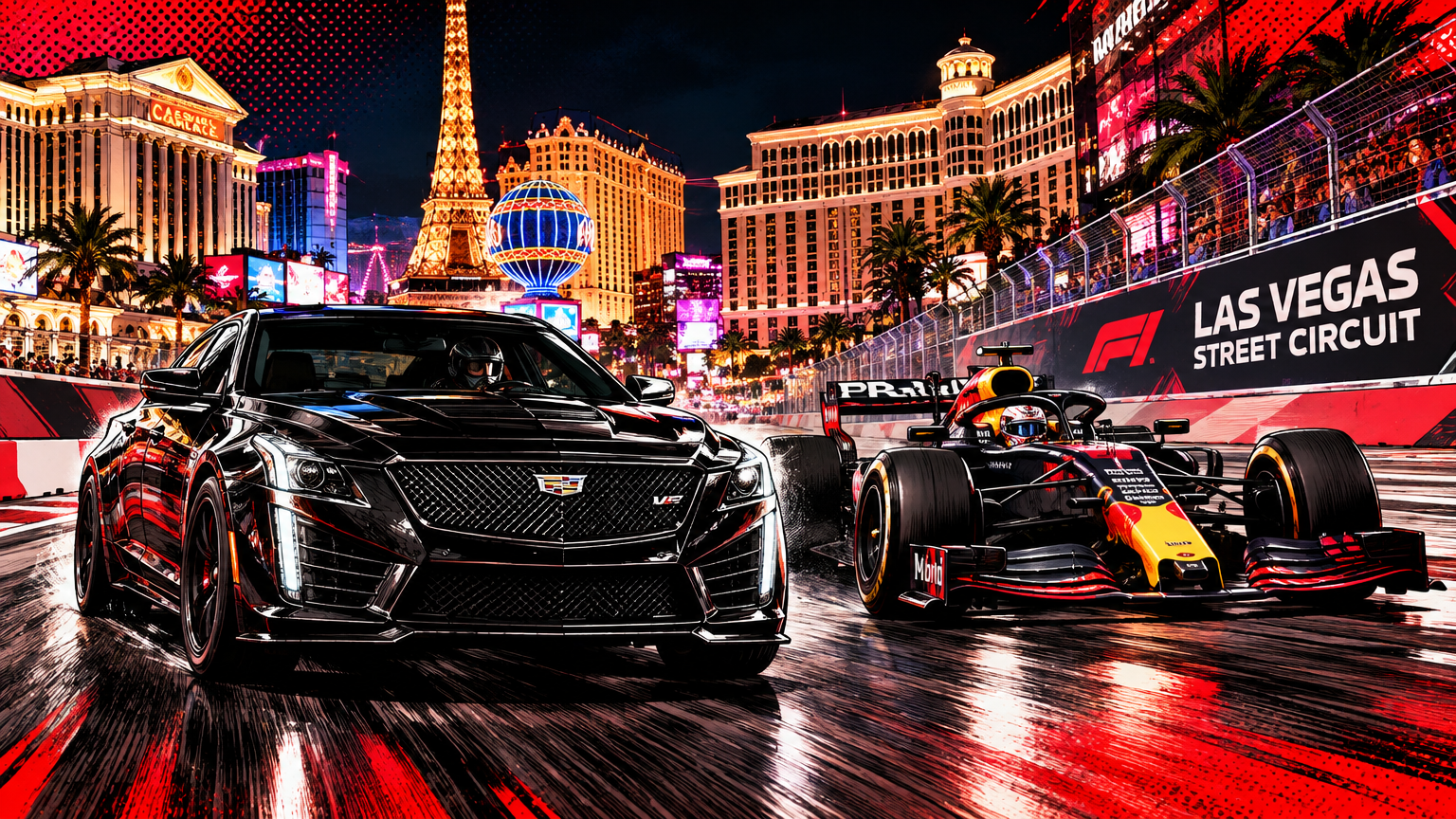
What happens if the Cadillac CTS-V picks a fight with a Formula 1 car?
What happens is the most American fight in this series yet. A supercharged pushrod V8 in a two ton luxury sedan, against a 1.6 liter hybrid science project that weighs less than half as much. One of these cars can win a Grand Prix. The other one can win the Grand Prix, lose, and still take the whole family to dinner afterwards in quiet comfort. Well, one of those statements is true.
Bring the valet ticket. This challenger brought the whole family.
First, Which Cadillac CTS-V Are We Talking About?
Precision matters here, because Cadillac built three generations of CTS-V between 2004 and 2019, and the internet loves to blend them into one imaginary super Cadillac that never existed as a single car.
The quick family history, so the scored car makes sense:
- First generation, 2004 to 2007: a sedan with a naturally aspirated Corvette V8 making 400 horsepower and a manual gearbox only. This is the car that launched the whole V-Series line at Sebring in March 2004, per Cadillac.
- Second generation, 2009 to 2015: a supercharged 6.2 liter V8 making 556 horsepower, sold as a sedan, a coupe, and, gloriously, a station wagon. If you see a CTS-V wagon at a car meet in Las Vegas, you are looking at one of the rarest fast family cars America ever built.
- Third generation, 2016 to 2019: our challenger. Sedan only, Alpha platform, and the full Corvette Z06 engine treatment.
Our challenger is the third generation Cadillac CTS-V, built from 2016 to 2019. It was the most powerful product in Cadillac history at launch, and Cadillac said so in exactly those words. The facts, in one clean list:
- Engine: LT4 6.2 liter supercharged V8, 6,162 cc, direct injection, with a compact 1.7 liter supercharger
- Power: 640 horsepower, SAE certified, at 6,400 rpm, which is 477 kW and 649 PS in European trim
- Torque: 630 pound feet, SAE certified, at 3,600 rpm, which is 855 Nm
- Redline: 6,600 rpm maximum engine speed
- Gearbox: Hydra-Matic 8L90 eight speed automatic with paddle shifters, launch control, and Performance Algorithm Shifting. No manual was offered on this generation, and that was a real change from the first two
- Drive: Rear wheel drive, with an electronic limited slip differential
- Seats: Five, in a four door luxury sedan, with a proper trunk
- Weight: About 4,145 pounds, roughly 1,880 kg, per Cadillac launch specifications
- Launch price: $83,995 for the 2016 car, per period Cadillac pricing reported at launch
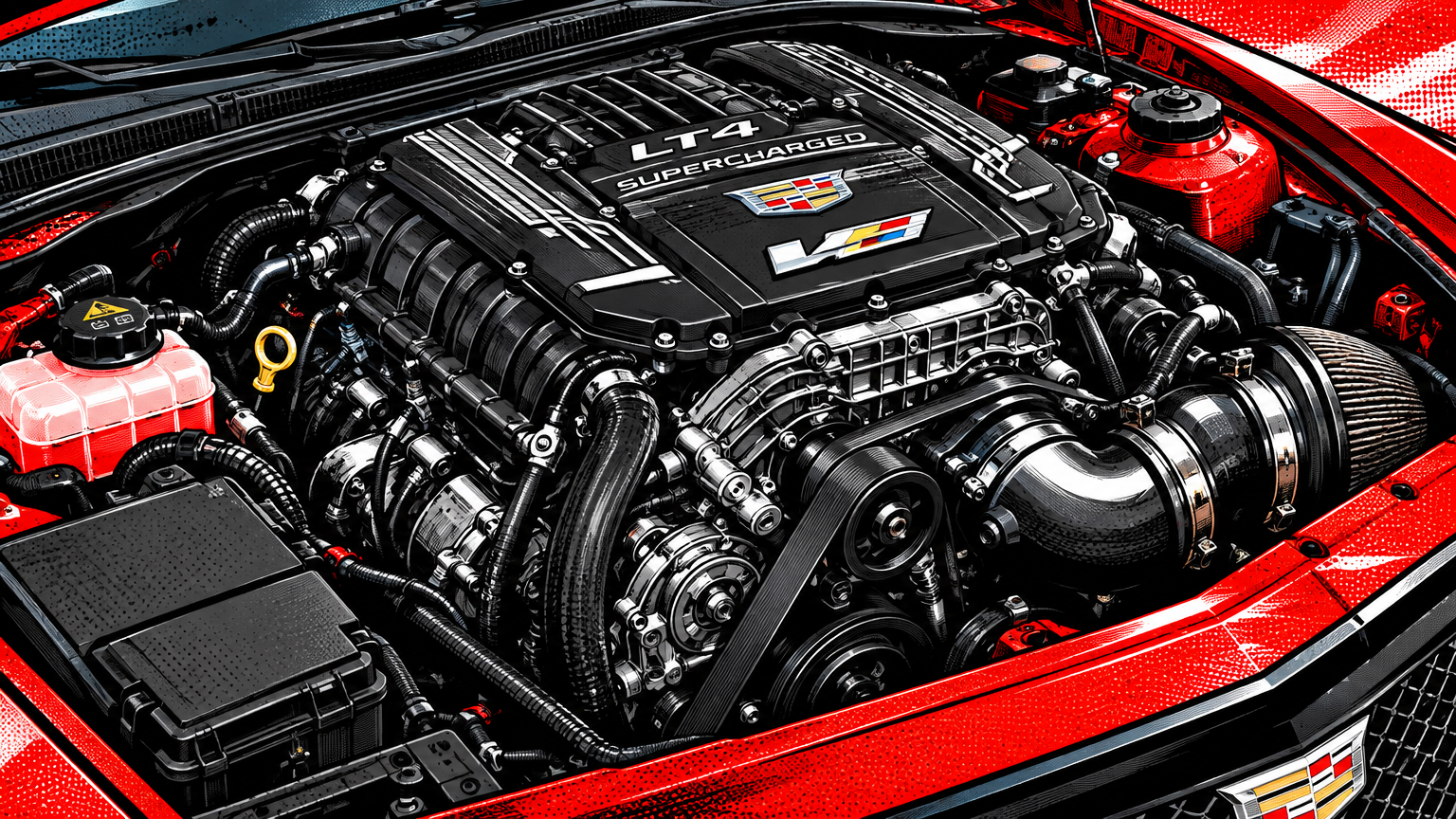
The engine is the headline, and it deserves to be. The LT4 is the same basic supercharged V8 that powered the C7 Corvette Z06, rated at 650 horsepower in the Corvette and 640 here. Cadillac did not detune a family sedan engine and hope for the best. It took the sharpest engine in the building, gave it a slightly different tune for sedan duty, and built the luxury car around it. That is why fans call this car a four door Corvette, and for once the nickname is not marketing fluff. It is a parts list.
Now the performance figures, labeled the way this series always labels them. These are Cadillac figures for the scored car: zero to 60 mph in 3.7 seconds and a top speed of 200 mph, which is 322 km/h. That top speed made it the fastest Cadillac ever launched at the time, and the first Cadillac to reach 200 mph. Independent tests, kept separate as always, landed in the same neighborhood with real world scatter: instrumented tests recorded zero to 60 mph runs from about 3.5 seconds to 4.0 seconds flat, and quarter mile runs around 11.6 to 11.9 seconds at 124 to 126 mph. That spread is not a scandal. It is a lesson, and Round One will use it.
Two chassis facts matter more than most buyers ever knew. First, the brakes are serious track hardware: a Brembo system with two piece 390 mm front rotors and staggered six piston calipers, and 365 mm rear rotors with four piston calipers, built, in Cadillac words, for track day performance straight from the factory. Second, the suspension uses third generation Magnetic Ride Control, which reads the road 1,000 times per second and can adjust each damper independently, with Cadillac claiming a 40 percent faster damping response than the generation before it. The tires are Michelin Pilot Super Sports, 265 mm wide in front and 295 mm in back, on 19 inch forged aluminum wheels. Keep those two facts in your pocket. Rounds Three and Four live there.
One more piece of history, kept strictly separate. The CTS-V name ended after 2019, and its successor is the CT5-V Blackwing, a different car with a similar recipe. Our scored car is the last and strongest car to actually wear the CTS-V badge, and that is exactly why it is the right Cadillac for this fight.
Meet the 2026 Formula 1 Car
Across the garage sits a 2026 Formula 1 car, and this time the challenger outweighs it by more than a whole extra Formula 1 car.
The shared facts for this series, reused in every fight: the 2026 car runs a 1.6 liter turbocharged V6 hybrid. The combustion engine is limited to about 400 kW, the MGU-K electric motor contributes up to 350 kW, and Formula 1 describes the total package as more than 1,000 horsepower. Minimum regulatory weight is 768 kg, about 1,693 pounds, including the driver. It is rear wheel drive, built from carbon, wears racing tires, and carries active front and rear aerodynamics that change the car shape for straights and corners.
Put the two cars side by side and you get the funniest contrast in the series so far. The Cadillac makes 640 horsepower from 6.2 liters and carries five people in leather seats. The Formula 1 car makes more than 1,000 horsepower from a 1.6 liter V6 with a turbocharger and a serious hybrid system, carries exactly one person in a carbon shell, and weighs about 2,450 pounds less than the Cadillac. The Cadillac has more than three times the engine size. The Formula 1 car has the power to weight ratio of a different species.
For top speed evidence on the Formula 1 side, this series uses measured speed traps, labeled by year, never an invented universal top speed. In 2026 qualifying trim, Pierre Gasly was trapped at 353.9 km/h, about 220 mph, at the Chinese Grand Prix, per FIA data. In Las Vegas, Yuki Tsunoda reached 358.3 km/h in 2025, and Alex Albon reached 368.9 km/h, about 229.2 mph, in 2024, the highest trap figure through the first three editions of the race. Hold those three numbers. The Cadillac 200 mph claim is about to meet them, and it is bringing a back seat to a knife fight.


Cadillac CTS-V vs. F1: The Numbers
| Category | Cadillac CTS-V (third generation, 2016 to 2019) | 2026 Formula 1 Car |
|---|---|---|
| Engine | 6.2 liter supercharged LT4 V8 | 1.6 liter turbocharged V6 hybrid |
| Power | 640 hp at 6,400 rpm (SAE certified) | More than 1,000 hp (Formula 1 figure for the package) |
| Torque | 630 lb-ft (855 Nm) at 3,600 rpm | No single comparable published figure used in this series |
| Gearbox | 8 speed automatic with paddle shifters and launch control | Semi automatic racing gearbox |
| Drive | Rear wheel drive | Rear wheel drive |
| Weight | About 4,145 lb (about 1,880 kg) | 768 kg minimum, including driver |
| Zero to 60 mph | 3.7 seconds (Cadillac figure); independent tests about 3.5 to 4.0 seconds | No universal official figure; see Round One |
| Top speed | 200 mph (322 km/h), Cadillac figure | 353.9 km/h trapped in 2026 qualifying (Gasly, China); 368.9 km/h best Las Vegas trap in this series (Albon, 2024) |
| Seats | 5, with four doors and a trunk | 1, with no doors at all |
| Built | 2016 to 2019, sedan only in this generation | Built for one racing season at a time |
| Vegas valet factor | Elite. Four doors, quiet Tour mode, and a valet who has no idea it can do 200 mph until the supercharger wakes up | Zero. It needs a crew, a laptop, and a starter procedure before it moves an inch |
Three lessons hide in that table, and they will make you sharper at reading every performance sedan claim you ever see again:
- Power is not the same as power to weight. The Cadillac 640 horsepower sounds enormous, and it is, until you divide it by about 1,880 kg. The Formula 1 car makes more power and weighs less than half as much. That gap, not the headline horsepower, decides most of this fight.
- Launch times scatter on rear wheel drive cars. Cadillac said 3.7 seconds. Testers recorded about 3.5 to 4.0 seconds in the same basic car. Surface, tires, temperature, and launch technique move the number. When one test looks slow, check the conditions before you call the car slow.
- A top speed claim and a speed trap are different animals. The Cadillac 200 mph is a top speed figure for a road car on a long enough run. The Formula 1 figures in this series are traps measured mid lap, in cornering trim, on a circuit. Both are real. They answer different questions, and Round Two will score them honestly.
Use those three checks on any fast sedan brochure, from any brand, and you will spot soft claims in about ten seconds. That is the most useful thing this article can hand you, and it is free.
Round One: Acceleration
Winner: Formula 1.
Start with respect, because this round is closer on paper than the weight gap suggests. A zero to 60 mph time of 3.7 seconds, Cadillac figure, in a five seat luxury sedan you could buy with a warranty, is still a serious number. Independent testers went as quick as about 3.5 seconds in the right conditions. The supercharged V8 makes its 630 pound feet of torque low in the rev range, the eight speed automatic shifts fast, and launch control plus Performance Algorithm Shifting do real work to keep the engine in its sweet spot. For a two ton sedan on street tires, this is violent, usable speed.
The Formula 1 car plays a different sport. More than 1,000 horsepower, 768 kg including the driver, racing tires warmed and ready, a gearbox built to shift in a blink, and aerodynamics that press the car into the road harder the faster it goes. That is roughly 1,300 horsepower per tonne, against roughly 340 horsepower per tonne for the Cadillac. This series never invents a universal Formula 1 zero to 60 time, because none exists as an official figure. It does not need one. On power to weight, tire, and gearing, the launch and the run through the gears both go to the racing car.
The honest lesson belongs to the Cadillac, and it is one you can use on any test you read. The CTS-V test spread, about 3.5 to 4.0 seconds for the same car, is what rear wheel drive and 630 pound feet of torque do on real surfaces. Too much power for the tire is a real limit, and no launch control fully repeals it. The Dodge Challenger SRT Demon 170 earlier in this series solved that problem with drag radials and a prepared strip. The Cadillac solves it the grown up way, with electronics, wide Michelins, and a driver mode for every mood, and still posts times that embarrass sports cars. Formula 1 wins the round. The Cadillac wins the argument about how much speed you can actually use on the way to dinner.
Round Two: Top Speed
Winner: Formula 1.
After two straight fights where the challenger took this round, the streak ends here, and it ends cleanly.
Line up the numbers, with their labels on. The Cadillac top speed is 200 mph, 322 km/h, a Cadillac figure, and a genuine landmark: the first 200 mph Cadillac, and the fastest car the brand had ever launched. The best Formula 1 speed trap in this series is Alex Albon at 368.9 km/h in Las Vegas in 2024. The 2026 car best trap so far is Pierre Gasly at 353.9 km/h in China. Both Formula 1 trap figures clear 322 km/h by a clear margin, and they were recorded on circuits, in traffic, in cars set up to corner.
Now the fairness note, because this series always prints it. The comparison actually flatters the Cadillac in one way and hurts it in another. It flatters the Cadillac because a trap figure is not a Formula 1 car trying for a top speed record. It hurts the Cadillac because even the non record, mid lap version of the Formula 1 number is still bigger. The McLaren F1 in the last fight took this round with a verified 240.1 mph record and a 231 mph showroom rating. The Cadillac brings 200 mph in a luxury sedan, which is heroic for a luxury sedan and simply not enough here.
Savor what 200 mph in this car actually means, though. It means a family sedan with five seats, a trunk, and a quiet mode for the school run can outrun almost every supercar of the generation before it, on a long enough road, with the air conditioning on. German rivals of the era were often limited to 155 mph from the factory. Cadillac did not limit this car to 155. It certified it at 200 and put the number in the press release. Round Two goes to Formula 1. The CTS-V still owns the bragging rights at every valet stand in Las Vegas.
Round Three: Now Add a Corner
Winner: Formula 1.
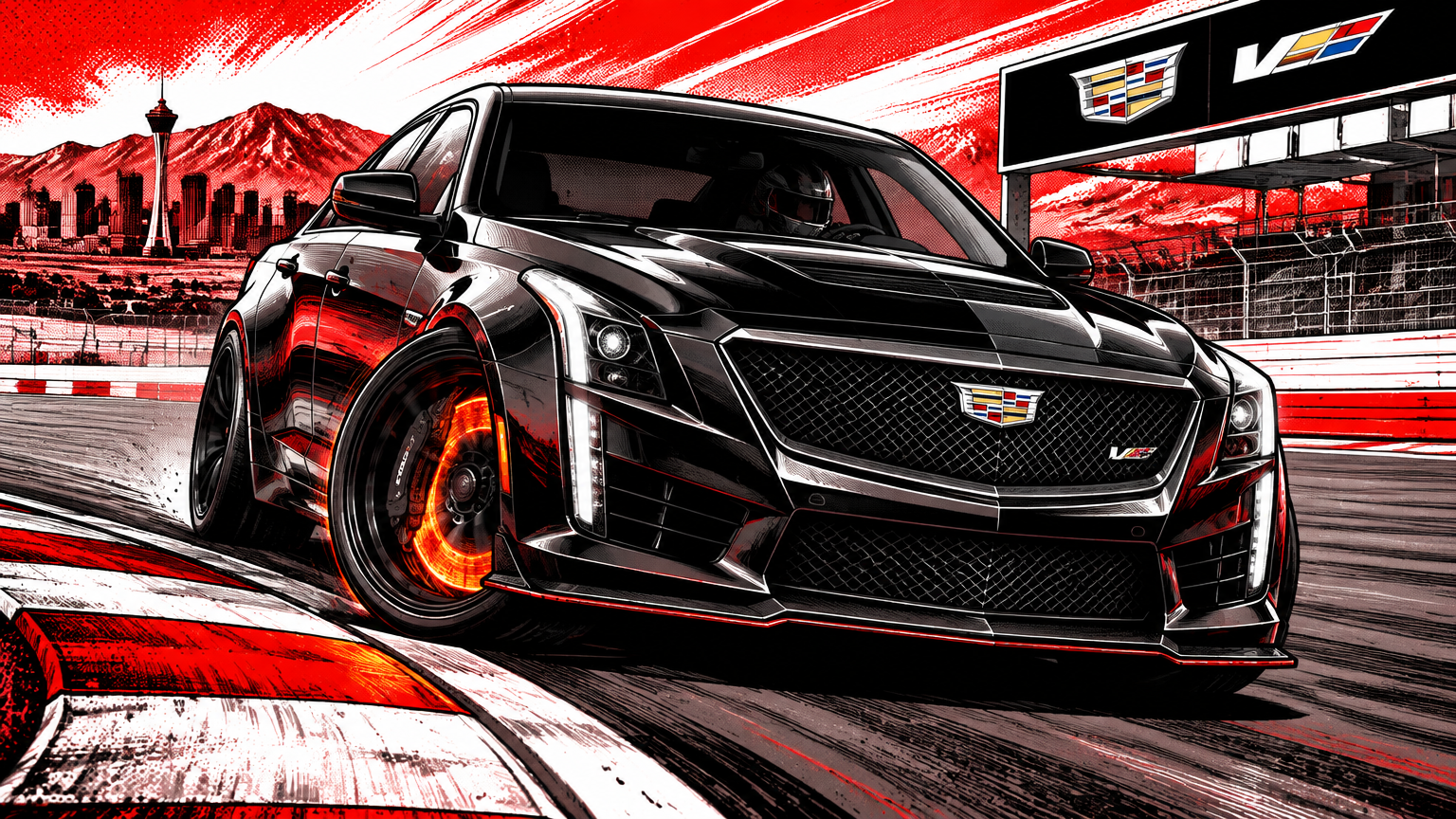
This is the round where the Cadillac cleverness deserves a full hearing before the verdict, because this car corners far better than a two ton luxury sedan has any right to.
Give the sedan its due first. The Alpha platform is stiff and balanced. Third generation Magnetic Ride Control adjusts each damper independently, reading the road 1,000 times per second, so the car can ride softly in Tour mode and lock down in Track mode without changing a single part. Performance Traction Management, offered in Track mode, gives the driver five settings of torque reduction and brake intervention, borrowed straight from the Corvette program. Add the electronic limited slip differential, the wide Michelin Pilot Super Sports, and steering tuned by people who also built the Camaro and Corvette chassis, and you get a luxury sedan that laps a circuit with genuine composure. Period testers kept using the same word for it: balance. At 4,100 plus pounds, that is an engineering achievement, not a happy accident.
A Formula 1 car corners on a different set of physics. It weighs 768 kg including its driver. It wears slick racing tires. And its active aerodynamics generate downforce, pushing the car into the track with a force a steel bodied sedan with a luxury car silhouette simply cannot match. Downforce is the cheat code here. It lets the racing car brake later, turn harder, and get back on the power sooner, lap after lap, at speeds that would have a road car, even this road car, sliding and cooking its tires within a few laps.
Think of it in Vegas terms. The Cadillac is the best table in the steakhouse, the one where five people eat in comfort and nobody believes the quiet car outside can do 200 mph. The Formula 1 car owns the building, the kitchen, and the parking lot. Round Three goes to Formula 1, by a wide margin, and the Cadillac still leaves as the best cornering luxury sedan America had built to that point.
Round Four: Braking
Winner: Formula 1.
The Cadillac braking story is the most underrated part of this car, so let us tell it properly. Those Brembo brakes, 390 mm two piece front rotors with staggered six piston calipers and 365 mm rears with four piston calipers, were not fitted for a brochure. Cadillac built the system for durability and consistency, for repeated hard stops on a track day, in a car weighing more than two tons with the driver aboard. Big rotors, serious calipers, and proper cooling are how a heavy, fast car stops the tenth time the way it stopped the first time. That repeatability is the real luxury in a performance brake, and most buyers never think to ask about it.
It still meets the same wall every challenger meets in this round. A Formula 1 car brakes with carbon brakes, massive downforce pressing the tires into the road, slick rubber, and a total weight less than half the Cadillac figure even before you add passengers. Downforce is a braking superpower nobody talks about enough. At high speed the air itself is helping to stop the car, which is why Formula 1 drivers can brake at markers that look impossible on television. Add the hybrid system recovering energy under braking on the 2026 car, and this round is not a debate.
The usable insight for your own driving is hiding right here, and the Cadillac proves it from the road car side. Braking is mostly tires, weight, and heat management, in that order of honesty. The CTS-V stops hard and repeatedly because Cadillac spent real money on rotors, calipers, and cooling sized for its weight. When any fast sedan brags about its brakes, ask about rotor size and whether the system survives a full track session, not just one hero stop. That is where the stopping actually lives.
So, Does the Cadillac CTS-V Win Anything?
It wins the part of life that happens on the other 364 days of the year.
It wins the everyday argument, outright.
- Five seats, four doors, and a trunk, against one seat and no doors at all
- A quiet Tour mode for the freeway and a Track mode for the circuit, in the same car, on the same day
- Air conditioning, a sound system, and a warranty, from a dealership, at a fraction of hypercar money
- The ability to lose this fight in the morning and still be the fastest, nicest car at dinner that night
It wins the value argument.
At $83,995 at launch, the CTS-V offered 640 horsepower, a 200 mph top speed, Corvette Z06 engine hardware, track brakes, and magnetic suspension for less than many German rivals charged for cars with less power and a 155 mph limiter. No car in this series so far gives you more verified speed per dollar with this many seats attached.
It wins the stealth argument.
The Bugatti Veyron announces itself from three blocks away. The CTS-V can sit in a casino valet line in Las Vegas looking like a nice Cadillac, while hiding a supercharged V8 that outruns supercars from the decade before it. For a certain kind of buyer, that quiet confidence is the whole point. Las Vegas understands this car. This town loves a high roller who does not need to shout about the bankroll.
It wins the lineage argument.
Three generations, 2004 to 2019, from a 400 horsepower manual sedan that shocked the Germans, through a 556 horsepower wagon that collectors now chase, to this 640 horsepower final car. The CTS-V is the car that proved Cadillac could build a world class performance sedan, on a racetrack, against the best in the world, and it did it with an American V8 and a price tag that embarrassed the room.
Cadillac CTS-V wins: the everyday championship, the value crown, the stealth award, and the title of the fastest luxury sedan America had ever sold to that point.
What Would Happen on the Las Vegas Strip Circuit?
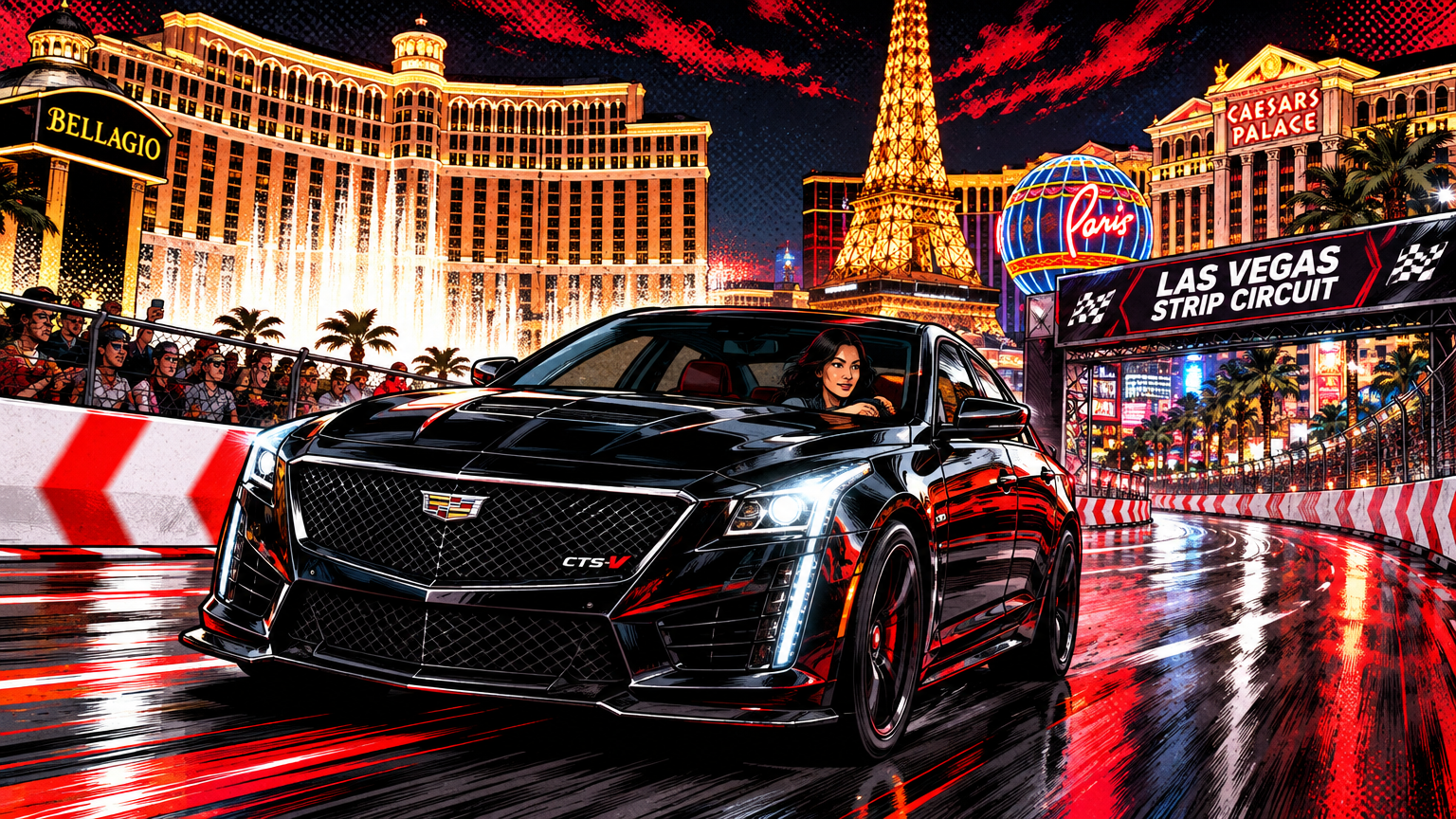
Now we bring the fight home, to the Las Vegas Strip Circuit, home of the Las Vegas Grand Prix.
The circuit runs 6.201 kilometers, about 3.85 miles, with 17 turns, and the Grand Prix lasts 50 laps. Running down the Strip there is roughly a two kilometer straight, under the neon, past the casinos.
That straight would be the Cadillac finest two kilometers in this whole series. Two kilometers is room for the LT4 to pull hard through its gears, the supercharger singing, five seats filled if you were foolish enough, toward that 200 mph Cadillac figure while the casino towers slide past. No challenger in this series would look more at home doing it. A big American V8 sedan at full song on the Las Vegas Strip, at night, is not just a car on a circuit. It is a postcard this city was built to send.
Then the lap turns, and keeps turning. Seventeen corners, heavy braking zones, and 50 laps of racing tires versus street tires, downforce versus silhouette, and 768 kg versus a luxury sedan carrying its comfort with it. Over one lap the Formula 1 car would build a gap measured in many seconds. Over a full Grand Prix distance it would be a racing car doing its job and a luxury sedan doing the most charismatic demonstration run Las Vegas has ever hosted. No invented lap times here. This is an informed comparison, not a recorded race, and nobody has timed a CTS-V around this circuit for us to quote.
And here is the Vegas twist. When the demonstration ends, the Formula 1 car goes back on a transporter, behind a crew and a laptop. The Cadillac turns its mode dial to Tour, softens its dampers a thousand times a second, and drives its five occupants to a late dinner in quiet comfort, then home. It loses the race and wins the ride home, every night, and in this town that counts for more than the trophy case admits.
The Final Call
Winner: Formula 1.
Four rounds to none, a clean sweep, and the first clean sweep since the Mazda RX-7 fight. Acceleration went to a power to weight advantage of roughly four to one. Top speed went to measured Formula 1 traps that clear the Cadillac 200 mph figure even in cornering trim. Cornering and braking went to the car that weighs 768 kg including its driver and uses the air itself as a brake and a glue. The Cadillac CTS-V was never going to win a Grand Prix in Las Vegas. It was built to prove a luxury brand could build a 200 mph, track ready, five seat sedan with a Corvette engine, and on the evidence of three generations and a 640 horsepower final car, it made its case and closed it.
And what a case it is. The most powerful Cadillac in brand history at launch. The first Cadillac to reach 200 mph. A supercharged V8, magnetic dampers reading the road a thousand times a second, Brembo brakes sized for track days, and a back seat. All of it sold to the public, with a warranty, for $83,995.
Formula 1 may win the fight. But the Cadillac CTS-V still owns the school run, the valet line, and the argument that the fastest car in the room can also be the most comfortable one.
There are plenty more cars waiting to pick a fight with Formula 1.
Next up: Formula 1 vs. Ferrari Testarossa. The flat twelve poster car of the 1980s steps out of the bedroom wall and into the ring.